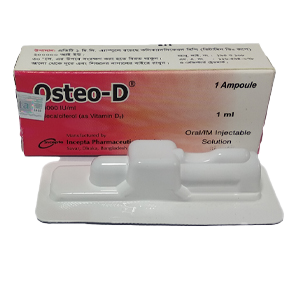
Osteo-D-IM Injection
by Incepta Pharmaceuticals Ltd
৳120.00
Aristopharma Ltd.
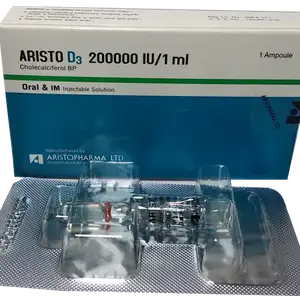
Aristo D3 - IM 1ml Injection from Aristopharma Ltd & Generic is Colecalciferol [Vitamin D3] 2000IU. Vitamin D3 insufficiency can be treated and prevented with colecalciferol (Vitamin D3). In patients with vitamin D3 deficiency, it can also be used as a supplement to particular osteoporosis treatment.
Vitamin D3 (Cholecalciferol) helps body to absorb calcium and phosphorus. It is used to treat and prevent bone disorders (such as rickets, osteomalacia). In combination with calcium it is used to treat or prevent bone loss (osteoporosis). It is also used with other medications to treat low levels of calcium or phosphate caused by certain disorders (such as hypoparathyroidism, pseudohypoparathyroidism, familial hypophosphatemia). It may be used in kidney disease to keep calcium levels normal and allow normal bone growth.
Colecalciferol (Vitamin D3) aids in calcium and phosphorus absorption and reabsorption. Vitamin D3 is required for optimal bone growth and density maintenance. It also helps type 2 diabetes patients maintain optimal insulin levels by reducing the severity of bacterial infection, improving lung function, reducing the risk of cancer (breast, colorectal), and preventing cancer (breast, colorectal).
For capsule: Adults:
Treatment of Vitamin D3 deficiency: 40000 IU once weekly for 7 weeks. Doses for maintenance therapy is 1400-2000 IU/day. To confirm the target level of 25 hydroxyvitamin D, measurement of it should be determined 3-4 months after initiating the maintenance therapy.
Prevention of Vitamin D3 deficiency: 20000 IU every 4 weeks. Higher doses may be required in certain situations.
Addition to specific therapy for osteoporosis: 20000 IU once a month.
For capsule: Children (12-18 years):
Treatment of Vitamin D3 deficiency: 20000 IU once every 2 weeks for 6 weeks.
Prevention of Vitamin D3 deficiency: 20000 IU every 6 weeks.
For film-coated tablet: 1000 IU (1-2 tablets) daily, or as directed by physician. Take the medicine with food or within 1 hour after a meal.
For oroflash or chewable tablets: 1000 IU to 2000 IU daily, or as directed by physician. Take the medicine with food or within 1 hour after a meal. Place the tablet in mouth swallow after chewing.
For Syrup:
For patients with risk of Cholecalciferol deficiency:
0-1 yr: 400 IU/ day (2 ml)
>1 Yr: 600 lU/ day (3 ml)
For Cholecalciferol deficient patients:
0-1 yr: 2000 IU/ day (+50000 IU/week ) for 6 weeks
1 -18 yrs: 2000 IU/ day for 6 weeks.
Injection: Prevention:
Infants receiving Vitamin D enriched milk: 1/2 ampoule (0.5ml) i.e. 1,00000 I.U. every 6 months.
Nursed infants or infants not receiving Vitamin D enriched milk or young children up to 5 years of age: 1 ampoule (1ml) i.e. 2,00000 I.U. every 6 months.
Adolescents: 1 ampoule (1ml) i.e. 2,00000 I.U. every 6 months during winter.
Pregnancy: 1/2 ampoule (0.5ml) i.e. 1,00000 I.U. from the 6th or 7th month of pregnancy.
Elderly: 1/2 ampoule (0.5ml) i.e. 1,00000 I.U. every 3 months. Digestive disorders, concomitant treatment with antiepileptics & other particular condition not described above; 1/2 ampoule (0.5ml) i.e. 1,00000 I.U. or 1 ampoule (1ml) i.e. 2,00000 I.U. every 3 or 6 months.
Injection: Vitamin D deficiency:
1 ampoule (1ml) i.e. 2,00000 I.U. which can be repeated 1 to 6 months later. Or, as directed by the registered physician.
Phenytoin, barbiturates, glucocorticoids, certain laxatives (such as liquid paraffin), actinomycin, and imidazole antifungal medicines are all affected.
Cholecalciferol is contraindicated in all diseases associated with hypercalcaemia. It is also contraindicated in patients with known hypersensitivity to Cholecalciferol (or medicines of the same class) and any of the constituent excipients. Cholecalciferol is contraindicated if there is evidence of vitamin D toxicity.
Generally all nutritional supplements are considered to be safe and well tolerable. However, few side-effects can generally occur including hypercalcaemia syndrome or calcium intoxication (depending on the severity and duration of hypercalcaemia), occasional acute symptoms include anorexia, headache, nausea, vomiting, abdominal pain or stomach ache and constipation with the administration of Cholecalciferol.
Use in pregnancy: There is no evidence to suggest that vitamin D3 is teratogenic in humans even at very high doses. Cholecalciferol should be used during pregnancy only if the benefits outweigh the potential risk to the fetus.
Use in nursing mothers: It should be assumed that exogenous Cholecalciferol passes into the breast milk. In view of the potential for hypercalcaemia in the mother and for adverse reactions from
Cholecalciferol in nursing infants, mothers may breastfeed while taking Cholecalciferol, provided that the serum Calcium levels of the mother and infant are monitored.
People with the following conditions should exercise with caution when considering taking vitamin D3 supplements:
- High blood calcium or phosphorus level
- Heart problems
- Kidney disease
Vitamin D3 must be taken with adequate amounts of both calcium and magnesium supplementation.
Vitamin in bone formation, Vitamin-D preparations
Keep the temperature below 30°C and keep it away from light and moisture. Keep out of children's reach.
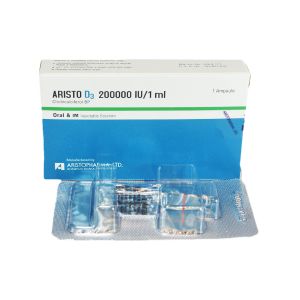
by Aristopharma Ltd.
৳120.00