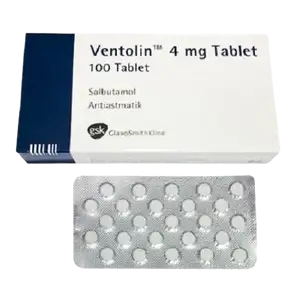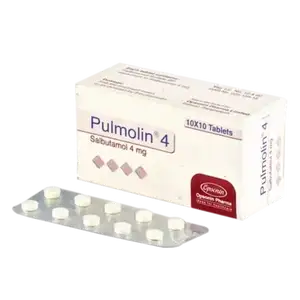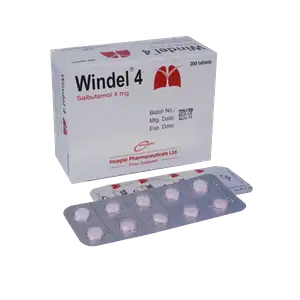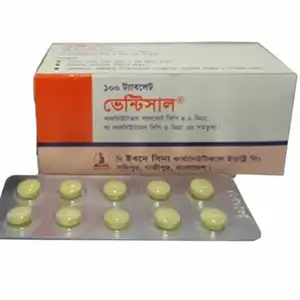
Salmolin 4 Tablet
by The ACME Laboratories Ltd.
৳0.46
ACI Limited

Salbutamol
Salbutamol is indicated as a bronchodilator for use in Asthma, Chronic Bronchitis, Emphysema, and other conditions associated with airways obstruction.
Salbutamol is a selective beta2-adrenoceptor agonist. At therapeutic doses, it acts on the beta 2-adrenoceptors of bronchial smooth muscle, with little or no action on the ß1-adrenoceptors of cardiac muscle. Salbutamol provides short-acting (4-6 hours) bronchodilatation with a fast onset (within 5 minutes) in reversible airways obstruction. It also has an anti-inflammatory effect on mast cells causing inhibition of release of bronchoconstrictor mediators including histamine, neutrophil chemotactic factor (NCF), and prostaglandin D2.
Salbutamol tablet or syrup-
Children:
Adults: 2-4 mg tablet, 3-4 times daily. Maximum single dose is 8 mg tablet.
Salbutamol Respirator Solution: To be used with a suitable nebulizer device under the direction of a physician. The solution must not be injected or ingested.
Method-1 (Intermittent Administration):
Method-2 (Continuous administration): 1-2 ml solution is diluted to make up to 100 ml with normal saline solution. The diluted solution is administered by a suitable nebulizer devise. When there is risk of anoxia through hypoventilation, oxygen should be added to the inspired air.
Salbutamol nebulizer solution: To be used with a suitable nebulizer device under the direction of a physician. The solution must not be injected or ingested.
Salbutamol injection:
Adults:
Children and Adolescents (<18 years of age): The dosage of Salbutamol infusion solution in the pediatric age group has not been established. At present, there are insufficient data to recommend a dosage regimen for children.
Salbutamol Inhalation Capsule:
Excercise-induced Asthma:
Tell your doctor about all of your drugs, including beta-blockers (e.g., propranolol, timolol), all asthma medications, ephedrine, epinephrine, pseudoephedrine, antidepressants, MAO inhibitors (e.g., furazolidone, linezolid, phenelzine, selegiline, tranylcypromine), diuretics, and anti depress (e.g., hydrochlorothiazide). All over-the-counter drugs, especially those used for colds, allergies, asthma, or dieting, should be read carefully because they may include the substances listed above. Do not begin or stop taking any medication without first consulting your doctor or pharmacist.
Salbutamol is contraindicated in patients with a history of hypersensitivity to Salbutamol or any of its components.
Salbutamol may cause fine tremors of skeletal muscles (particularly the hands), palpitations, and muscle cramps. Tachycardia, tenseness, headaches, and peripheral vasodilatation have been reported after large doses.
Pregnancy: The drug should be used during pregnancy only if the potential benefit justifies the potential risk of the fetus. Lactation: It is not known whether this drug is excreted in human milk. Because of the potential of the tumorigenicity shown for Salbutamol in some animal studies, a decision should be made whether to discontinue nursing or to discontinue the drug, taking into account the importance of the drug to the mother.
Salbutamol should be used with caution in patients with hyperthyroidism, cardiovascular disease, occlusive vascular disorders, hypertension, and aneurysms. Hypokalaemia associated with high doses of Salbutamol may result in increased susceptibility to digitalis-induced cardiac arrhythmia. Tachyphylaxis with resistance may occur with prolonged use of high dosage. Care is necessary when treating patients with diabetes mellitus or closed-angle glaucoma and in those receiving antihypertensive therapy.
Short-acting selective & β2-adrenoceptor stimulants.
Should be stored in a cool and dry place.
ACI Limited