Cefim-3 DS
ACI Limited
1 Pc
৳60.00
1 Strip = 3 Pcs
৳180.00
1 Box = 2 Strips
৳360.00
Dosage: Cefixime Trihydrat 400mg
Form: Capsule
Generic name(s): Cefixime Trihydrat 400mg
Available (pcs): 0
Prescription required: Yes
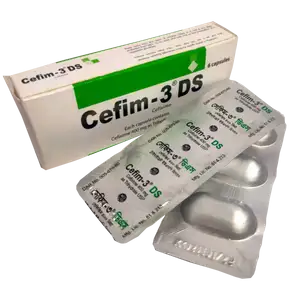
Cefim-3 DS Capsule Uses, Side Effects, Price & Dosage - osudpotro
Cefim-3 DS Capsule by ACI pharmaceutical Ltd is available in our Trusted medicine store. Place your order in osudpotro and get the best Price online medicine home delivery in Bangladesh.
Indications of Cefim-3 DS
When caused by susceptible strains of the approved bacteria, cefixime is indicated for the treatment of the following illnesses: uncomplicated urinary tract infections caused by Escherichia coli and Proteus mirabilis.
- Haemophilus influenza, Moraxella catarrhalis, and Streptococcus pyogenes cause otitis media.
- Streptococcus pyogenes causes pharyngitis and tonsillitis.
- Streptococcus pneumoniae and Haemophilus influenza induce acute bronchitis and acute exacerbations of chronic bronchitis.
- Neisseria gonorrhoeae causes uncomplicated gonorrhea (cervical/urethral).
Pharmaceutical Name of Cefim-3 DS
Pharmacology
Cefixime is a semisynthetic third-generation cephalosporin antibiotic for oral use. At easily obtainable plasma concentrations, it is bactericidal against a wide range of gram-positive and gram-negative bacteria. By interfering with the synthesis of the bacterial cell wall, it kills bacteria. In the presence of the Beta-lactamase enzyme, it is extremely stable.
As a result, many organisms resistant to penicillins and some cephalosporins may be sensitive to Cefixime due to the presence of beta-lactamases. It is absorbed about 40% to 50% of the time, whether it is given with or without food.
Dosage & Administration of Cefim-3 DS
The usual course of treatment is 7 days. This may be continued for up to 14 days depending on the severity of the infection.
Adult and children over 12 years: The recommended adult dose is 200-400 mg (1 to 2 capsules) daily, given either as a single dose or in two divided doses. For the treatment of uncomplicated cervical/urethral gonococcal infections, a single oral dose of Cefixime 400 mg is recommended.
Children (6 month or older): Usually 8 mg/kg/day given as a single dose or in two divided doses or may be given as following
- ½-1 year: 75 mg daily.
- 1-4 years: 100 mg daily.
- 5-10 years: 200 mg daily.
- 11-12 years: 300 mg daily
- In typhoid fever, dosage should be 10 mg/kg/day for 14 days.
Children (under 6 month): The safety and efficacy of Cefixime has not been established in children aged less than 6 months.
Interaction of Cefim-3 DS
Carbamazepine: Taking these drugs together raises the carbamazepine level. Concurrent use of warfarin and other anticoagulants raises prothrombin time.
Contraindications
It's not recommended if you're allergic to Cefixime or other cephalosporins.
Side Effects of Cefim-3 DS
In general, the medication is well tolerated. Diarrhea and stool alterations are the most common adverse effects, which are more typically associated with greater doses. Nausea, abdominal pain, dyspepsia, vomiting, flatulence, headache, and dizziness are some of the other side effects. Rashes, pruritus, urticaria, drug fever, and arthralgia have all been described as allergic reactions. When the therapy was stopped, these effects usually decreased.
Pregnancy & Lactation
However, no suitable and well-controlled studies in pregnant women have been conducted. Because animal reproduction studies do not always predict human response, this medication should only be used during pregnancy if absolutely necessary. Cefixime is not known to be excreted in human milk. When Cefixime is given to a breastfeeding mother, caution should be observed.
Precautions & Warnings
Individuals having a history of gastrointestinal disorders, particularly colitis, should be prescribed with caution. Patients with severe renal impairment, as well as those on continuous ambulatory peritoneal dialysis or hemodialysis, should be given the medicine with caution. Only in severe renal failure (creatinine clearance 20 ml/min) should the dosage be adjusted; in that case, a dose of 200 mg once daily should not be exceeded.
Therapeutic Class
Cephalosporins of the third generation
Storage Conditions
Keep the temperature below 30°C and keep it away from light and moisture. Keep out of children's reach.