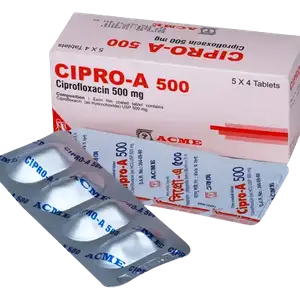
Ciprocin 500 Tablet
by Square Pharmaceuticals Limited
৳15.05
Opsonin Pharma Limited

Ciprox 500 from Opsonin Pharma & Generic is Ciprofloxacin 500mg. Ciprofloxacin is used to treat Respiratory Tract Infections, Urinary Tract Infections, Pelvic Inflammatory Diseases, Infectious Diarrhea (Shigella dysenteriae, Vibrio cholera), Typhoid Fever, Intra-abdominal Infections, Prostatitis, Skin and Soft Tissue Infections, Bone and Joint Infections, Gonorrhea, Neutropenic Patients.
Ciprofloxacin is used to treat Respiratory Tract Infections, Urinary Tract Infections, Pelvic Inflammatory Diseases, Infectious Diarrhea (Shigella dysenteriae, Vibrio cholera), Typhoid Fever, Intra-abdominal Infections, Prostatitis, Skin and Soft Tissue Infections, Bone and Joint Infections, Gonorrhea, Neutropenic individuals with fever caused by a bacterial infection, Meningitis, and surgical prophylaxis.
Ciprofloxacin is a fluoroquinolone antibiotic. It is bactericidal to a wide variety of gram-positive and gram-negative species. It prevents bacterial DNA synthesis by attaching to the bacterial enzymes DNA gyrase and topoisomerase IV, which are in charge of DNA supercoiling.
Tablet: Adult:
Suspension: Pediatric: 10-20 mg/kg (max. 750 mg) twice daily (10 to 21 days). The duration of therapy depends on the type and severity of the infection.
Extended-release tablet: In uncomplicated urinary tract infection (acute cystitis), the recommended dose of extended-release tablet is 1000 mg tablet once daily for three days.
For IV infusion:
Instruction for the use of Ciprofloxacin IV infusion-
Duration of treatment: The duration of treatment depends upon the severity of infection, clinical response and bacteriological findings. For acute infections the usual treatment period is 5 to 10 days. Generally treatment should be continued for 3 days after the signs and symptoms of the infection have been disappeared.
Ciprofloxacin should not be taken concurrently with antacids or sucralfate containing magnesium or aluminum, or with other products containing calcium, iron, or zinc. These medications should be given two hours after or six hours before Ciprofloxacin. Ciprofloxacin should not be taken in conjunction with milk or other dairy products since absorption may be considerably decreased. Although dietary calcium is consumed as part of a meal, it has no effect on Ciprofloxacin absorption.
It is not recommended for individuals who have a history of hypersensitivity to Ciprofloxacin or other quinolones.
Nausea and other gastrointestinal problems, headache, dizziness, joint pain, and skin rashes are all possible side effects.
In pregnant women, there are no appropriate and well-controlled trials. Ciprofloxacin should only be taken during pregnancy if the possible benefit outweighs the danger to the fetus and mother. Ciprofloxacin is a drug that is excreted in human milk. Ciprofloxacin should not be taken during breastfeeding due to the risk of articular injury.
Patients using Ciprofloxacin should be advised to drink plenty of water. It should be taken with caution in individuals who have suspected or known CNS diseases such epilepsy or other conditions that predispose to seizures and convulsions. In patients with known QT prolongation or hypokalemia, avoid.
4-Quinolone preparations, Anti-diarrhoeal Antimicrobial drugs
Maintain a temperature of less than 30°C and keep it away from light and moisture. Keep out of children's reach.