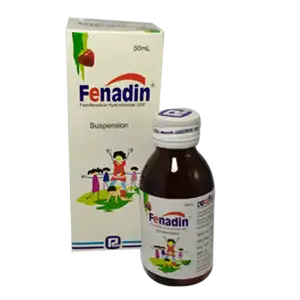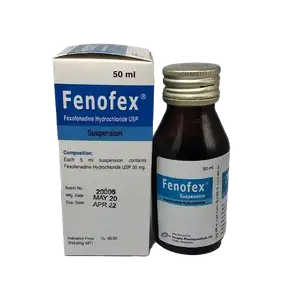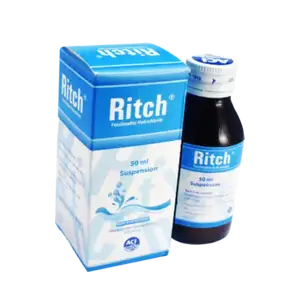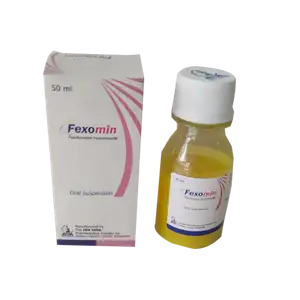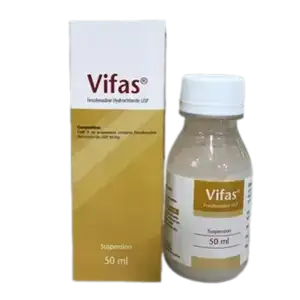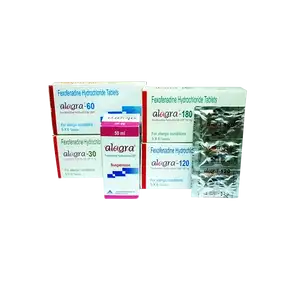
Fexo 50 ml Oral Suspension
by Square Pharmaceuticals Limited
৳55.00
Opsonin Pharma Limited
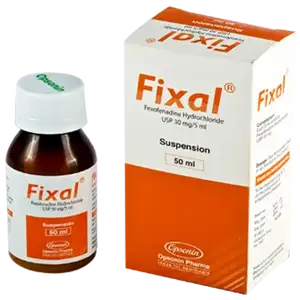
Fexofenadine Hydrochloride
Fexofenadine is indicated for relief of symptoms associated with seasonal allergic rhinitis such as sneezing, rhinorrhea, pruritus and lacrimation Perennial allergic rhinitis Urticaria.
Fexofenadine Hydrochloride is an antihistamine that works by blocking peripheral H1 receptors. After oral administration, it is rapidly absorbed and reaches maximal plasma concentration in 2-3 hours. It doesn't appear to be able to pass through the blood-brain barrier.
Tablet
Adults and children over 12 years Seasonal Allergic Rhinitis: 120 mg (Ritch® 120) or 180 mg (Ritch® 180) once daily Perennial Allergic Rhinitis: 60 mg (Ritch® 60) twice daily Urticaria: 180 mg (Ritch® 180) once daily A dose of 60 mg once daily is recommended as the starting dose in patients with decreased renal function. Children aged 6 to 11 years Seasonal Allergic Rhinitis: 30 mg twice daily A dose of 30 mg once daily is recommended as the starting dose in patients with decreased renal function.
Suspension
Children aged 2 to 11 years Seasonal Allergic Rhinitis: 30 mg or 5ml (1 teaspoonful) twice daily A dose of 30 mg or 5 ml (1 teaspoonful) once daily is recommended as the starting dose in pediatric patients with decreased renal function. Chronic Idiopathic Urticaria: 30 mg or 5 ml (1 teaspoonful) twice daily For pediatric patients with decreased renal function, the recommended starting dose is 30 mg or 5 ml (1 teaspoonful) once daily. Children aged 6 months to less than 2 years Chronic Idiopathic Urticaria: 15 mg or 2.5 ml (1/2 teaspoonful) twice daily For pediatric patients with decreased renal function, the recommended starting dose is 15 mg or 2.5 ml (1/2 teaspoonful) once daily.
Plasma concentrations of Fexofenadine have been increased when given with Erythromycin or Ketoconazole. Fexofenadine had no effect on the pharmacokinetics of Erythromycin or Ketoconazole. Antacid containing Aluminium and Magnesium Hydroxide reduces the absorption of Fexofenadine. It is advisable to leave 2 hours between administration or Fexofenadine and Aluminium and Magnesium Hydroxide containing Antacids.
Fexofenadine is contraindicated in patients with a known hypersensitivity to Fexofenadine or any of its ingredients.
Fexofenadine is generally well tolerated. The most common side effects are headache, fatigue, dizziness or drowsiness and nausea. In rare cases, rash, urticaria, pruritus and hypersensitivity reactions such as angioedema, dyspnoea, chest tightness, flushing and systemic anaphylaxis have been reported.
Fexofenadine is pregnancy category B2. There are no adequate and well controlled studies in pregnant women exposed to Fexofenadine alone or through the administration of Terfenadine. Fexofenadine should be used during pregnancy only if the potential benefit justifies the potential risk to the fetus. It is not known if Fexofenadine is excreted in human milk. Because many drugs are excreted in human milk, caution should be exercised when Fexofenadine is administered to a nursing woman.
Studies in the elderly, patients with hepatic impairment and patients with cardiac disease exposed to Fexofenadine through administration of Terfenadine showed no statistically significant differences in pharmacokinetic parameters for Fexofenadine when compares to those pharmacokinetic parameters in healthy individuals. There is only limited data in the elderly and renally or hepatically impaired patients. Fexofenadine should be administered with care in these special groups. Fexofenadine causes drowsiness less than other antihistamines; therefore caution should be advised during drive or operate potentially dangerous machinery.
Non-sedating antihistamines
Store in a cool and dry place. Protect from light. Keep away from the reach of children.
Opsonin Pharma Ltd.
৳55.00