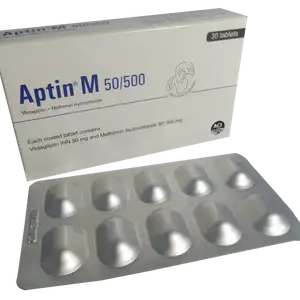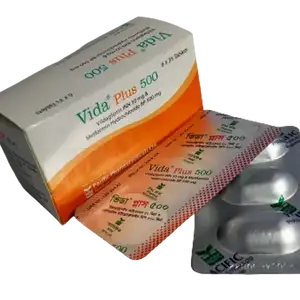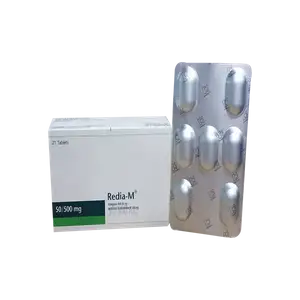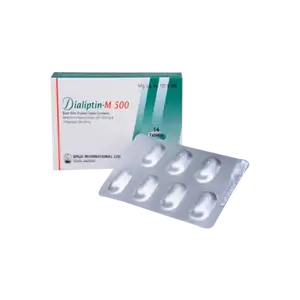
Dialiptin-M 500 Tablet
by Drug International Limited
৳18.00
The White Horse Pharmaceuticals Ltd.
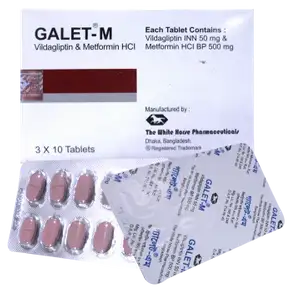
Vildagliptin + Metformin Hydrochloride
Patients with type 2 diabetes mellitus who are not adequately controlled on Metformin Hydrochloride or Vildagliptin alone, or who are already treated with the combination of Vildagliptin and Metformin Hydrochloride as separate tablets, should take this tablet as an adjunct to diet and exercise to improve glycaemic control.
Vildagliptin works primarily by inhibiting DPP4 (dipeptidyl peptidase 4), which is responsible for the degradation of the incretin hormones GLP1 (glucagon-like peptide 1) and GIP (glucose-dependent insulin-promoting polypeptide). Administration of vildagliptin leads to rapid and complete inhibition of DPP4 activity, leading to increased endogenous levels of the incretin hormones GLP1 and GIP on an empty stomach and after meals. By increasing endogenous levels of these incretin hormones, vildagliptin increases insulin secretion in pancreatic β cells and reduces glucagon secretion in α cells. Due to increased levels of incretin hormones, the increase in the insulin / glucagon ratio during hyperglycemia leads to a decrease in fasting and postprandial hepatic glucose production, which leads to a decrease in blood sugar.
Metformin hydrochloride is a biguanide oral hypoglycemic agent used to treat type 2 diabetes. It lowers basal and postprandial blood sugar. Its mechanism of action is different from that of sulfonylureas and does not produce hypoglycemia. Glucosamine reduces liver glucose production, reduces intestinal glucose absorption, and improves insulin sensitivity by increasing peripheral glucose uptake and utilization.
Adults: Depending on the patient's current metformin dose, this combination can be started twice a day, 1 tablet in the morning and 1 tablet in the evening. Patients who receive vildagliptin and metformin as separate tablets can switch to this combination, where the dose of each component is the same. It is not recommended to use vildagliptin doses greater than 100 mg. There is no clinical experience of triple combination of vildagliptin and metformin with other hypoglycemic agents. Taking this combination with or after meals can reduce gastrointestinal symptoms associated with metformin.
When vildagliptin (100 mg once daily) was co-administered with metformin hydrochloride (1,000 mg once daily), no clinically relevant pharmacokinetic interactions were observed. The possibility of vildagliptin drug interaction is very small. Since vildagliptin is not an enzyme substrate of cytochrome P (CYP) 450, nor does it inhibit or induce the CYP 450 enzyme, it is unlikely to interact with drugs that are substrates, inhibitors or inducers of these enzymes. As a result of these studies, after co-administration with vildagliptin, no combination with other oral hypoglycemic drugs (glibenclamide, pioglitazone, metformin hydrochloride), amlodipine, digoxin, ramipril , Simvastatin, valsartan or warfarin clinically relevant interactions. On the other hand, furosemide, nifedipine and glibenclamide will increase the Cmax and AUC of metformin in the blood without changing the renal clearance of metformin.
Patients who have a known hypersensitivity to Vildagliptin, Metformin Hydrochloride, or any of the excipients should avoid this combination. It's not recommended for people who have kidney illness or malfunction, a heart attack, or septicaemia. It's also not recommended for people who have congestive heart failure or who have acute or chronic metabolic acidosis, such as diabetic ketoacidosis, with or without coma. It should be temporarily stopped in patients undergoing radiologic examinations that require intravascular administration of iodinated contrast materials, as such products can cause acute renal dysfunction.
Headache, tremor, dizziness, nausea, hypoglycemia, and other side effects are the most common.
Because there are no good and well-controlled studies in pregnant women, this combination should not be taken during pregnancy unless the possible benefit outweighs the risk to the fetus. There have been no research done on the components of this combination. This combination should not be given to breast-feeding women because it is unknown whether Vildagliptin and/or Metformin Hydrochloride are excreted in human milk.
lt should be used with caution in patients with impaired renal function, heart problem and impaired hepatiCiun.tion
Combination Oral hypoglycemic preparations
Keep away from light and heat in a dry location. Keep out of children's reach.
The White Horse Pharma

by SK+F
৳20.00