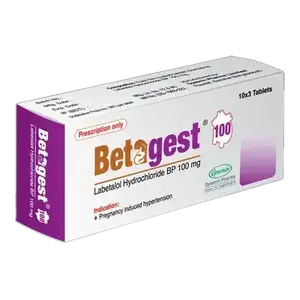
Betagest 100 Tablet
by Opsonin Pharma Limited
৳6.00
Incepta Pharmaceuticals Ltd

Labetalol Hydrochloride.
Labetalol Hydrochloride is a drug that is used to treat hypertension. Labetalol tablets can be taken on their own or in combination with other antihypertensive medications, such as thiazide and loop diuretics.
Labetalol non-selectively antagonizes beta-adrenergic receptors and specifically antagonizes alpha-1-adrenergic receptors. Taking after verbal organization, labetalol has 3 times the beta-blocking capacity than alpha-blocking capacity. This increments to 6.9 times taking after intravenous organization. The enmity of alpha-1-adrenergic receptors leads to vasodilation and diminished vascular resistance. This leads to a diminish in blood weight that's most articulated whereas standing. The enmity of beta-1-adrenergic receptors leads to a slight diminish in heart rate. The hostility of beta-2-adrenergic receptors leads to a few of the side impacts of labetalol such as bronchospasms, be that as it may, this may be somewhat constricted by alpha-1-adrenergic enmity. Labetalol leads to supported vasodilation over the long term without a critical diminish in cardiac yield or stroke volume, and a negligible diminish in heart rate.
Adult: The recommended initial dosage is 100 mg twice daily whether used alone or added to a diuretic regimen. The usual maintenance dosage of Labetalol Hydrochloride is between 200 and 400 mg twice daily. Patients with severe hypertension: May require from 1,200 to 2,400 mg per day, with or without thiazide diuretics. Titration increments should not exceed 200 mg twice daily. Elderly Patients: The majority of elderly patients will require between 100 and 200 mg twice daily.
Labetalol in combination with tricyclic antidepressants may cause tremor; Cimetidine has been appeared to extend the bioavailability of Labetalol. On the off chance that Labetalol is utilized with nitroglycerin in patients with angina pectoris, extra antihypertensive impacts may happen; Care ought to be taken in case Labetalol is utilized concomitantly with calcium enemies of the verapamil sort; Both digitalis glycosides and beta-blockers moderate atrioventricular conduction and diminish heart rate. Concomitant utilize can increment the hazard of bradycardia.
The majority of adverse effects are minor and temporary, and they appear early in the course of treatment. Fatigue, Asthenia, Headache, Nausea, Vomiting, Dyspepsia, Abdominal pain, Diarrhea, Taste distortion, Dizziness, Paresthesia, Nasal stuffiness, Increased perspiration, Edema, Postural hypotension, Bradycardia, Dyspnea, Rash, Vision anomaly, and Vertigo are some of the more common adverse responses.
Pregnancy Category C. Teratogenic thinks about were performed with Labetalol in rats and rabbits at verbal measurements up to roughly six and four times the greatest prescribed human measurements (MRHD), separately. No reproducible prove of fetal mutations was watched. Labetalol Hydrochloride given to pregnant ladies with hypertension did not show up to influence the normal course of labor and conveyance. Little sums of Labetalol (roughly 0.004% of the maternal measurements) are excreted in the human drain. Caution ought to be worked out when Labetalol tablets are managed by a nursing lady.
In individuals with Impaired Hepatic Function, Congestive Heart Failure, Exacerbation of Ischemic Heart Disease, Nonallergic Bronchospasm, Pheochromocytoma, Diabetes Mellitus, and Hypoglycemia, Labetalol Hydrochloride should be used with caution.
Even if the canister appears to be empty, it should not be punctured, broken, or incinerated. Avoid storing in direct sunlight or in a hot environment. Keep it below 30°C. Keep your distance from the eyes. Keep your distance from youngsters.
Incepta Pharmaceuticals Ltd.
