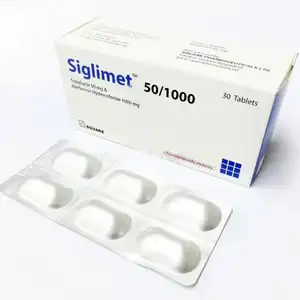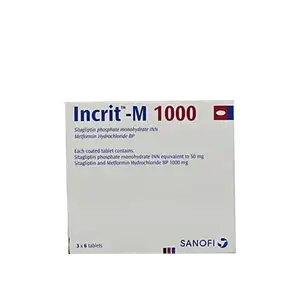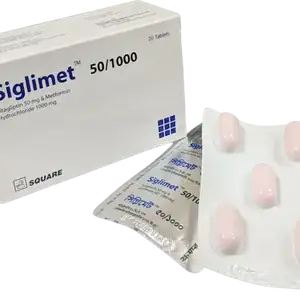
Siglimet 50/1000 Tablet
by Square Pharmaceuticals Limited
৳16.00
EURO Pharma Ltd.

Sitagliptin + Metformin Hydrochloride
This is indicated as an adjunct to diet and exercise to improve glycemic control in adults with type 2 diabetes mellitus when treatment with both sitagliptin and metformin is appropriate. Important limitations of use:
The tablet combines two antihyperglycemic drugs with complementary mechanisms of action to improve blood sugar control in patients with type 2 diabetes. Sitagliptin, a dipeptidyl peptidase-4 (DPP4) inhibitor; and metformin HCl, a member of the biguanide class. Sitagliptin is a dipeptidyl peptidase-4 (DPP4) inhibitor that is believed to work in patients with type 2 diabetes by slowing the inactivation of the incretin hormone. Incretin hormones, including glucagon-like peptide 1 (GLP1) and glucose-dependent insulinotropic polypeptide (GIP), are released from the intestine during the day and their levels rise with meals. These hormones are quickly inactivated by the enzyme DPP4. Secretin is part of the endogenous system involved in the physiological regulation of glucose homeostasis. When blood glucose levels are normal or elevated, GLP1 and GIP increase insulin synthesis and are released from pancreatic β cells through intracellular signaling pathways involving cyclic AMP. GLP1 also reduces the secretion of glucagon from pancreatic alpha cells, which leads to a decrease in glucose production in the liver. By increasing and prolonging active incretin levels, sitagliptin increases insulin release and lowers blood glucose levels in a glucose-dependent manner. The pharmacological mechanism of metformin hydrochloride is different from other types of oral hypoglycemic drugs. Metformin hydrochloride decreases glucose production in the liver, decreases intestinal absorption of glucose, and increases peripheral glucose uptake and utilization.
Dose of film-coated tablet: The dosage of this tablet should be individualized on the basis of the patient's current regimen, efectiveness, and tolerability while not exceeding the maximum recommended daily dose of 100 mg sitagliptin and 2000 mg metformin. Initial combination therapy or maintenance of combination therapy should be individualized and left to the discretion of the health care provider.
This tablet should generally be given twice daily with meals, with gradual dose escalation, to reduce the gastrointestinal (GI) side efects due to metformin.
The starting dose of this tablet should be based on the patient’s current regimen. This tablet should be given twice daily with meals.
The recommended starting dose in patients not currently treated with metformin is 50 mg sitagliptin/500 mg metformin hydrochloride twice daily, with gradual dose escalation recommended to reduce gastrointestinal side efects associated with metformin.
The starting dose in patients already treated with metformin should provide sitagliptin dosed as 50 mg twice daily (100 mg total daily dose) and the dose of metformin already being taken. For patients taking metformin 850 mg twice daily, the recommended starting dose of this tablet is 50 mg sitagliptin/1000 mg metformin hydrochloride twice daily.
No studies have been performed specifcally examining the safety and efcacy of Sitagliptin Phosphate Monohydrate INN/Metformin Hydrochloride BP in patients previously treated with other oral antihyperglycemic agents and switched to Sitagliptin Phosphate Monohydrate INN/Metformin Hydrochloride BP. Any change in therapy of type 2 diabetes should be undertaken with care and appropriate monitoring as changes in glycemic control can occur.
Dose of extended-release tablet: Administer once daily with a meal preferably in the evening. Gradually escalate the dose to reduce the gastrointestinal side effects due to Metformin. May adjust the dosing based on effectiveness and tolerability while not exceeding the maximum recommended daily dose of 100 mg Sitagliptin and 2000 mg Metformin extended-release. Maintain the same total daily dose of Sitagliptin and Metformin when changing between film-coated tablet and extended-release tablet, without exceeding the maximum recommended daily dose of 2000 mg Metformin extended-release.
Patients using two extended-release tablets (such as two 50/500 or two 50/1000 tablets) should take the two tablets together once daily. The 100 mg Sitagliptin/1000 mg Metformin HCI extended-release tablet should be taken as a single tablet once daily.
Patients treated with an insulin secretagogue or insulin: Co-administration of the combination with an insulin secretagogue (e.g., sulfonylurea) or insulin may require lower doses of the insulin secretagogue or insulin to reduce the risk of hypoglycemia.
Cationic Medications: Cationic drugs are excreted in the tubules of the kidney and should be used with caution.
Phenprocoumon: Metformin may reduce phenprocoumon's anticoagulant impact. As a result, careful monitoring of the INR is advised.
Metformin's hypoglycemia effect can be reduced by taking levothyroxine. Blood glucose levels should be monitored, especially when thyroid hormone therapy is started or stopped, and metformin dosage should be modified if necessary.
This tablet is contraindicated in patients with:
This tablet should be temporarily discontinued in patients undergoing radiologic studies involving intravascular administration of iodinated contrast materials, because use of such products may result in acute alteration of renal function.
≥5% The most common adverse reactions reported by patients who started using sitagliptin and metformin at the same time were diarrhea, upper respiratory tract infection, and headache, which were more common than those who received placebo.
In patients treated with sitagliptin combined with sulfonylureas and metformin, ≥5% and more common adverse reactions reported in patients treated with placebo combined with sulfonylureas and metformin were hypoglycemia and headache.
Hypoglycemia is the only adverse reaction ≥ 5% reported in patients receiving sitagliptin combined with insulin and metformin, and the incidence is higher than that of patients receiving placebo combined with insulin and metformin.
Nasopharyngitis is the only reported adverse reaction rate ≥ 5% in patients receiving sitagliptin monotherapy and is more frequent than in patients receiving placebo.
The most common (>5%) side effects of starting metformin treatment are diarrhea, nausea/vomiting, loss of appetite, abdominal discomfort, indigestion, fatigue, and headache.
Pregnancy Classification B. Because no appropriate and well-controlled trials with Sitagliptin Phosphate Monohydrate INN/Metformin Hydrochloride BP or its individual components have been conducted in
pregnant women, the safety of Sitagliptin Phosphate Monohydrate INN/Metformin Hydrochloride BP in pregnant women is unknown. This tablet should only be taken during pregnancy if absolutely necessary.
Sitagliptin is not known to be excreted in human milk. Because many medications are excreted in human milk, this tablet should be used with caution if given to a nursing mother.
Lactic Acidosis-
Others-
Combination Oral hypoglycemic preparations
Store below 25°C in a dry place away from light. Keep the medicines in a safe place, out of the reach of children. Do not use later than the date of expiry. To be dispensed only on the prescription of a registered physician.
Euro Pharma Ltd.
৳18.00