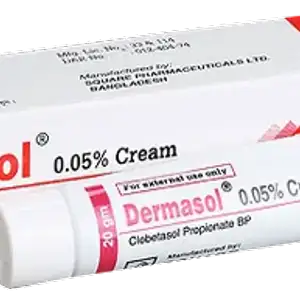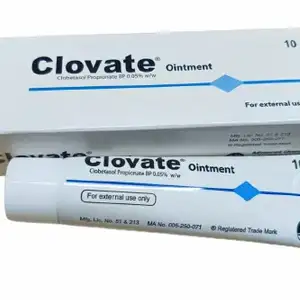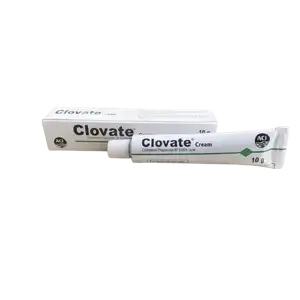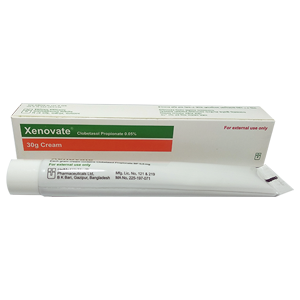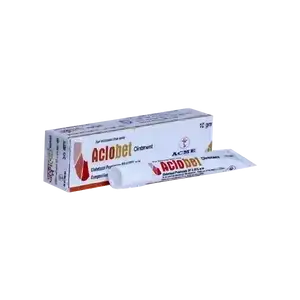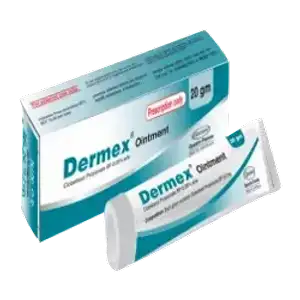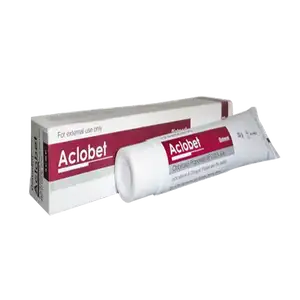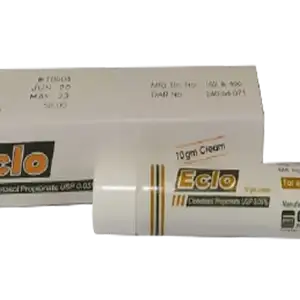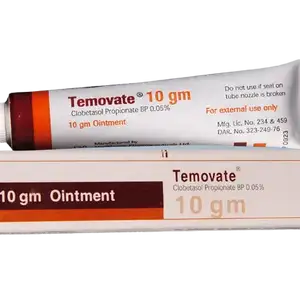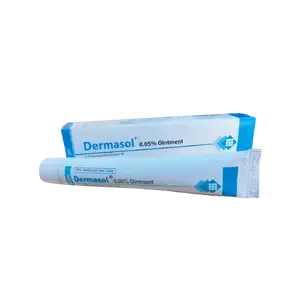
Dermasol 0.05% 20g Ointment
by Square Pharmaceuticals Limited
৳75.50
The ACME Laboratories Ltd.
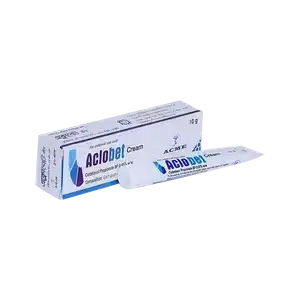
Aclobet cream 10g from ACME Laboratories Ltd & Generic is Clobetasol Propionate Topical Preparation 0.05%. Clobetasol Propionate is used to treat the following dermatoses in adults, the elderly, and children over the age of one year. Recalcitrant dermatoses Lichen planus Discoid lupus erythematosus Other skin disorders that do not react well to less strong steroids Psoriasis (excluding broad plaque psoriasis) Recalcitrant dermatoses Lichen planus Discoid lupus erythematosus.
Clobetasol Propionate is approved for the treatment of the following dermatoses in adults, the elderly, and children over the age of one year.
Clobetasol Propionate is approved for the treatment of the following dermatoses in adults, the elderly, and children over the age of one year. It reduces mast cell density, chemotaxis, and eosinophil activation. It also lowers cytokine production and inhibits arachidonic acid metabolism.
Adults, elderly and children over 1 year: Apply a thin layer of Clobetasol Propionate Cream or Ointment to the affected skin areas twice daily and rub in gently and completely. Repeated short courses of Clobetasol Propionate may be used to control exacerbations. In more resistant lesions, especially where there is hyperkeratosis, the effect of Clobetasol can be enhanced, if necessary, by occluding the treatment area with polythene film. Overnight occlusion only is usually adequate to bring about a satisfactory response. Clobetasol Propionate is super-high potency topical corticosteroids; therefore, treatment should be limited to 2 consecutive weeks. The maximum weekly dose should not be exceeded 50 gm/week. In case of children, courses should be limited if possible to five days and reviewed weekly.
Cutaneous administration route Creams are especially suitable for wet or damp surfaces. Ointments are particularly useful for dry, lichenified, or scaly sores.
Co-administered medications that inhibit CYP3A4 (e.g., ritonavir, itraconazole) have been demonstrated to decrease corticosteroid metabolism, resulting in increased systemic exposure.
It is not recommended for patients who are allergic to any of the preparation's ingredients. It should not be used in the following conditions: rosacea, acne vulgaris, perioral dermatitis, perianal and genital pruritus, pruritus without inflammation, and untreated skin infections.
Burning and stinging sensations are the most commonly reported adverse effects. Itching, skin atrophy, cracking, and fissuring of the skin are less common side effects. Cushing syndrome has been observed in babies and adults as a result of using topical Clobetasol Propionate formulations for an extended period of time.
It is not recommended for patients who are allergic to any of the preparation's ingredients. It should not be used in the following conditions: rosacea, acne vulgaris, perioral dermatitis, perianal and genital pruritus, pruritus without inflammation, and untreated skin infections. Clobetasol Propionate Cream should be used during pregnancy and lactation only if the predicted benefit to the mother justifies the potential hazards of therapy.
It is uncertain if this medication is excreted in human milk. Because many medications are excreted in human milk, Clobetasol Propionate Cream should be used with caution to a breastfeeding woman.
When using occlusive dressings, the skin should be cleaned before applying a new dressing. Topical corticosteroids should be used with caution in psoriasis because they can cause rebound relapses and the development of local or systemic toxicity due to decreased skin barrier function. Treatment should be restricted to 5 days if applied on the face. When using Clobetasol Propionate on eyelids, take care not to get it in your eyes because it might cause cataracts and glaucoma.
Other corticosteroids used topically
Keep the temperature below 30°C and away from light and moisture. Do not get paralyzed. Keep out of children's reach.