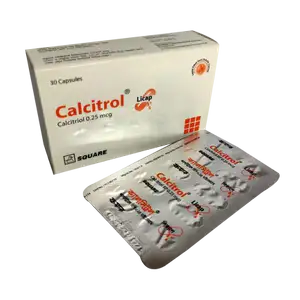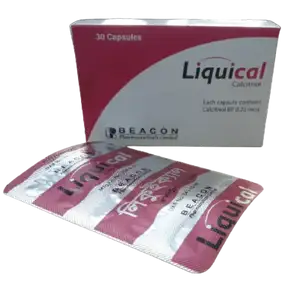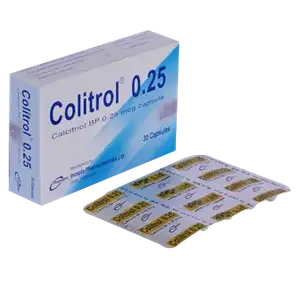
Dicaltrol Capsule
by Drug International Limited
৳12.00
Pacific Pharmaceuticals Ltd.

Caltrol from Pacific Pharmaceuticals & Generic is Calcitriol 0.25mcg. It is used to Established postmenopausal osteoporosis, Renal osteodystrophy in patients with chronic renal failure, particularly those undergoing hemodialysis, Hypoparathyroidism after surgery, Vitamin D-dependent rickets, Hypophosphatemic vitamin D-resistant rickets.
Calcitriol is suitable for
* Postmenopausal osteoporosis
* Renal osteodystrophy
* Postoperative hypoparathyroidism
* Idiopathic hypoparathyroidism
* Pseudohypoparathyroidism
* Moderate Secondary hyperparathyroidism in patients with to severe chronic renal failure 44 (vitamin precursor)
Calcitriol is one of the most important active metabolites of vitamin D3. It is usually formed in the kidney from its precursor 25-hydroxycholecalciferol. Calcitriol promotes calcium absorption in the intestines and regulates bone mineralization. Calcitriol's key role is to regulate calcium homeostasis, including stimulating osteoblast activity in bone.
The optimal daily dose of Calcitriol capsule must be carefully determined for each patient on the basis of serum calcium level.
In Post-menopausal Osteoporosis: The recommended dose of Calcitriol capsule is 0.25 mcg twice daily.
In Renal Osteodystrophy (dialysis patients): The initial daily dose is 0.25 mcg of Calcitriol capsule. In patients with normal or only slightly reduced calcium levels, doses of 0.25 mcg every other day are sufficient.
In Hypoparathyroidism and Rickets: The recommended initial dosage of Calcitriol capsule is 0.25 mcg/day which given in the morning. If within 2-4 weeks satisfactory response is not observed by usual dose then dose may be increased at 2-4 weeks intervals.
The recommended intravenous initial dose of Calcitriol injection, depending on the severity of the hypocalcemia and/or secondary hyperparathyroidism, is 1 mcg (0.02 mcg/kg) to 2 mcg administered three times weekly, approximately every other day. Doses as small as 0.5 mcg and as large as 4 mcg three times weekly have been used as an initial dose. If a satisfactory response is not observed, the dose may be increased by 0.5 to 1 mcg at two to four week intervals.
Concurrent treatment with thiazide diuretics increases the risk of hypercalcaemia. For patients receiving digitalis therapy, the dose of calcitriol must be carefully determined, because hypercalcemia in such patients can induce arrhythmias. Medicines that contain magnesium (such as antacids) can cause hypermagnesemia.
Calcitriol is contraindicated in patients known to be allergic to any of its ingredients. Calcitriol is also prohibited for all hypercalcemia-related conditions.
Occasional symptoms include anorexia, headache, vomiting, and constipation. Chronic effects can include malnutrition, fever, polyuria, dehydration, listlessness, and urinary tract infections.
There is no evidence that vitamin D has teratogenic effects in humans. Calcitriol should only be used during pregnancy if the benefits outweigh the potential risks to the fetus. Mothers can breastfeed while taking calcitriol, but the mother's and baby's serum calcium levels should be monitored.
During calcitriol treatment, if the serum calcium level rises above the normal value of 1 mg/dL or the serum creatinine rises to> 120 µmol/L, the calcitriol dose should be greatly reduced or the treatment should be stopped.
Vitamin in bone formation, Vitamin-D preparations
keep in a dry place away from light and heat. Keep out of the reach of children.

by Healthcare Pharmaceuticals Limited
৳10.00