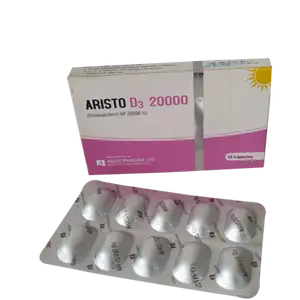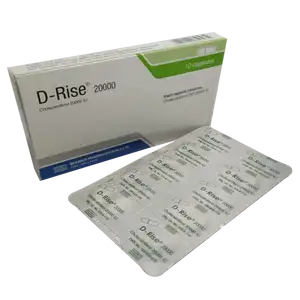
D-Rise 20000 Capsule
by Beximco Pharmaceuticals Ltd.
৳20.00
Drug International Limited

D-CAP 20000 capsule from Drug International Ltd & Generic is Colecalciferol [Vitamin D3] 20000IU. Vitamin D3 insufficiency can be treated and prevented with colecalciferol (Vitamin D3). In patients with vitamin D3 deficiency, it can also be used as a supplement to particular osteoporosis treatment.
Vitamin D3 insufficiency can be treated and prevented with colecalciferol (Vitamin D3). In patients with vitamin D3 deficiency, it can also be used as a supplement to particular osteoporosis treatment.
Colecalciferol (Vitamin D3) aids in calcium and phosphorus absorption and reabsorption. Vitamin D3 is required for optimal bone growth and density maintenance. It also helps type 2 diabetes patients maintain optimal insulin levels by reducing the severity of bacterial infection, improving lung function, reducing the risk of cancer (breast, colorectal), and preventing cancer (breast, colorectal).
For capsule: Adults:
For capsule: Children (12-18 years):
For film-coated tablet: 1000 IU (1-2 tablets) daily, or as directed by physician. Take the medicine with food or within 1 hour after a meal.
For oroflash or chewable tablets: 1000 IU to 2000 IU daily, or as directed by physician. Take the medicine with food or within 1 hour after a meal. Place the tablet in mouth swallow after chewing.
For Syrup:
For patients with risk of Cholecalciferol deficiency:
For Cholecalciferol deficient patients:
Injection: Prevention:
Injection: Vitamin D deficiency:
Phenytoin, barbiturates, glucocorticoids, certain laxatives (such as liquid paraffin), actinomycin, and imidazole antifungal medicines are all affected.
It's not recommended for people who have a history of Vitamin D3 hypersensitivity.
Hypercalcaemia, hypercalciuria, skin rash, pruritus, urticaria, nausea, and abdominal pain are the most common adverse effects.
Studies have showed that dosages up to 4000 IU are safe to use during pregnancy. The recommended daily consumption for pregnant women is 400 IU; however, if the woman is Vitamin D3 deficient, a larger amount may be necessary. Women should follow their doctor's advise during pregnancy because their needs may change depending on the severity of their disease and how well they respond to therapy.
Breast milk excretes vitamin D3 and its metabolites. Overdose in nursing mothers' newborns has not been reported; however, when providing more vitamin D3 to a breast-fed child, the practitioner should take into account the dose of any additional vitamin D3 given to the mother.
In patients with compromised renal function, it should be used with caution.
Vitamin in bone formation, Vitamin-D preparations
Keep the temperature below 30°C and keep it away from light and moisture. Keep out of children's reach.