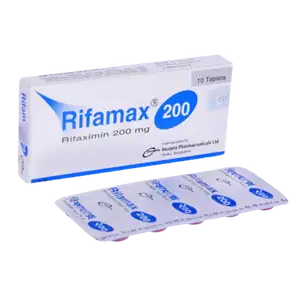
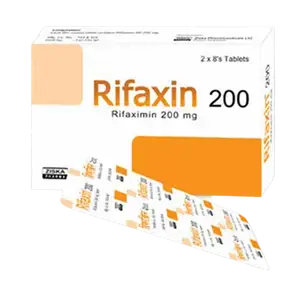
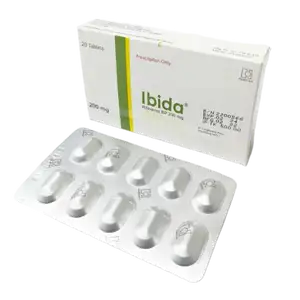
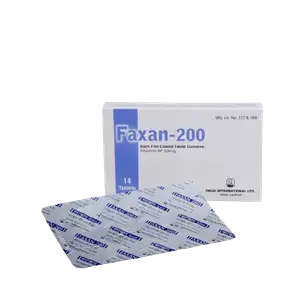
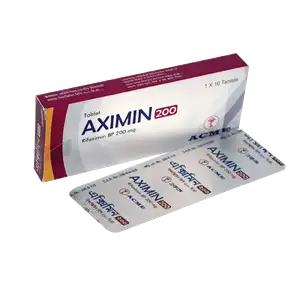
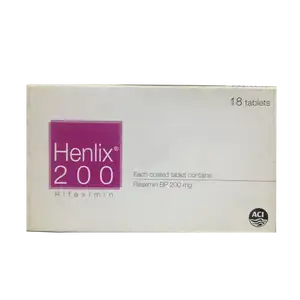
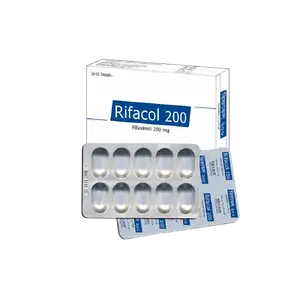
Rifagut 200 Tablet
by Opsonin Pharma Limited
৳20.06
Aristopharma Ltd.
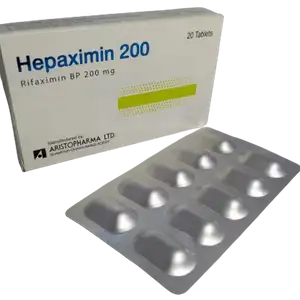
Rifaximin
Rifaximin is used to treat traveler's diarrhea caused by noninvasive E. coli strains, as well as to reduce the risk of overt hepatic encephalopathy and bacterial overgrowth in people with irritable bowel syndrome.
Rifaximin is a rifamycin-based non-systemic antibiotic that is semi-synthetic. Unlike other types of orally taken antibiotics, very little of the medicine will get through the gut wall into the circulation. Rifaximin acts on the beta-subunit of the DNA-dependent RNA polymerase to suppress bacterial RNA production. It has the same broad spectrum activity as rifamycin, which kills Gram-positive and Gram-negative bacteria in both aerobic and anaerobic environments.
Traveler's Diarrhea: For patients ≥12 years of age: 200 mg 3 times daily for 3 days.
Hepatic Encephalopathy: For patients ≥18 years of age: 550 mg 2 times daily.
Bacterial overgrowth of irritable bowel syndrome: 400 mg 3 times daily for 10 days or 550 mg 3 times daily for 14 days. Can be taken with or without food
In an in vitro study has suggested that Rifaximin induces CYP3A4. However, in patients with normal liver function, Rifaximin at the recommended dosing regimen is not expected to induce CYP3A4.
Hypersensitivity to Rifaximin, any of the rifamycin antibacterial agents, or any of the product's components is contraindicated.
Flatulence, headache, abdominal pain, rectal tenesmus, defecation urgency, nausea, constipation, pyrexia, and vomiting are some of the side effects. Anaphylaxis, angioneurotic edema, and exfoliative dermatitis have all been recorded as side effects.
Pregnancy category C. It is not known whether Rifaximin is excreted in human milk or not.
In patients with diarrhea that is accompanied by a fever and/or blood in the feces, rifaximin has not been found to be beneficial. If diarrhea symptoms worsen or last longer than 24 hours, rifaximin therapy should be stopped and an alternative antibiotic should be investigated. Nearly all antibacterial drugs have been linked to pseudomembranous colitis, which can range in severity from moderate to life-threatening. As a result, this diagnosis should be considered in patients who present with diarrhea following the administration of antimicrobial drugs.
4-Quinolone preparations
Keep below 30°C temperature, away from light & moisture. Keep out of the reach of children.
Aristopharma Ltd.