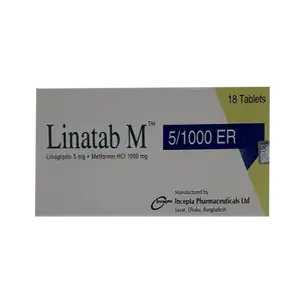
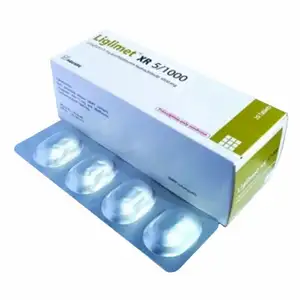
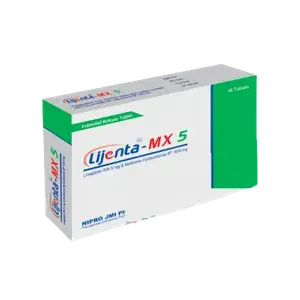
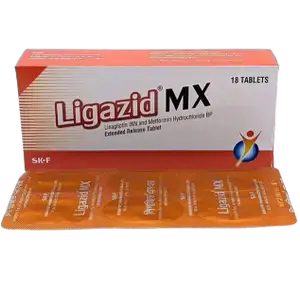
Linaglip-M 2.5/500 Tablet
by Aristopharma Ltd.
৳14.00
The ACME Laboratories Ltd.
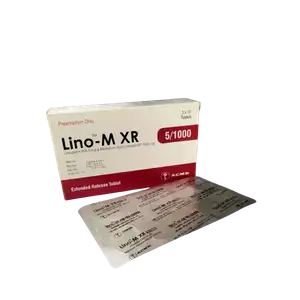
Linagliptin + Metformin Hydrochloride
LINO-M is indicated as an adjunct to diet and exercise to improve glycemic control in adults with type 2 diabetes mellitus when treatment with both Linagliptin and Metformin is appropriate. Combination of Linagliptin and Metformin is not recommended for treatment of type 1 diabetes or diabetic ketoacidosis and has not been studied in patients with a history of pancreatitis.
LINO-M combines 2 antihyperglycemic agents (combination of Linagliptin, a DPP-4 inhibitor & Metformin, a member of the biguanide class) with complementary mechanisms of action to improve glycemic control in patients with type 2 diabetes mellitus.
Linagliptin: Linagliptin is an inhibitor of DPP-4, an enzyme that degrades the incretin hormones glucagon-like peptide-1 (GLP-1) and glucose-dependent insulinotropic polypeptide (GIP). Thus, Linagliptin increases the concentrations of active incretin hormones, stimulating the release of insulin in a glucose-dependent manner and decreasing the levels of glucagon in the circulation. Both incretin hormones are involved in the physiological regulation of glucose homeostasis. Incretin hormones are secreted at a low basal level throughout the day and levels rise immediately after meal intake. GLP-1 and GIP increase insulin biosynthesis and secretion from pancreatic beta cells in the presence of normal and elevated blood glucose levels. Furthermore, GLP-1 also reduces glucagon secretion from pancreatic alpha cells, resulting in a reduction in hepatic glucose output.
Metformin: Metformin lowers both basal and postprandial plasma glucose. It does not stimulate insulin secretion and therefore does not produce hypoglyceamia or increased weight gain. Metformin may exert its glucose-lowering effect via four mechanisms:
- by reduction of hepatic glucose production through inhibition of gluconeogenesis and glycogenolysis;
- in muscle, by modestly increasing insulin sensitivity, improving peripheral glucose uptake and utilization;
- by delaying intestinal glucose absorption;- stimulate intracellular glycogen synthesis by acting on glycogen synthase and increase the transport capacity of glucose transporters (GLUT-1 & GLUT-4)
Recommended starting dose for 2.5/500 & 2.5/850 mg tablet:
Patients not currently treated with Metformin: Initiate treatment with Linaglip-M 2.5/500 tablet twice daily.
Patients already treated with Metformin: If patient is taking Metformin 500 mg tablet twice daily, then give him/her Linaglip-M 2.5/500 tablet twice daily. If patient is taking Metformin 850 mg tablet twice daily, then give him/her Linaglip-M 2.5/850 tablet twice daily.
Patients already treated with Linagliptin and Metformin individual components: May be switched to Linaglip-M containing the same doses of each component
Maximum recommended dose: 2.5 mg Linagliptin/1000 mg Metformin tablet twice daily.
Recommended starting dose for 5/1000 mg ER tablet:
In patients currently not treated with metformin: Initiate Linaglip-M 5/1000 ER tablet once daily with a meal
In patients already treated with metformin: Start Linaglip-M 5/1000 ER tablet once daily with a meal
In patients already treated with linagliptin and metformin or their combination: May be switched to Linaglip-M 5/1000 ER tablet once daily with a meal containing the same doses of each component
Amiloride, digoxin, morphine, ranitidine, trimethoprim, and other cationic medicines may impair metformin elimination.
P-glycoprotein/CYP3A4 inducer (i.e. rifampin): When used together, the efficacy of this medicine may be diminished.
Metformin Hydrochloride is known to be considerably eliminated by the kidney, notwithstanding Linagliptin's limited renal excretion. With the severity of renal impairment, the risk of Metformin Hydrochloride buildup and lactic acidosis increases. As a result, people with renal impairment should avoid this combination. Acute or chronic metabolic acidosis (diabetic ketoacidosis) and hypersensitivity to Linagliptin or Metformin Hydrochloride are other contraindications.
The most common side effects of this combination of Linagliptin & Metformin are weakness or tiredness, unusual muscle pain, breathing in trouble, nausea, vomiting, diarrhea, dizziness. Adverse reactions reported in >5% of patients treated with Linagliptin & Metformin combination and more commonly than in patients treated with placebo are nasopharyngitis and diarrhea. Hypoglycemia was more commonly reported in patients treated with the combination of Linagliptin & Metformin and SU compared with those treated with the combination of SU and Metformin.
Pregnancy: Linagliptin & Metformin combination is pregnancy Category B. Linagliptin & Metformin combination tablets should be used during pregnancy only if clearly needed. But the limited data with combination of Linagliptin & Metformin combination extended release tablet use in pregnant women are not sufficient to inform a Linagliptin & Metformin extended-release combination - associated or Linagliptin - associated risk for major birth defects and miscarriage.
Nursing mothers: There is no information regarding the presence of both Linagliptin & Metformin combination and Linagliptin & Metformin combination extended release tablet or Linagliptin in human milk, the effects on the breastfed infant, or the effects on milk production.
Metformin should be stopped immediately in patients with lactic acidosis who are taking it, and supportive care should be started very once. Acute pancreatitis has been reported after the drug's release. If pancreatitis is detected, stop taking Linagliptin and Metformin very away. In patients having radiologic investigations with intravascular infusion of iodinated contrast materials or any surgical procedures requiring restricted food and fluid intake, temporarily stop taking Linagliptin and Metformin. Because metformin can lower Vitamin B12 levels, hematologic markers should be checked at least once a year.
Store at 25°C and dry place, protect from light. Keep out of the reach of children.
ACME Laboratories Ltd.
৳20.00