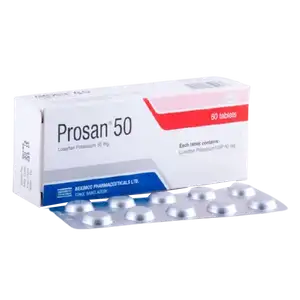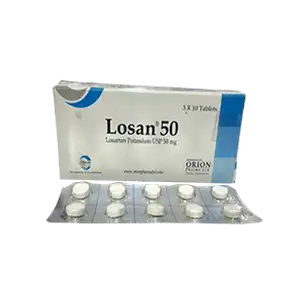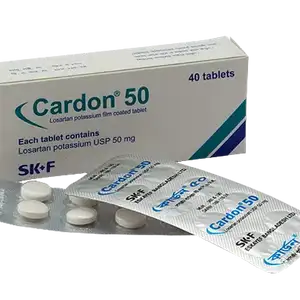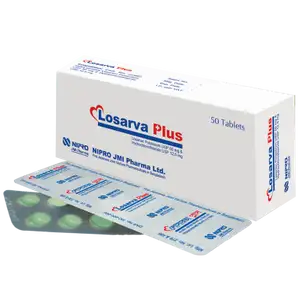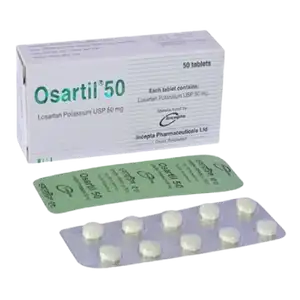
Osartil 50 Tablet
by Incepta Pharmaceuticals Ltd
৳10.00
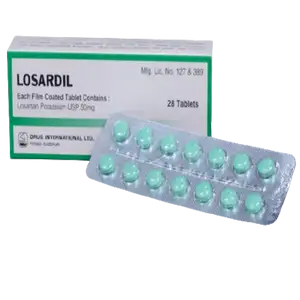
Drug International Limited
Losartan Potassium
is suitable for the treatment of hypertension. It has also been shown to reduce the risk of stroke in patients with hypertension and left ventricular hypertrophy.
Angiotensin II is formed by angiotensin I in the reaction catalyzed by angiotensin converting enzyme (ACE). It is an effective vasoconstrictor and the main vasoactive hormone of the renin-angiotensin system. An important part of the pathophysiology of hypertension. It also stimulates the adrenal cortex to secrete aldosterone. Losartan and its main active metabolite block the vasoconstriction and aldosterone secretion of angiotensin II by selectively blocking the binding of angiotensin II to AT1 receptors found in many tissues (such as vascular smooth muscle, adrenal glands). In vitro binding studies have shown that Losartan is a competitive and reversible AT1 receptor inhibitor. Neither losartan nor its active metabolite inhibit ACE (kinase II, an enzyme that converts angiotensin I to angiotensin II and breaks down bradykinin); they also do not bind to or block known important cardiovascular regulation at other hormone receptors or ion channels It is known to be important for cardiovascular regulation.
Hydrochlorothiazide is a thiazide diuretic. Thiazides affect the mechanism of renal tubular electrolyte reabsorption and directly increase the excretion of approximately the same amount of sodium and chlorine. Indirectly, the diuretic effect of hydrochlorothiazide reduces plasma volume, leading to increased plasma renin activity, increased aldosterone secretion, increased urinary potassium loss, and decreased serum potassium. Renal aldosterone binding is mediated by angiotensin II, so co-administration of angiotensin II receptor antagonists tends to reverse the potassium loss associated with these diuretics.
Losartan Potassium active metabolite levels are reduced by rifampicin and fluconazole. Concurrent usage of Losartan Potassium with hydrochlorothiazide may result in antihypertensive potentiation. Concurrent use of potassium-sparing diuretics (e.g., spironolactone, triamterene, amiloride), potassium supplements, or potassium-containing salt substitutes may result in a rise in serum potassium. Losartan's antihypertensive impact may be reduced by the nonsteroidal anti-inflammatory medication indomethacin. The concurrent use of an ACE inhibitor, an angiotensin receptor antagonist, an anti-inflammatory medication, and a thiazide diuretic raises the risk of renal impairment.
Patients allergic to any component of this product should not use the combination of losartan and hydrochlorothiazide. Because it contains hydrochlorothiazide, patients with anuria or allergic to other sulfonamides should not use this product.
Side effects are usually mild. Symptomatic hypotension, including dizziness, may occur, especially in patients with insufficient intravascular volume (eg, patients taking high-dose diuretics). Hyperkalemia occasionally occurs; some angiotensin II receptor antagonists have also reported angioedema. Dizziness; less common gastrointestinal disorders, angina, palpitations, edema, dyspnea, headache, sleep disturbances, malaise, hives, itching, rash; rarely hepatitis, atrial fibrillation, cerebrovascular accident, syncope, paraesthesia; Pancreatitis, allergic reactions, cough, depression, erectile dysfunction, anemia, thrombocytopenia, hyponatraemia, arthralgia, myalgia, kidney failure, rhabdomyolysis, tinnitus, photosensitivity, and vasculitis (including allergic purpura).
Unless necessary, angiotensin II receptor antagonists should be avoided during pregnancy. They can negatively affect blood pressure control and kidney function in fetuses and newborns; Skull defects and oligocephaly have also been reported. Information on the use of angiotensin II receptor antagonists in lactation is limited. They are not recommended for breastfeeding and there are alternative treatment options available, with better information on safety during breastfeeding.
Losartan Potassium use throughout the second and third trimesters of pregnancy lowers fetal renal function and increases fetal and neonatal morbidity and mortality. Symptomatic hypotension can develop in people who have lost intravascular volume (e.g., those on high-dose diuretics). In cirrhotic patients, the plasma concentration of Losartan Potassium is much higher. Renal impairment has been linked to changes in renal function, including renal failure.
Combined antihypertensive preparation
Do not store above 30°C. Please keep out of reach of children.
Drug International Ltd.
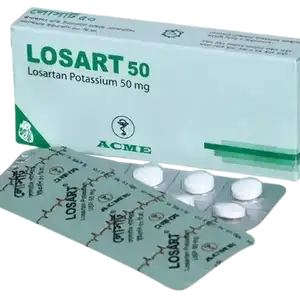
by The ACME Laboratories Ltd.
৳10.00