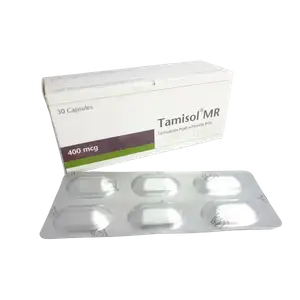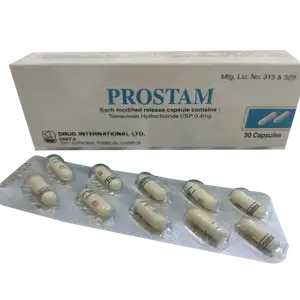
Uromax Capsule
by UniMed UniHealth Pharmaceuticals Ltd
৳12.00
Beacon Pharmaceuticals Limited

Tamsulosin Hydrochloride
Tamsulosin Hydrochloride is a medication used to treat the symptoms of benign prostatic hyperplasia (BPH).
Tamsulosin, a selective alpha1 adrenoceptor blocker, shows alpha1 A adrenoceptor selectivity in the human prostate. Blocking these adrenoceptors causes smooth muscle in the bladder neck and prostate to relax, resulting in increased urine flow and a decrease in BPH symptoms.Following oral administration of Tamsulosin hydrochloride capsule 0.4mg under fasting conditions, absorption is nearly full (90 percent). When given without food, the time to maximum concentration (Tmax) is four to five hours, while when given with food, it is six to seven hours.Human plasma protein is strongly bound to tamsulosin hydrochloride (94 percent to 99 percent ). Tamsulosin hydrochloride is extensively processed in the liver by cytochrome P 450 enzymes, with less than 10% of the dosage eliminated unaltered in urine.
Tamsulosin Hydrochloride 0.4 mg (one capsule) daily, to be taken after meal at night. The dose may be increased after 2 to 4 weeks, if necessary, to Tamsulosin Hydrochloride 0.8 mg (two capsules) once daily. If Tamsulosin Hydrochloride administration is discontinued or interrupted for several days at either the 0.4 mg or 0.8 mg dose, therapy should be started again with the Tamsulosin Hydrochloride 0.4 mg (one capsule) once daily dose. The capsule should be swallowed whole with a glass of water (about 150 ml) in the standing or sitting position. The capsule should not be crunched or chewed, as this will interfere with the modified release of the active ingredient.
The use of additional alfa1-adrenoceptor antagonists at the same time may cause hypotension. When Tamsulosin was used with atenolol, enalapril, or nifedipine, no interactions were observed. Tamsulosin plasma levels rise with concomitant cimetidine and decline with concomitant frusemide, but because levels remain within the normal range, posology does not need to be modified.During in vitro investigations with liver microsomal fractions (typical of the cytochrome P450-linked drug-metabolizing enzyme system) involving amitriptyline, salbutamol, glibenclamide, and finasteride, no interactions at the level of hepatic metabolism were observed. Diclofenac and warfarin, on the other hand, may enhance the rate of Tamsulosin elimination.
Patients with hypersensitivity to tamsulosin hydrochloride, a history of orthostatic hypotension, or severe hepatic insufficiency should not use it.As with other alpha1 blockers, a decrease in blood pressure can occur in rare situations during therapy with Tamsulosin, leading to syncope. If the patient experiences the first signs of orthostatic hypotension (dizziness, weakness), he or she should sit or lie down until the symptoms disappear.They should also be warned to avoid circumstances that could end in injury (like driving, operating machinery or performing hazardous tasks).
Dizziness, abnormal ejaculation, and, less commonly, headache, asthenia, postural hypotension, and palpitations have all been described as side effects of Tamsulosin use.
Tamsulosin should not be used during pregnancy or nursing.
During orthostatic provocation testing following the initial dose, temporary postural symptoms have occurred on rare occasions. It is not recommended for use in people who have micturition syncope.
Effects on driving and machine operation: There is no information on whether Tamsulosin impairs one's ability to drive or operate machinery. Patients should be cautioned, however, that dizziness can lead to other complications.
BPH/ Urinary retention/ Urinary incontinence
Keep it cool and dry, below 30°C, and out of direct sunlight.
Beacon Pharmaceuticals Ltd.