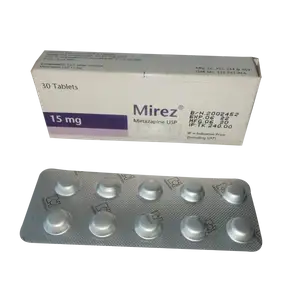
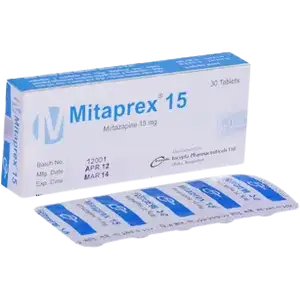
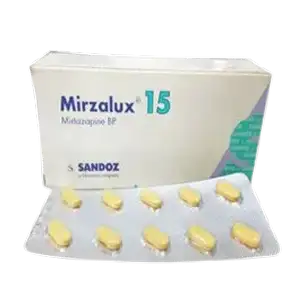
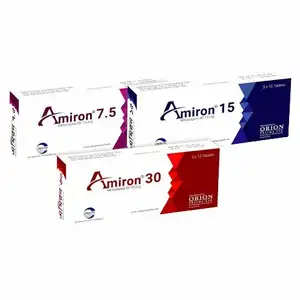
Mitrazin-15 Tablet
by GENERAL Pharmaceuticals Ltd.
৳9.00
Sun Pharmaceutical Industries Ltd.
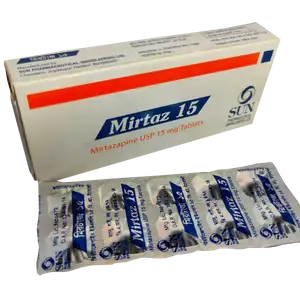
Mirtazapine
Mirtazapine Tablets are prescribed to treat serious depressive disorder (MDD).
Pharmacodynamics: Mirtazapine's mechanism of action, like those of other medicines used to treat severe depression, remains unclear. Preclinical evidence shows that mirtazapine increases central noradrenergic and serotonergic activity. Mirtazapine works as an antagonist at central presynaptic 2-adrenergic inhibitory autoreceptors and heteroreceptors, which is thought to result in an increase in central noradrenergic and serotonergic activity. Mirtazapine is a powerful 5-HT2 and 5-HT3 receptor antagonist. Mirtazapine has no affinity for the 5-HT1A or 5-HT1B receptors. Mirtazapine is a strong antagonist of histamine (H1) receptors, which may explain its sedative effects. Mirtazapine is a mild peripheral 1-adrenergic antagonist, which might explain the occasional orthostatic hypotension seen with its usage. Mirtazapine is a mild muscarinic receptor antagonist, which may explain the low prevalence of anticholinergic adverse effects associated with its usage.
Pharmacokinetics: Mirtazapine, the active component, is quickly and thoroughly absorbed following oral treatment, reaching peak plasma levels in about 2 hours. Mirtazapine binds to plasma proteins around 85 percent of the time. The average elimination half-life is 20-40 hours (26 hours in males, 37 hours in females). The elimination half-life is long enough to support once-daily dosage. Within the approved dosage range, mirtazapine has linear pharmacokinetics. Mirtazapine is substantially processed and removed four days later through the urine and feces. The major biotransformation routes are demethylation and oxidation, followed by conjugation.
Adult dose: The recommended starting dose for Mirtazapine tablets is 15 mg/day, administered in a single dose, preferably in the evening or prior to sleep. The effective dose range was generally 15 to 45 mg/day and the patients not responding to the initial 15 mg dose may benefit from dose increases up to a 30 mg to maximum of 45 mg/day. Mirtazapine has an elimination half-life of approximately 20 to 40 hours; therefore, dose changes should be made at intervals of less than 1 to 2 weeks in order to allow sufficient time for the therapeutic response to a given dose.
Use in children: Use in children are not recommended to Mirtazapine.
Missed Dose: If anyone misses a dose of mirtazapine, take it as soon as remember unless it is close to when the next dose is due. If anyone missed a dose of medication and it is close to the time of next dose, skip the missed dose and should take next dose at the regularly scheduled time. One should not take double or more than prescribed dose.
Mirtazapine interacts clinically with Monoamine Oxidase Inhibitors (MAOI) and other serotonergic medications such as tryptophan, triptans, linezolid, serotonin reuptake inhibitors, venlafaxine, lithium, tramadol, or St. John's wort. Mirtazapine has the potential to disrupt the metabolism or action of Carbamazepine, Phenytoin, or Cimetidine. While using Mirtazapine, the patient should avoid alcohol and diazepam.
Mirtazapine is contraindicated in individuals who have a known allergy to Mirtazapine or any of its excipients.
Monoamine Oxidase Inhibitors: It is not recommended to use Mirtazapine with a monoamine oxidase (MAO) inhibitor at the same time. Mirtazapine should not be taken within 14 days of starting or stopping monoamine oxidase inhibitor treatment (MAOI).
Mirtazapine's most frequent adverse effects are dizziness, sleepiness, dry mouth, increased hunger, weight gain, and others.
Category-C Pregnancy. Patients should be encouraged to tell their doctor if they get pregnant or plan to become pregnant while taking Mirtazapine. If a patient is nursing a newborn, they should tell their doctor.
Patients, families, and caregivers should be encouraged to be on the lookout for the emergence of anxiety, agitation, panic attacks, insomnia, irritability, hostility, aggressiveness, impulsivity, akathisia (psychomotor restlessness), hypomania, mania, other unusual changes in behavior, worsening of depression, and other symptoms, and suicidal thoughts, particularly early in antidepressant treatment and when the dose is increased or decreased. Mirtazapine patients should be cautioned about the possibility of developing agranulocytosis. Because of its sedative impact, mirtazapine may impair judgment, reasoning, and, in particular, motor abilities. Elevations in ALT (SGPT) that are clinically significant (three times the upper limit of the normal range) are possible.
Atypical antidepressant medications
Keep light and moisture at bay. Store at temperatures below 30o C. Keep any medications out of children's reach.
Sun Pharmaceutical Ltd.

by ACI Limited
৳8.00