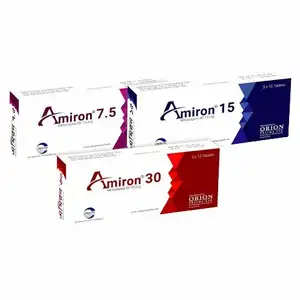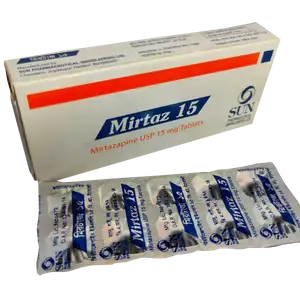
Mirtaz 15 Tablet
by Sun Pharmaceutical Industries Ltd.
৳10.00
Novartis(Bangladesh) Limited
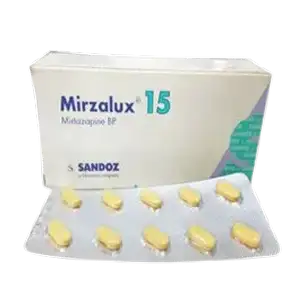
Mirtazapine
Mirtazapine Tablets are used to treat major depressive disorder (MDD) (MDD).
Pharmacodynamics: The mechanism of action of mirtazapine and other drugs that are effective in treating major depression is unclear. Evidence from preclinical studies indicates that mirtazapine can enhance central noradrenergic and serotonergic activities. These studies indicate that mirtazapine may act as an antagonist of the presynaptic center of alpha 2 adrenergic inhibitory autoreceptors and heterologous receptors, and this effect is believed to cause central noradrenergic and increased serotonergic activity. Mirtazapine is a potent 5HT2 and 5HT3 receptor antagonist. Mirtazapine has no significant affinity for the 5HT1A and 5HT1B receptors. Mirtazapine is a potent histamine (H1) receptor antagonist, which may explain its prominent sedative effect. Mirtazapine is a moderately peripheral α1 adrenergic antagonist; this property may explain the occasional orthostatic hypotension associated with its use. Mirtazapine is a moderate muscarinic receptor antagonist, which may explain the relatively low incidence of anticholinergic side effects associated with its use.
Pharmacokinetics: After oral administration of mirtazapine tablets, the active ingredient mirtazapine is rapidly absorbed and reaches the maximum plasma level after approximately 2 hours. The binding rate of mirtazapine to plasma proteins is approximately 85%. The elimination half-life is 2040 hours; (26 hours for men and 37 hours for women). The elimination half-life is sufficient to justify administration once a day. Mirtazapine has linear pharmacokinetics within the recommended dose range. Mirtazapine is extensively metabolized and is excreted in urine and feces for four days. The main pathways of biotransformation are demethylation and oxidation, followed by conjugation.
Adult dose: The recommended starting dose for Mirtazapine tablets is 15 mg/day, administered in a single dose, preferably in the evening or prior to sleep. The effective dose range was generally 15 to 45 mg/day and the patients not responding to the initial 15 mg dose may benefit from dose increases up to a 30 mg to maximum of 45 mg/day. Mirtazapine has an elimination half-life of approximately 20 to 40 hours; therefore, dose changes should be made at intervals of less than 1 to 2 weeks in order to allow sufficient time for the therapeutic response to a given dose.
Use in children: Use in children are not recommended to Mirtazapine.
Missed Dose: If anyone misses a dose of mirtazapine, take it as soon as remember unless it is close to when the next dose is due. If anyone missed a dose of medication and it is close to the time of next dose, skip the missed dose and should take next dose at the regularly scheduled time. One should not take double or more than prescribed dose.
Monoamine Oxidase Inhibitors (MAOI) and other serotonergic medicines such as tryptophan, triptans, linezolid, serotonin reuptake inhibitors, venlafaxine, lithium, tramadol, or St. John's wort have clinically significant drug-drug interactions with mirtazapine. Carbamazepine, Phenytoin, and Cimetidine's metabolism and function may be disrupted by Mirtazapine. While using Mirtazapine, the patient should avoid alcohol and diazepam.
Hypersensitivity to Mirtazapine or any of the excipients: Mirtazapine is contraindicated in individuals who have a history of hypersensitivity to Mirtazapine or any of the excipients.
Monoamine Oxidase Inhibitors: Taking Mirtazapine plus a monoamine oxidase (MAO) inhibitor at the same time is not recommended. Mirtazapine should not be used within 14 days of starting or stopping monoamine oxidase inhibitor medication (MAOI).
The most common side effects of Mirtazapine are dizziness, drowsiness, dry mouth, increased appetite, weight gain etc.
Pregnancy Category-C. Patients should be advised to notify their physician if they become pregnant or intend to become pregnant during Mirtazapine therapy. Patients should be advised to notify their physician if they are breastfeeding an infant.
Patients, their families, and their caregivers should be encouraged to be alert to anxiety, agitation, panic attacks, insomnia, irritability, hostility, aggressiveness, impulsivity, akathisia (psychomotor agitation), hypomania, mania, and other abnormalities. behavioral changes, worsening depression and suicidal ideation, especially in the early stages of antidepressant treatment and when the dose is increased or decreased. Patients receiving mirtazapine should be warned of the risk of agranulocytosis. Mirtazapine can affect judgment, thinking, especially motor skills, because it has a significant calming effect. There may be a clinically significant increase in ALT (SGPT) (≥ 3 times the upper limit of the normal range).
Atypical anti-depressant drugs
Keep away from light and moisture. Store below 30º C. Keep all medicine out of the reach of children.
SANDOZ (A Novartis Division)
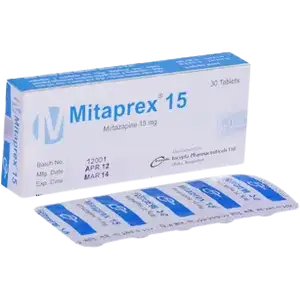
by Incepta Pharmaceuticals Ltd
৳8.00