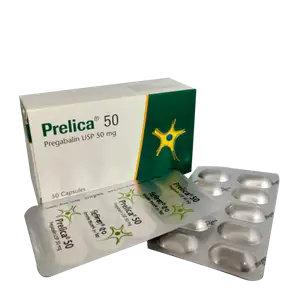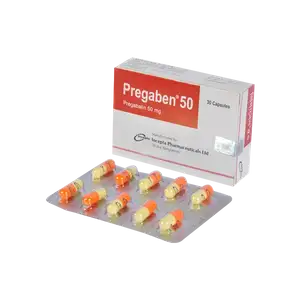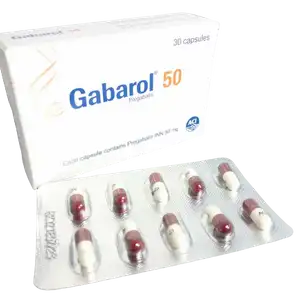
Pregaba 50 Capsule
by Opsonin Pharma Limited
৳15.00
UniMed UniHealth Pharmaceuticals Ltd
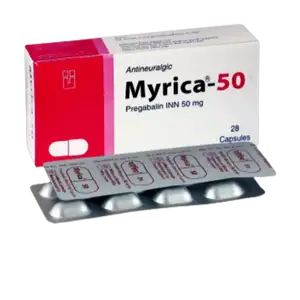
Pregabalin
Management of neuropathic pain associated with diabetic peripheral neuropathy
Management of post-herpetic neuralgia
Adjunctive therapy for adult patients with partial-onset seizures
Management of fibromyalgia
Neuropathic pain associated with spinal cord injury.
Pregabalin is a structural derivative of the inhibitory neurotransmitter gamma-aminobutyric acid (GABA). It does not bind directly to GABAA, GABAB, or benzodiazepine receptors. Pregabalin binds with high affinity to the alpha-2-delta site (an auxiliary subunit of voltage-gated calcium channels) in central nervous system tissues.
In general, it is recommended that patients be started on a total daily dose no greater than 150 mg/day (75 mg two times a day, or 50 mg three times a day). Based on individual patient response and tolerability, the dose may be increased to a maximum dose of 600 mg/day.
There are no significant interactions between Pregabalin with other antiepileptic drugs & oral contraceptives. Pregabalin may potentiate the effects of ethanol and lorazepam.
Pregabalin is contraindicated in patients with known hypersensitivity to pregabalin or any of its components.
The most common side effects include dizziness, somnolence, dry mouth, edema, blurred vision, weight gain, and abnormal thinking.
The pregnancy category of Pregabalin is C. So it should only be used if the potential benefit justifies the potential risks to the fetus.
Discontinuation of Pregabalin without tapering may produce insomnia, nausea, headache, and diarrhea. So it should be tapered gradually over a minimum of 1 week rather than discontinued abruptly.
Adjunct anti-epileptic drugs.
Keep in a cool & dry place (below 30° C), protected from light & moisture. Keep out of the reach of children.
UniMed UniHealth Pharmaceuticals Ltd

by SK+F
৳15.00