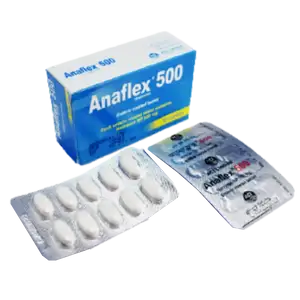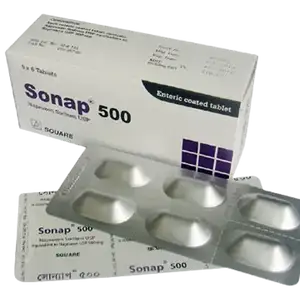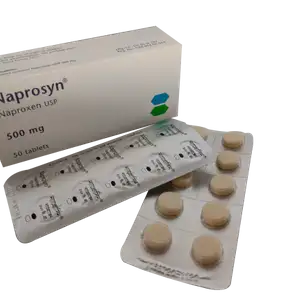
Naprosyn 500 Tablet
by Radiant Pharmaceuticals Limited
৳16.00
Novatek Pharmaceuticals Ltd.
Naproxen Sodium
Rheumatoid arthritis, osteoarthritis, ankylosing spondylitis, juvenile arthritis, tendonitis, bursitis, and acute gout are among the conditions for which naproxen is prescribed. It's also used to treat pain and dysmenorrhea in women with primary dysmenorrhea.
Naproxen is an anti-inflammatory, analgesic, and antipyretic non-steroidal anti-inflammatory medication (NSAID). It is quickly absorbed from the gastrointestinal tract and has a bioavailability of 95%.
Naproxen Tablet-
Rheumatoid arthritis, osteoarthritis and ankylosing spondylitis: The usual dose is 500-1000 mg daily in two divided doses after meals.
Management of pain, primary dysmenorrhea, acute tendonitis & bursitis: Recommended starting dose is 500 mg followed by 500 mg every 12 hours or 250 mg every 6-8 hours. The initial total daily dose should not exceed 1250 mg and thereafter, the total daily dose should not exceed 1000 mg.
Acute gout: Recommended starting dose is 750 mg followed by 250 mg every 8 hours until the attack has subsided.
Naproxen Suspension-
For Juvenile rheumatoid arthritis: The usual dose for children over 2 years is 10 mg/kg/day given as two divided doses at 12-hours intervals. Therapy in children under 2 years of age is not recommended.
Naproxen Gel-
Is to be applied 2-6 times a day as required and is not recommended for use in children.
ACE inhibitors: ACE inhibitors have a reduced antihypertensive impact.
Patients who have a known hypersensitivity to naproxen should avoid using it. Patients who have had asthma, urticaria, or allergic-type reactions after taking aspirin or other NSAIDs should not take it. In the situation of coronary artery bypass graft (CABG) surgery, it is contraindicated for the treatment of perioperative discomfort.
The following are the most commonly reported adverse effects:
Naproxen is classified as a pregnancy category C by the US Food and Drug Administration. So, unless the potential benefits to the other outweigh the potential hazards to the unborn, Naproxen should be avoided during pregnancy and nursing.
Bromhexine should be taken with caution in patients with a history of peptic ulcer disease because mucolytics can disturb the stomach mucosa. Asthmatic patients should also take precautions. Patients with significant hepatic or renal impairment may have a decreased clearance of bromhexine and its metabolites.
Drugs for Osteoarthritis, Drugs used for Rheumatoid Arthritis, Non-steroidal Anti-inflammatory Drugs (NSAIDs)
Keep below 30°C temperature, protected from light & moisture. Keep out of the reach of children.
Amico Laboratories Ltd.

by Aristopharma Ltd.
৳11.00