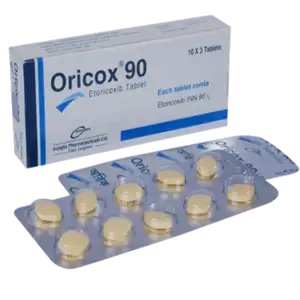
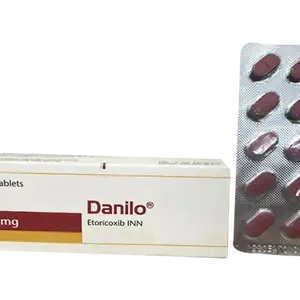
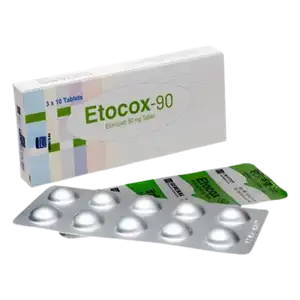
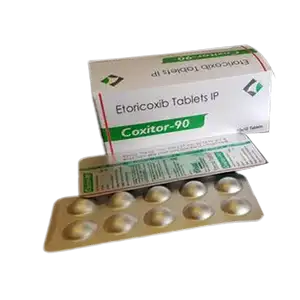
Indications of Oricox 90
Etoricoxib is indicated for the symptomatic relief of-
- Osteoarthritis (OA)
- Rheumatoid arthritis (RA)
- Ankylosing spondylitis, and
- The pain and signs of inflammation are associated with acute gouty arthritis.
- For the short-term treatment of moderate pain associated with dental surgery.
Pharmaceutical Name of Oricox 90
Incepta Pharmaceuticals Ltd.
Pharmacology
Etoricoxib could be a strong, orally dynamic cyclooxygenase-2 (COX-2) particular inhibitor inside, and altogether over, the clinical dosage run. Two isoforms of cyclooxygenase have been distinguished: cyclooxygenase-1 (COX-1) and cyclooxygenase-2 (COX-2). COX-1 is capable of prostaglandin-mediated ordinary physiologic capacities such as gastric cytoprotection and platelet accumulation. Hindrance of COX-1 by nonselective NSAIDs has been related to gastric harm and restraint of platelet conglomeration. COX-2 has been appeared to be essentially capable of the union of prostanoid arbiters of torment, aggravation, and fever. Particular restraint of COX-2 by etoricoxib (inside the clinical dosage extend) diminishes these clinical signs and side effects with diminished potential for Gl poisonous quality and impacts on platelet conglomeration. Etoricoxib created dose-dependent restraint of COX-2 without the hindrance of COX-1 at dosages up to 150 mg every day. Etoricoxib did not hinder the gastric prostaglandin blend.
Dosage & Administration
Adult and adolescent over 16 years:
- Osteoarthritis: The recommended dose is 30 mg once daily. In some patients with insufficient relief from symptoms, an increased dose of 60 mg once daily may increase efficacy.
- Rheumatoid arthritis: The recommended dose is 90 mg once daily.
- Ankylosing spondylitis: The recommended dose is 90 mg once daily.
- Acute gouty arthritis: The recommended dose is 120 mg once daily. In clinical trials for acute gouty arthritis, Etoricoxib was given for 8 days.
- Postoperative dental surgery pain: The recommended dose is 90 mg once daily, limited to a maximum of 3 days.
Some people may require extra analgesia after surgery. Because Etoricoxib's cardiovascular hazards grow with dose and length of exposure, the shortest possible duration and lowest effective daily dose should be used. Especially in individuals with osteoarthritis, the patient's requirement for symptomatic alleviation and response to therapy should be re-evaluated on a regular basis.
Interaction of Oricox 90
With medicine:
- Oral anticoagulants: In subjects stabilized on chronic warfarin therapy, the administration of Etoricoxib was associated with an increase in prothrombin time.
- Diuretics, ACE inhibitors and Angiotensin II Antagonists: NSAIDs may reduce the effect of diuretics and other antihypertensive drugs.
- Acetylsalicylic Acid: Etoricoxib can be used concomitantly with acetylsalicylic acid at doses used for cardiovascular prophylaxis (low-dose acetylsalicylic acid).
- Ciclosporin and tacrolimus: Although this interaction has not been studied with Etoricoxib, coadministration of ciclosporin or tacrolimus with any NSAID may increase the nephrotoxic effect of ciclosporin or tacrolimus.
- Lithium: NSAIDs decrease lithium renal excretion and therefore increase lithium plasma levels.
With food & others: Take without regards to meals.
Contraindications
- Hypersensitivity to the active substance or to any of the excipients.
- Active peptic ulceration or active gastro-intestinal (Gl) bleeding.
- Patients who have experienced bronchospasm, acute rhinitis, nasal polyps, angioneurotic oedema, urticaria, or allergic-type reactions after taking acetylsalicylic acid or NSAIDs including COX-2 (cyclooxygenase-2) inhibitors.
- Pregnancy and lactation.
- Severe hepatic dysfunction (serum albumin <25 g/l or Child-Pugh score 10).
- Estimated renal creatinine clearance <30 ml/min.
- Children and adolescents under 16 years of age.
- Inflammatory bowel disease.
- Congestive heart failure (NYHA ll-IV).
- Patients with hypertension whose blood pressure is persistently elevated above 140/90 mmHg and has not been adequately controlled.
- Established ischaemic heart disease, peripheral arterial disease, and/or cerebrovascular disease.
Side Effects of Oricox 90
Palpitation, fatigue, influenza-like symptoms, and ecchymosis are common side effects; less common side effects include dry mouth, taste disturbance, mouth ulcer, appetite and weight change, atrial fibrillation, transient ischaemic attack, chest pain, flushing, cough, dyspnoea, epistaxis, anxiety, mental acuity impairment, paraesthesia, electrolyte disturbance, myalgia, and arthralgia; very rarely confusion.
Pregnancy & Lactation
The utilize of Etoricoxib, as with any medicate substance known to restrain COX-2, isn't suggested in ladies endeavoring to conceive. It isn't known whether Etoricoxib is excreted in human drain. Etoricoxib is excreted within the drain of lactating rats. Ladies who utilize Etoricoxib must not breastfeed.
Precautions & Warnings
- Caution is advised with treatment of patients most at risk of developing a gastrointestinal complication with NSAIDs; the elderly, patients using any other NSAID or acetylsalicylic acid concomitantly or patients with a prior history of gastrointestinal disease, such as ulceration and Gl bleeding.
- Patients with significant risk factors for cardiovascular events (e.g. hypertension, hyperlipidaemia, diabetes mellitus, smoking) should only be treated with Etoricoxib after careful consideration.
- Administration of Etoricoxib may cause a reduction in prostaglandin formation and, secondarily, in renal blood flow, and thereby impair renal function. Monitoring of renal function in such patients should be considered.
- Caution should be exercised in patients with a history of cardiac failure, left ventricular dysfunction, or hypertension and in patients with pre-existing edema from any other reason.
- Any patients with symptoms and/or signs suggesting liver dysfunction, or in whom an abnormalliver function test has occurred, should be monitored. If signs of hepatic insufficiency occur, or if persistently abnormal liver function tests (three times the upper limit of normal) are detected, Etoricoxib should be discontinued.
- Etoricoxib should be discontinued at the first appearance of skin rash, mucosal lesions, or any other sign of hypersensitivity.
- Etoricoxib may mask fever and other signs of inflammation. Caution should be exercised when co-administering Etoricoxib with warfarin or other oral anticoagulants.
Therapeutic Class
Non-steroidal Anti-inflammatory Drugs (NSAIDs).
Storage Conditions
Keep away from light and moisture in a cool, dry location (below 30° C). Keep out of children's reach.
Generic of Oricox 90
Etoricoxib.