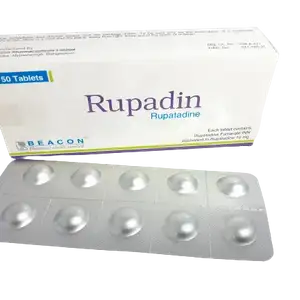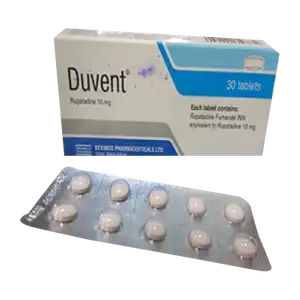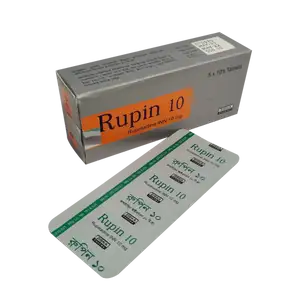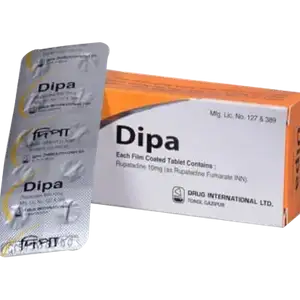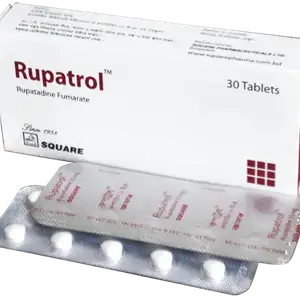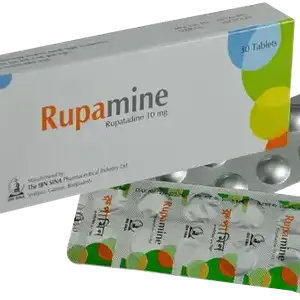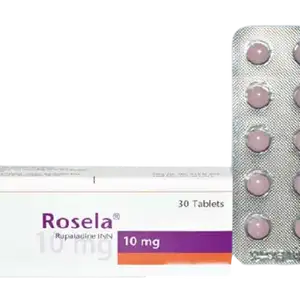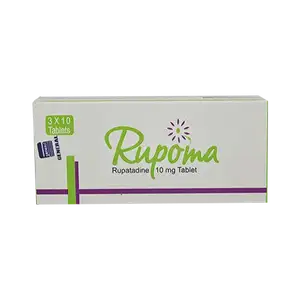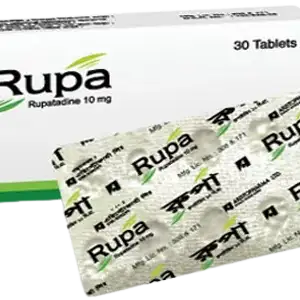
Rupa Tablet
by Aristopharma Ltd.
৳12.00
SK+F

Rupatadine Fumarate
Rupatadine is used to treat the symptoms of seasonal and perennial allergic rhinitis, as well as urticaria.
Rupatadine is a non-sedative antagonist of histamine H1-receptors with a lengthy half-life. It also inhibits platelet activating factor (PAF) (PAF). Histamine and PAF both produce broncho constriction, which increases vascular permeability and serves as a mediator in the inflammatory process. Rupatadine has a better therapeutic impact than a single antihistamine because of its dual mechanism of action. Rupatadine also inhibits mast cell degranulation triggered by immunological and non-immune stimuli, as well as the release of cytokines, particularly tumor necrosis factor alpha (TNF), in human mastocytes and monocytes.
Adults and adolescents (over 12 years): The recommended dose is 10 mg once a day. Rupatadine may be taken with or without food.
Children aged 2 to 11 year:
When taking Rupatadine 20 mg with ketoconazole or erythromycin at the same time, the systemic exposure is increased. When these drugs, as well as other inhibitors of the CYP3A4 isozyme, are used together, rupatadine should be used with caution. When used with statins, CNS depressants, or alcohol, rupatadine should be used with caution.
Grapefruit and grapefruit juice should not be eaten at the same time as Rupatadine.
Intolerance to Rupatadine or any of the excipients.
Asthenia, dizziness, and drowsiness are all common symptoms. Uncommon: Increased appetite, arthralgia, back pain, dizziness, constipation, cough, diarrhea, dry throat, epistaxis, fever, gastrointestinal discomfort, increased risk of infection, irritability, malaise, myalgia, nasal dryness, nausea, oropharyngeal pain, rash, thirst, vomiting, weight gain Palpitations and tachycardia are uncommon.
There are no clinical studies on the effects of Rupatadine on a pregnant woman. Rupatadine should not be used by pregnant women unless the possible benefit outweighs the risk to the baby. There is no information on whether Rupatadine is excreted in breast milk. As a result, it should not be used during nursing unless the benefits to the mother outweigh the danger to the newborn.
Rupatadine should be taken with caution in patients who have a known QT interval prolongation, uncorrected hypokalemia, or persistent proarrhythmic circumstances including clinically severe bradycardia or acute myocardial ischemia. In senior people, rupatadine should be administered with caution (65 years and older). The use of Rupatadine 10 mg tablets in patients with compromised renal or liver function is currently not indicated due to a lack of clinical data.
Non-sedating antihistamines
Keep below 30ºC temperature, protected from light & moisture. Keep out of the reach of children.
Eskayef Pharmaceuticals Ltd.
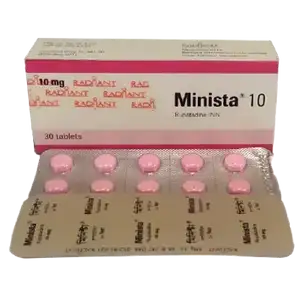
by Radiant Pharmaceuticals Limited
৳12.03