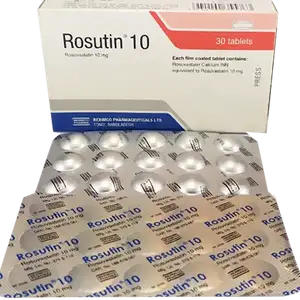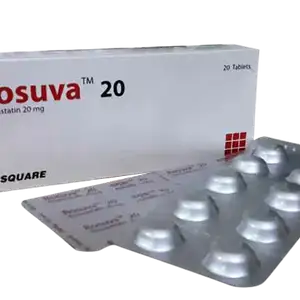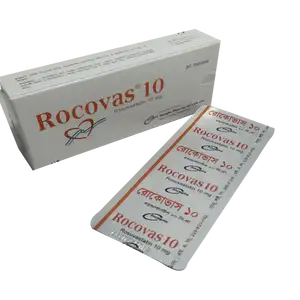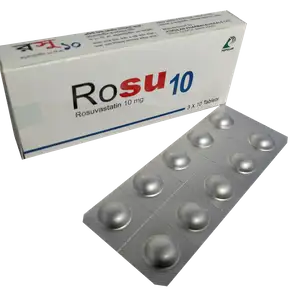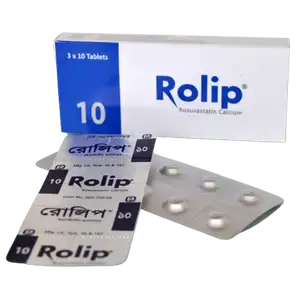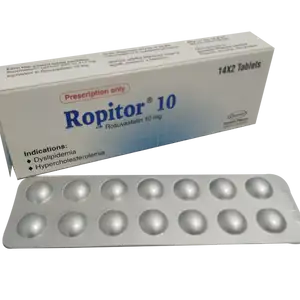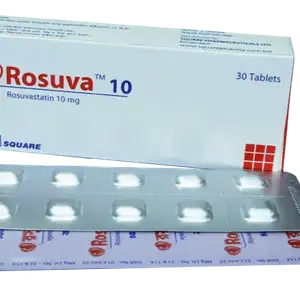
Rosuva 10 Tablet
by Square Pharmaceuticals Limited
৳22.00
Aristopharma Ltd.
Rosuvastatin.
Rosuvastatin is indicated in Heterozygous Hypercholesterolemia (Familial and Non familial)
Rosuvastatin could be a specific and competitive inhibitor of HMG-CoA reductase, the rate-limiting chemical that changes over 3-hydroxy-3-methyl glutaryl coenzyme A to mevalonate, a forerunner of cholesterol. Rosuvastatin produces its lipid-modifying impacts in two ways. To begin with, it increments the number of hepatic LDL receptors on the cell surface to upgrade take-up and catabolism of LDL. Moment, Rosuvastatin inhibits hepatic amalgamation of VLDL, which diminishes the overall number of VLDL and LDL particles.
Dose range: 5-40 mg once daily. Use 40 mg dose only for patients not reaching LDL-C goal with 20 mg
HoFH: Starting dose 20 mg/day.
Pediatric patients with HeFH: 5-10 mg/day for patients 8 to less than 10 years of age, and 5-20 mg/day for patients 10 to 17 years of age.
Pediatric patients with HoFH: 20 mg/day for patients 7 to 17 years of age.
Rosuvastatin can be taken at any time of day, with or without meals.
Remarkable drug interactions of Rosuvastatin are-
Cyclosporine: Combination increases Rosuvastatin exposure. Rosuvastatin dose should be limited to 5 mg once daily.
Gemfibrozil: Combination should be avoided. If used together, the Rosuvastatin dose should be limited to 10 mg once daily.
Lopinavir/Ritonavir or atazanavir/ritonavir: Combination increases Rosuvastatin exposure. Rosuvastatin dose should be 10 mg once daily.
Coumarin anticoagulants: Combination prolongs international normalized ratio (INR). Stable INR should be achieved prior to starting Rosuvastatin. INR should be monitored frequently until stable upon initiation or alteration of Rosuvastatin therapy.
Concomitant lipid-lowering therapies: Use with fibrates and niacin products may increase the risk of skeletal muscle effects.
Rosuvastatin is contraindicated if-
Known hypersensitivity to product components Liver disease, which may include unexplained persistent elevations in hepatic transaminase levels in Pregnant women and women who may become pregnant Nursing mothers.
Rosuvastatin is for the most part well endured. The foremost visit unfavorable occasions thought to be related to Rosuvastatin were cerebral pain, myalgia, clogging, asthenia, stomach torment, and queasiness.
The safety of the drug in pregnant women has yet to be determined. Rosuvastatin is not known whether or whether it is excreted in human milk.
Skeletal muscle effects (e.g., myopathy and rhabdomyolysis): Risks increase with the use of 40 mg dose, advanced age (>65 years), hypothyroidism, renal impairment, and combination use with cyclosporine, lopinavir/ritonavir, atazanavir/ritonavir, or certain other lipid-lowering drugs. Patients should be advised to promptly report unexplained muscle pain, tenderness, or weakness. Rosuvastatin can be discontinued if signs or symptoms appear.
Liver enzyme abnormalities and monitoring: Persistent elevations in hepatic transaminases can occur. Liver enzymes should be monitored before and during treatment.
It is unknown whether or not it is safe for pregnant women. Rosuvastatin isn't known if it's excreted in human milk.
Even if the canister appears to be empty, it should not be punctured, broken, or incinerated. Avoid storing in direct sunlight or in a hot environment. Keep it below 30°C. Keep your distance from the eyes. Keep your distance from youngsters.
Aristopharma Ltd.
by UniMed UniHealth Pharmaceuticals Ltd
৳25.00