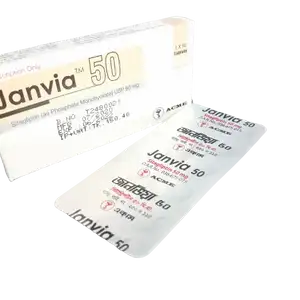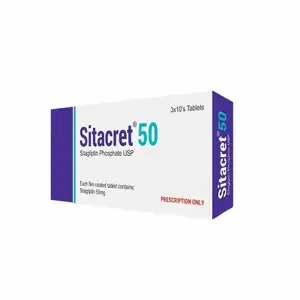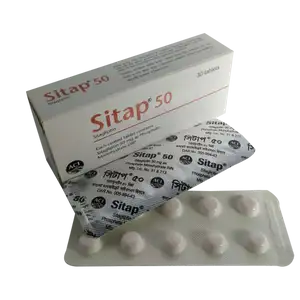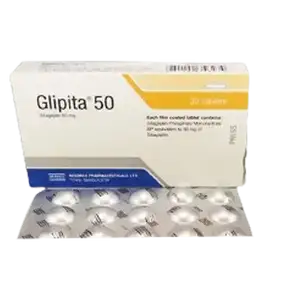
Glipita 50 Tablet
by Beximco Pharmaceuticals Ltd.
৳13.00
Square Pharmaceuticals Limited
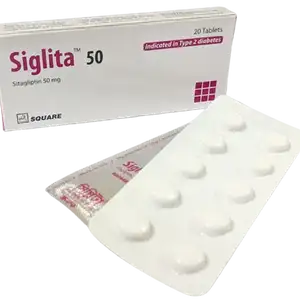
Usually shown as an aide to eat less and work out to progress glycemic control in grown-ups with sort 2 diabetes mellitus when treatment with both sitagliptin and metformin is fitting. Vital impediments of use: This ought to not be utilized in patients with sort 1 diabetes or for the treatment of diabetic ketoacidosis, because it would not be efective in these settings. This has not been examined in patients with a history of pancreatitis. It is obscure whether patients with a history of pancreatitis are at expanded hazard for the improvement of pancreatitis whereas utilizing this.
This tablet combines two antihyperglycemic specialists with complementary components of activity to progress glycemic control in patients with sort 2 diabetes. Sitagliptin, a dipeptidyl peptidase-4 (DPP-4) inhibitor, and Metformin HCl, a part of the biguanide course. Sitagliptin could be a dipeptidyl peptidase-4 (DPP-4) inhibitor, which is accepted to apply its activities in patients with sort 2 diabetes by abating the inactivation of incretin hormones. Incretin hormones, counting glucagon-like peptide-1 (GLP-1) and glucose-dependent insulinotropic polypeptide (GIP), are discharged by the digestive system all through the day, and levels are expanded in reaction to a dinner. These hormones are quickly inactivated by the protein, DPP-4.
Measurements of film-coated tablet: The measurement of this tablet ought to be individualized on the premise of the patient's current regimen, efectiveness, and tolerability whereas not surpassing the greatest prescribed day by day measurements of 100 mg sitagliptin and 2000 mg metformin. Beginning combination treatment or upkeep of combination treatment ought to be individualized and cleared out to the caution of the wellbeing care provider. This tablet ought to by and large be given twice day by day with dinners, with slow dosage heightening, to decrease the gastrointestinal (GI) side efects due to metformin. The beginning dosage of this tablet ought to be based on the patient’s current regimen. This tablet ought to be given twice every day with meals. The suggested beginning measurements in patients not right now treated with metformin is 50 mg sitagliptin/500 mg metformin hydrochloride twice day by day, with progressive measurements acceleration suggested to decrease gastrointestinal side efects related with metformin.
Direction for use of IV Injection: Omeprazole lyophilized powder and water for injection is for intravenous administration only and must not be given by any other route. Omeprazole IV injection should be given as a slow intravenous injection. The solution for IV injection is obtained by adding 10 ml water for injection to the vial containing powder. After reconstitution the injection should be given slowly over a period of at least 2 to 5 minutes at a maximum rate of 4 ml/minute. Use only freshly prepared solution. The solution should be used within 4 hours of reconstitution.
Direction for use of IV Infusion: Omeprazole IV infusion should be given as an intravenous infusion over a period of 20-30 minutes or more. The contents of one vial must be dissolved in 100 ml saline for infusion or 100 ml 5% Dextrose for infusion. The solution should be used within 12 hours when Omeprazole is dissolved in saline and within 6 hours when dissolved in 5% Dextrose. The reconstituted solution should not be mixed or co-administered in the same infusion set with any other drug.
Omeprazole can cause diazepam, warfarin, and phenytoin to be eliminated more slowly. When Omeprazole is added to the therapy, the amount of warfarin or phenytoin may need to be reduced. Omeprazole does not appear to interact with theophylline, propranolol, or antacids.
Omeprazole is not recommended for people who have a history of hypersensitivity to any of the formulation's components.
Omeprazole is well tolerated in most people. Nausea, stomach colic, paresthesia, dizziness, and headache have all been reported to be minor and transitory, with no dosage decrease.
Omeprazole is classified as pregnancy category C by the US Food and Drug Administration. However, the findings of three prospective epidemiological studies show that Omeprazole has no negative effects on pregnancy or the health of the fetus/newborn child. There is no information on Omeprazole's entry into breast milk or its effects on the newborn. If the usage of Omeprazole is deemed necessary, breast-feeding should be terminated.
When a stomach ulcer is suspected, the potential of gastric cancer should be ruled out before starting Omeprazole treatment, as the medication may relieve symptoms while delaying detection.
Inhibitor of the Proton Pump
Keep away from light and heat in a dry area. Keep out of children's reach.
Square Pharmaceuticals Ltd.
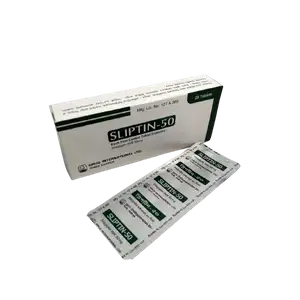
by Drug International Limited
৳15.05