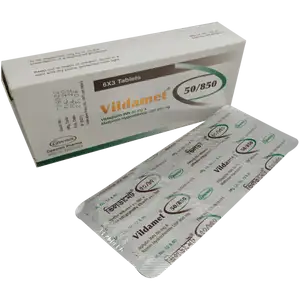
Vildamet 50/850 Tablet
by Opsonin Pharma Limited
৳24.00
Pacific Pharmaceuticals Ltd.
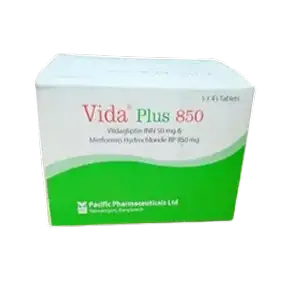
Vildagliptin + Metformin Hydrochloride
For patients with type 2 diabetes who cannot adequately control diabetes with metformin hydrochloride or vildagliptin alone or who have received a combination of vildagliptin and metformin hydrochloride, this product can be used as a supplement to diet and exercise to improve blood sugar control.
Vildagliptin works primarily by inhibiting DPP4 (dipeptidyl peptidase 4), which is responsible for the degradation of the incretin hormones GLP1 (glucagon-like peptide 1) and GIP (glucose-dependent insulin-promoting polypeptide). Administration of vildagliptin leads to rapid and complete inhibition of DPP4 activity, leading to increased endogenous levels of the incretin hormones GLP1 and GIP on an empty stomach and after meals. By increasing endogenous levels of these incretin hormones, vildagliptin increases insulin secretion in pancreatic β cells and reduces glucagon secretion in α cells. Due to increased levels of incretin hormones, the increase in the insulin / glucagon ratio during hyperglycemia leads to a decrease in fasting and postprandial hepatic glucose production, which leads to a decrease in blood sugar.
Metformin hydrochloride is a biguanide oral hypoglycemic agent used to treat type 2 diabetes. It lowers basal and postprandial blood sugar. Its mechanism of action is different from that of sulfonylureas and does not produce hypoglycemia. Glucosamine reduces liver glucose production, reduces intestinal glucose absorption, and improves insulin sensitivity by increasing peripheral glucose uptake and utilization.
Adults: Depending on the patient's current metformin dose, this combination can be started twice a day, 1 tablet in the morning and 1 tablet in the evening. Patients who receive vildagliptin and metformin as separate tablets can switch to this combination, where the dose of each component is the same. It is not recommended to use vildagliptin doses greater than 100 mg. There is no clinical experience of triple combination of vildagliptin and metformin with other hypoglycemic agents. Taking this combination with or after meals can reduce gastrointestinal symptoms associated with metformin.
When vildagliptin (100 mg once daily) was co-administered with metformin hydrochloride (1,000 mg once daily), no clinically relevant pharmacokinetic interactions were observed. The possibility of vildagliptin drug interaction is very small. Since vildagliptin is not an enzyme substrate of cytochrome P (CYP) 450, nor does it inhibit or induce the CYP 450 enzyme, it is unlikely to interact with drugs that are substrates, inhibitors or inducers of these enzymes. As a result of these studies, after co-administration with vildagliptin, no combination with other oral hypoglycemic drugs (glibenclamide, pioglitazone, metformin hydrochloride), amlodipine, digoxin, ramipril , Simvastatin, valsartan or warfarin clinically relevant interactions. On the other hand, furosemide, nifedipine and glibenclamide will increase the Cmax and AUC of metformin in the blood without changing the renal clearance of metformin.
This combination is contraindicated in patients known to be allergic to vildagliptin or metformin hydrochloride or any excipient. Patients with kidney disease or kidney failure, acute myocardial infarction, and sepsis are contraindicated. Patients with congestive heart failure and patients with acute or chronic metabolic acidosis (including diabetic ketoacidosis), patients with or without coma are also contraindicated. Patients receiving radiological studies of intravascular administration of iodine-containing contrast agents should temporarily stop using this product, because the use of such products can cause acute changes in kidney function.
The most common side effects are headache, tremor, dizziness, nausea, hypoglycaemia etc.
There are no adequate and well-controlled studies on pregnant women, so this combination should not be used during pregnancy unless the potential benefit justifies the potential risk to the fetus. The components of this combination have not been studied. Since it is not clear whether vildagliptin and/or metformin hydrochloride will be excreted from human milk, this combination should not be used in breastfeeding women.
Due to accumulation of metformin, lactic acidosis can occur. If metabolic acidosis is suspected, treatment should be stopped and hospitalized immediately. Patients with normal kidney function should be monitored for serum creatinine at least once a year, while patients with serum creatinine levels above the upper limit of normal and elderly patients should be monitored 2 to 4 times a year. . For elderly patients who may have impaired kidney function (for example, when they start taking antihypertensives, diuretics, or non-steroidal anti-inflammatory drugs), special care should be taken. It is recommended to monitor liver function tests (LFTs) before you start taking the drug, every three months for the first year and regularly thereafter. If the transaminase level is elevated, the patient should undergo a second liver function assessment to confirm the findings, and then frequent liver function tests until the abnormality returns to normal. If AST or ALT lasts for 3 x ULN, vildagliptin and metformin tablets should be discontinued. Patients with jaundice or other signs of liver dysfunction. After vildagliptin and metformin treatment is stopped and LFT returns to normal, vildagliptin and metformin treatment should not be restarted. Vidagliptin and metformin tablets should be discontinued 48 hours before elective surgery under general anesthesia, and generally should not be resumed earlier than 48 hours after surgery.
Combination Oral hypoglycemic preparations
Keep in a dry place away from light and heat. Keep out of the reach of children.
Pacific Pharmaceuticals Ltd.