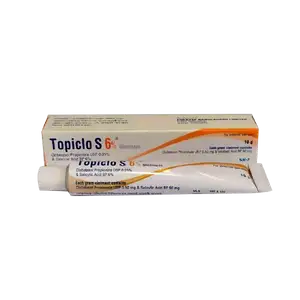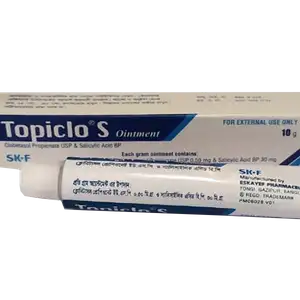
Topiclo S Ointment
by SK+F
৳70.00
UniMed UniHealth Pharmaceuticals Ltd
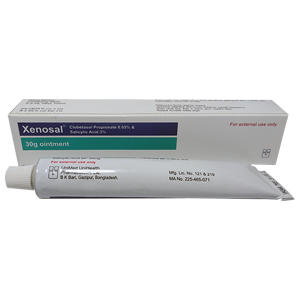
Xenosal 30g from UniMed UniHealth Pharmaceuticals & Generic is Clobetasol Propionate 0.05% + Salicylic Acid 3%. This ointment is indicated for the relief of the inflammatory manifestations of hyperkeratotic and dry corticosteroid responsive dermatoses such as, psoriasis, chronic atopic dermatitis, neurodermatitis (licehen Simplex, Chronicus), lichen planus, eczema (including nummular eczema, hand eczema, eczematous dermatitis), seborrheic dermatitis of the scalp, ichthyosis vulgaris and other ichthyotic conditions.
This ointment has abandoned hyperplasia such as psoriasis, chronic atopic dermatitis, qi dermatitis (simple, chronic), squamous dermatitis, atopic dermatitis (including image eczema, hand eczema, atopic dermatitis) And is used to relieve the inflammatory symptoms of psoriasis-reactive dermatitis., seborrheic dermatitis of the scalp, ichthyosis vulgaris, and other ichthyosis conditions.
Corbetasol propionate high potency corticosteroid. Corticosteroids reduce inflammation by stabilizing the lysosomal membrane of leukocytes, preventing the release of acidic hydrolases that destroy leukocytes; inhibits the accumulation of macrophages in inflamed areas; reduce the adhesion of leukocytes to the capillary endothelium; reduce the permeability of the capillary walls and the formation of edema; reduce additional ingredients; histamine antagonistic activity and release of kinins from the substrate; and reduced fibroblast proliferation, collagen deposition, and subsequent scar tissue formation.
Salicylic acid has strong keratolytic and mild antiseptic effects when applied topically. It softens and destroys the stratum corneum by increasing endogenous hydration causing swelling, softening and subsequent sloughing of the stratum corneum. In high concentrations, salicylic acid has a caustic effect. It also has low antifungal and antibacterial activity.
Adult: Apply a thin layer of this ointment to the affected skin areas twice daily and rub in gently & completely. For some patients, adequate maintenance therapy may be achieved with less frequent application. As with other higher active corticosteroids, therapy should be discontinued when control has been achieved. If no improvement is seen within 2 weeks, reassessment of diagnosis may be necessary. It should not be used with occlusive dressing. Treatment beyond 2 consecutive weeks is not exceeding 50 gm/week because of the potential for the drug to suppress the hypothalamic pituitary adrenal axis.
Children: Use in pediatric patients under 12 years of age is not recommended.
For external use only.
There are no reports of interactions with Clobetasol Propionate ointments or creams. As shown, there are no known interactions of salicylic acid when used. However, topical salicylic acid can increase the absorption of other drugs applied topically. Therefore, avoid using salicylic acid ointment or other topical agents on the same skin area.
ClobetasolPropionatev is contraindicated in patients with known hypersensitivity to clobetasol propionate. This preparation is also contraindicated in the treatment of primary infected bacterial or fungal skin lesions if an anti-infective agent is not used concurrently, in primary viral skin infections (ie. herpes simplex, vaccination and chickenpox) and tuberculosis skin lesions. Clobetasol propionate is also contraindicated in skin conditions in children under one year of age, including dermatitis and rashes. Salicylic acid is contraindicated in patients with known hypersensitivity to salicylate or to any of the ingredients in the preparation.
As with other topical corticosteroids, long-term use of many Clobetasol Propionates and systemic absorption may occur sufficient to characterize cortisol hyperplasia, which treats large sites. This effect is more likely to occur when using infants and closed dressings. Local atrophy may occur after long-term treatment. In rare cases, corticosteroids may have induced a brain-like illness that treats (or discontinues) psoriasis. Clobetasol Propionate is generally well tolerated, but discontinue administration as soon as signs of hypersensitivity appear. Sensitive reactions, dryness and irritation can occur when using Salicylic Acid.
The use of topical corticosteroids in pregnant animals may cause abnormalities in fetal development. The relevance of this finding to humans has not yet been determined. The safety of using Clobetasol Propionate during breast-feeding has not been established. However, the use of Clobetasol Propionate during pregnancy and lactation should only be considered if the expected benefit to the mother outweighs any possible risk to the fetus. Medicines in this class should not be widely used in patients who are pregnant in large quantities or for long periods. Although there are no contraindications to the use of salicylic acid ointment during pregnancy and lactation, the safety has not been established. Therefore, care should be taken while using salicylic acid ointment.
It is not suitable for long time use with high concentration and a large area of the body. Altered peripheral circulation or diabetes. Avoid damaged skin, mouth, eyes, mucous membranes, and anogenital area.
Clobetasol / Clobetasone & Combined Preparations
Store in a cool and dry place, protected from light.
UniMed UniHealth Pharmaceuticals Ltd
Clobetasol Propionate + Salicylic Acid
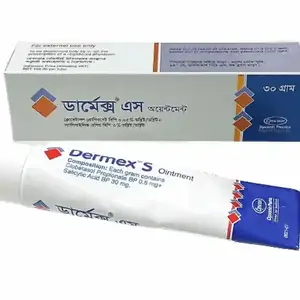
by Opsonin Pharma Limited
৳150.00