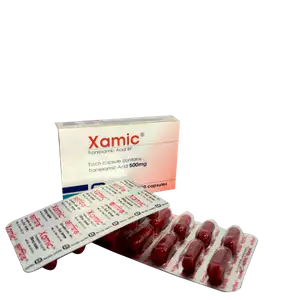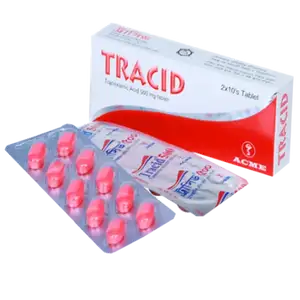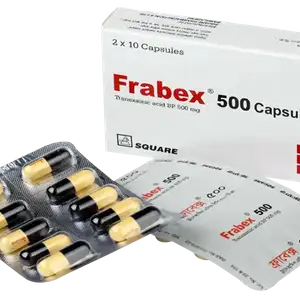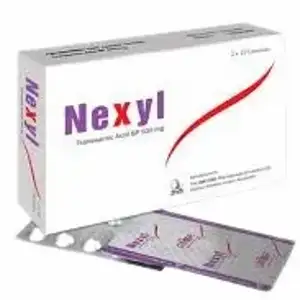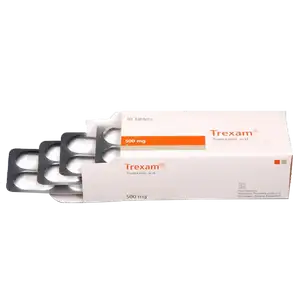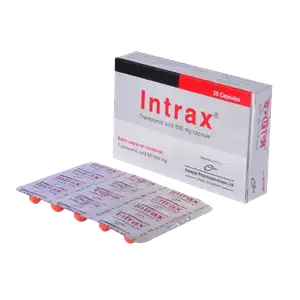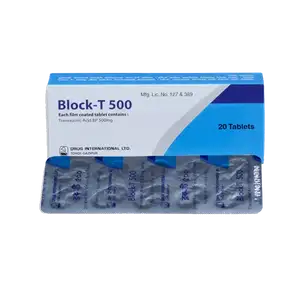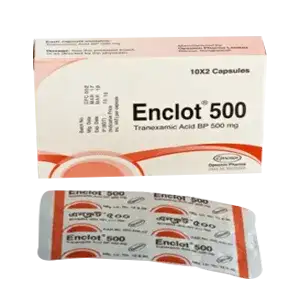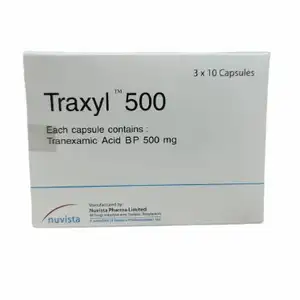
Traxyl 500 Capsule
by Nuvista Pharma Limited
৳25.00
ACI Limited

Tranexamic Acid
Anaxyl® capsule and injection are indicated in –
PHARMACOLOGICAL ACTIONS: Tranexamic acid has a strong inhibitory effect on the activation of plasminogen, i.e. the conversion of plasminogen to plasmin, in the fibrinolytic system.The half life is 1-2 hours. Plasma protein binding is 3% at therapeutic plasma levels. The plasma protein binding seems fully accounted by its binding to plasminogen. Tranexamic acid is excreted unchanged in the urine.
PHARMACOKINETICS: Tranexamic acid is rapidly absorbed from the gastrointestinal tract. Maximum serum levels are reached within 2-3 hours. After oral administration, about 40% of the dose is excreted in the urine during the first 24 hours. After intravenous administration 45% of the dose is excreted in the urine during the first day.
Adults-
Children-
Elderly patients: No reduction in dosage is necessary unless there is evidence of renal failure.
Clinically important interactions have not been observed with Tranexamic Acid. Because of the absence of interaction studies, simultaneous treatment with anticoagulants must take place under the strict supervision of a physician experienced in this field.
Active thromboembolic disease, such as deep vein thrombosis, pulmonary embolism and cerebral thrombosis Subarachnoid haemorrhage Hypersensitivity to Tranexamic acid or any of the ingredients.
Dose-dependent, gastrointestinal discomfort is the most commonly reported undesirable effect, but it is usually of mild and temporary in nature. Allergic skin reactions have been reported as an uncommon undesirable effect. Hypotension may occur after fast injection.
Pregnancy: Tranexamic acid crosses the placenta. Clinical experience of use in pregnant women is limited. Animal studies have not supplied any evidence of an increased incidence of fetal damage.
Lactation: Tranexamic acid is excreted into breast milk, but it is not likely to influence the child at therapeutic doses.
Tranexamic Acid should be used with caution in patients with renal impairment. The dose should be reduced beacause of high risk of accumulation. Caution should also be exercised in case of massive haematuria (avoid if risk of ureteric obstruction), disseminated intravascular coagulation (patient must be under the supervision of a physician experienced in treating this disorder), irregular menstrual bleeding (cause should be established before initiating therapy). Drugs with actions on haemostasis should be given with caution to patients on antifibrinolytic therapy.
Anti-fibrinolytic drugs, Haemostatic drugs
Store at a cool and dry place, protected from light and moisture.
ACI Limited
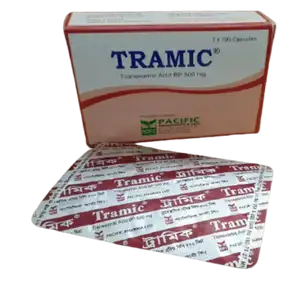
by Pacific Pharmaceuticals Ltd.
৳23.00