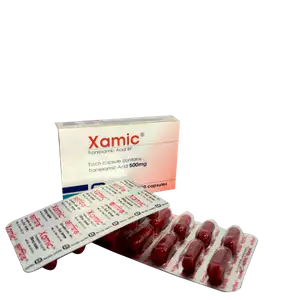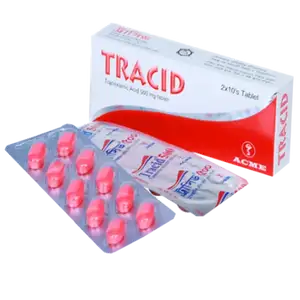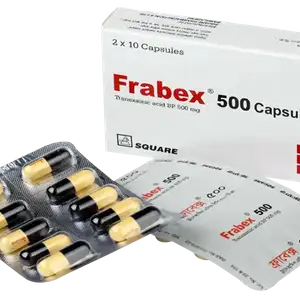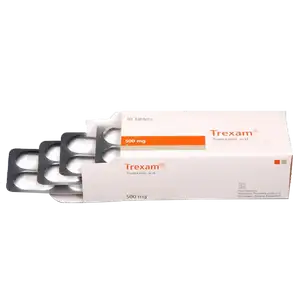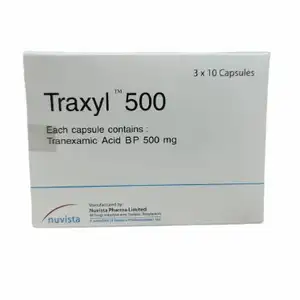
Traxyl 500 Capsule
by Nuvista Pharma Limited
৳25.00
Pacific Pharmaceuticals Ltd.
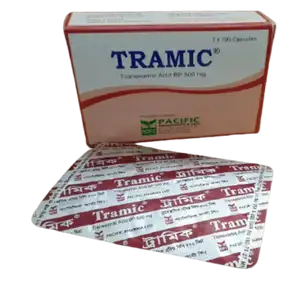
Tranexamic Acid
Medicine: prevention and treatment of parathyroid hemorrhage, gastrointestinal hemorrhage, hemorrhagic syndrome due to leukemia, liver cirrhosis and hemophilia, thrombocytopenic purpura, thrombolytic therapy and accidents during blood transfusion.
Surgery: Preventive and anti-bleeding treatment during surgeries of any type and nature, especially lung, cardiovascular and abdominal surgery, as well as postoperative and traumatic shock.
Urology: Preventive and anti-hemorrhagic treatment of prostate, bladder and kidney surgery. Hematuria
Obstetrics: prevention and treatment of postpartum and puerperal hemorrhage, hemorrhagic endometriosis, functional menorrhagia, idiopathic or intrauterine device-induced menorrhagia (intrauterine device), primitive hyperfibrinolysis (placenta detachment, placental abruption) and cervical erosion.
In the Department of Otolaryngology: tonsillectomy, general specialist surgery, prevention and anti-bleeding treatment during epistaxis.
Department of Stomatology: maxillofacial surgery, prevention and anti-bleeding treatment during tooth extraction.
In oncology (as supportive therapy): Promotes the formation of fibrin capsules to isolate and inhibit the growth of ovarian tumors. The cause of ascites regression secondary to cancer. Reduce bleeding during surgical intervention.
This is a preparation of tranexamic acid (trans 4-aminomethyl cyclohexane carboxylic acid). Tranexamic acid is a substance with a strong antifibrinolytic effect, it has been shown to be 10 times more active than conventional hemostatic agents in vivo and in vitro, according to the test. The anti-bleeding effect of tranexamic acid is mainly due to the inhibition of plasminogen activation by exogenous activators (such as streptokinase) and endogenous activators (such as urokinase and tissue plasminogen activator). This fact is particularly important for the clinical application of tranexamic acid because it ensures anti-bleeding activity against fibrinolytic mechanisms under various conditions.
Tranexamic acid has very low acute toxicity and almost no chronic toxicity. Tranexamic acid is well absorbed orally, and the effect can be observed 1530 minutes after administration. It is mainly excreted through the kidneys, but more slowly than traditional hemostatic agents. These properties make the effect of tranexamic acid longer than traditional hemostatic agents. Therefore, a relatively low single dose of tranexamic acid can be administered over a longer time interval, and the plasma level of the drug will not drop to an ineffective antifibrinolytic activity level between two doses.
Therapeutic dose of tranexamic acid will not interfere with the coagulation process, and even long-term administration will not be accompanied by any tendency to thrombosis.
Adults-
Children-
Elderly patients: No reduction in dosage is necessary unless there is evidence of renal failure.
Tranexamic acid is a synthetic amino acid and is incompatible with solutions containing penicillin (such as benzyl penicillin). Thrombolytic drugs such as streptokinase and urokinase can antagonize the antifibrinolytic effect of tranexamic acid. Taking estrogen-containing drugs (such as oral contraceptives) at the same time may increase the possibility of thrombosis. Avoid directly mixing tranexamic acid with whole blood during blood transfusion.
Since the transplacental passage of the drug and its possible effect on the fetus is not clear, tranexamic acid should not be administered during known and suspected pregnancy. Tranexamic acid enters breast milk at a concentration of about one percent of the concentration in maternal blood. It is unlikely to have an antifibrinolytic effect in nursing babies.
Anti-fibrinolytic drugs, Haemostatic drugs
Store in a dry place at 15-30°C, away from light and keep out of children's reach.
Pacific Pharmaceuticals Ltd.
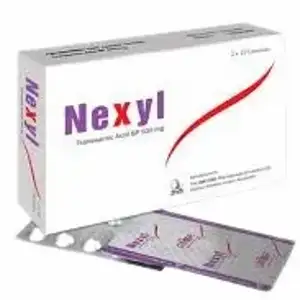
by The IBN SINA Pharmaceutical Industry Ltd.
৳15.00