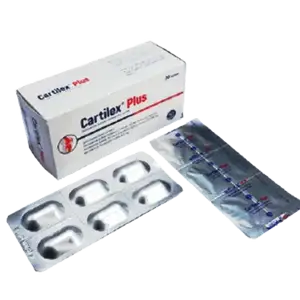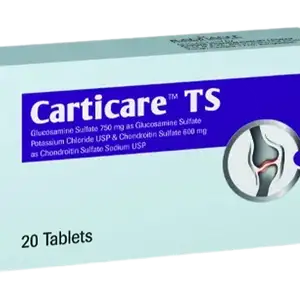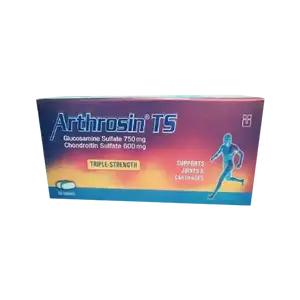
Arthrosin TS Tablet
by UniMed UniHealth Pharmaceuticals Ltd
৳30.00
Opsonin Pharma Limited
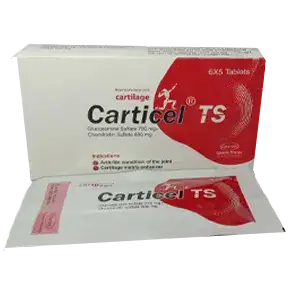
Glucosamine Sulfate + Chondroitin
As a dietary supplement, it is indicated for the treatment of osteoarthritis of the knee, hip, spine, hand, and other joints. It can also help with rheumatoid arthritis, sports injuries, migraines, certain skin disorders (such as psoriasis), vascular difficulties (such as atherosclerosis), kidney stones, and inflammatory bowel illness (e.g., ulcerative colitis, leaky gut syndrome).
Glucosamine is a natural amino-sugar that the body produces and that may be found in some meals. It is the most basic building component needed for the production of glycosaminoglycans (GAGs) such as hyaluronic acid, keratan sulfate, and chondroitin sulfate. GAGs bind to protein to produce proteoglycans, which are an important building block of articular cartilage. Osteoarthritis develops when the cartilage in a joint deteriorates. It also aids in the formation of ligaments, tendons, nails, and other connective tissues. When we take an artificially produced Glucosamine Sulfate supplement, it raises Glucosamine levels in the body, facilitating cartilage synthesis and repair. Glucosamine also stimulates chondrocytes in the cartilage, which aid in the production of GAGs and proteoglycans.
Chondroitin Sulfate is a glycosaminoglycan (acid muco polysaccharide) present in connective tissue, particularly articular cartilage, in all animals. Chondroitin Sulfate supplementation works similarly to Glucosamine Sulfate supplementation in that it provides a substrate for proteoglycans. Chondroitin also preserves existing healthy cartilage from early deterioration by inhibiting the MMP (Matrix metalloproteinase) enzyme that degrades proteoglycans.
The combination of Glucosamine and Chondroitin Sulfate has a synergistic effect. This combination has been found to be extremely beneficial in severe cases of Osteoarthritis, treating both signs and symptoms of Osteoarthritis and moderating disease development, according to the data. In the case of healthy people, it prevents osteoarthritis. It is equally effective as NSAIDs in osteoarthritic pain, but with far greater tolerance and clinical compliance. It is also beneficial throughout the healing process of musculoskeletal soft tissue injuries such as tendon or ligament strains.
250/200 mg tablet: 1 to 2 tablets, three times daily. Dose may be adjusted according to the response of the drug and body weight. Doses can be tapered after 60 days as per requirement of the individual and for cost convenience. Typical dosage recommendation, based on body weight is as follows-
750/600 mg tablet: 1 tablet two times daily or as directed by the physician.
There have been no reports of significant Glucosamine and Chondroitin medication interactions with antibiotics, antidepressants, antihypertensives, nitrates, antiarrythmics, anxiolytics, hypoglycemic drugs, antisecretives, or antiasthmatics. Chondroitin may increase the blood-thinning effects of anticoagulants such as Warfarin and Heparin.
Glucosamine and Chondroitin have no recognized contraindications. However, documented hypersensitivity to Glucosamine and Chondroitin (e.g., allergy to shellfish or sulfur) is a contraindication.
There are no discernible adverse effects in trials using Glucosamine Sulfate and Chondroitin Sulfate. Side effects that occur infrequently (such as mild and reversible intestinal flatulence) are virtually identical to placebo.
Women who are pregnant or may become pregnant should avoid using Glucosamine Sulfate or Chondroitin Sulfate. The effects of glucosamine and chondroitin on a growing fetus have not been thoroughly investigated. There have been no research on the usage of Glucosamine and Chondroitin during pregnancy or breastfeeding. During pregnancy and nursing, it should be used with caution and under the supervision of a doctor.
When using Glucosamine, patients with Diabetes Mellitus should test their blood glucose levels on a regular basis. There were no particular investigations in individuals with renal or hepatic impairment. The toxicological and pharmacokinetic profiles of Glucosamine and Chondroitin show no restrictions for these individuals. Patients with severe hepatic or renal impairment, on the other hand, should be administered under proper medical care. Glucosamine and Chondroitin should not be given to children.
Stimulation of Cartilage formation
Store in a cold, dry, and light-free environment.
Opsonin Pharma Limited