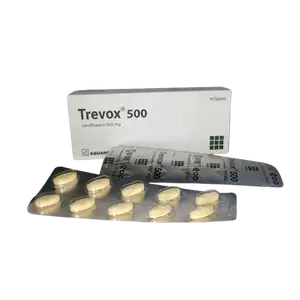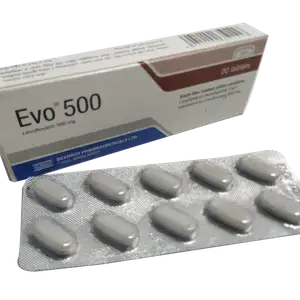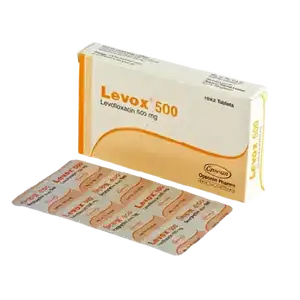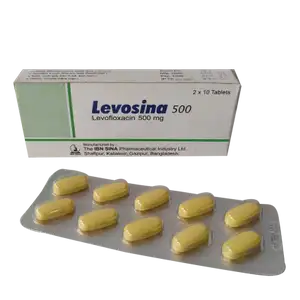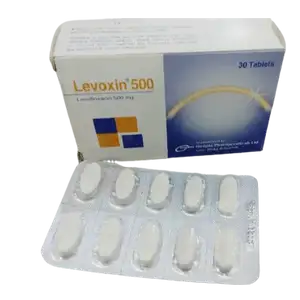
levoxin 500 Tablet
by Incepta Pharmaceuticals Ltd
৳17.00
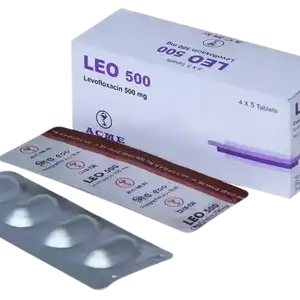
The ACME Laboratories Ltd.
Levofloxacin Hemihydrate
Levofloxacin is used to treat mild, moderate, and severe infections caused by susceptible strains of the following microorganisms in the following conditions:
Levofloxacin is a third-generation fluoroquinolone antibiotic that is synthetic and broad-spectrum. Levofloxacin is a chiral fluorinated carboxyquinolone chemically. The enzymes necessary for DNA replication, transcription repair, and recombination, bacterial topoisomerase IV and DNA gyrase, are inhibited by levofloxacin. It exhibits efficacy against a variety of gm-ve and gm+ve bacteria in vitro.
The usual dose of Levofloxacin Tablets is 250 mg or 500 mg or 750 mg administered orally every 24 hours. Levofloxacin tablets can be administered without regard to food. Levofloxacin oral solution should be taken 1 hour before, or 2 hours after eating.
Levofloxacin injection should only be administered by intravenous infusion. It is not for intramuscular, intrathecal, intraperitoneal, or subcutaneous administration. The usual dose of Levofloxacin injection is 250 mg or 500 mg administered by slow infusion over 60 minutes every 24 hours or 750 mg administered by slow infusion over 90 minutes every 24 hours. Since the Levofloxacin injections are for single-use only, any unused portion should be discarded. Additives or other medications should not be added to Levofloxacin Injection or infused simultaneously through the same intravenous line.
Adults:
Children:
Through the same intravenous line, no quinolone should be given with any solution containing multivalent cations, such as magnesium. Levofloxacin absorption is hampered by antacids, iron, and adsorbents. The use of nonsteroidal anti-inflammatory drugs (NSAIDs) may raise the risk of CNS stimulation. Warfarin can make you bleed more easily.
Patients having a history of hypersensitivity to levofloxacin, quinolone antibiotic drugs, or any other component of this medicine should not take it.
Levofloxacin is well tolerated by most people. However, there are generally a few negative effects. Retinal detachment is a possibility. Nausea, vomiting, diarrhea, abdominal pain, flatulence, and phototoxicity are some of the other side effects (0.1 percent ). Tremors, melancholy, anxiety, and bewilderment are some of the unusual side effects that may occur.
Because the effects on the unborn child or nursing infant are unknown, levofloxacin is not indicated for use during pregnancy or lactation.
During the administration of Levofloxacin, the following precautions should be taken:
4-Quinolone preparations.
Keep the temperature below 30°C and away from light and moisture. Keep out of children's reach.
ACME Laboratories Ltd.
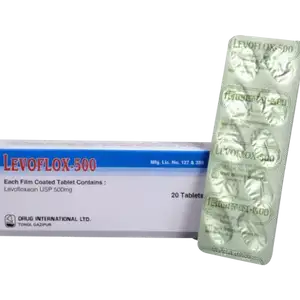
by Drug International Limited
৳15.05