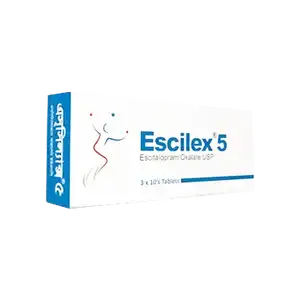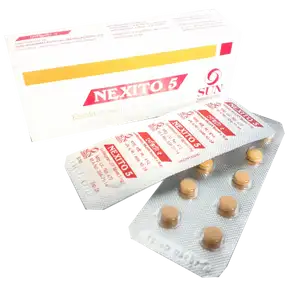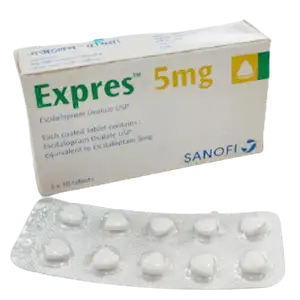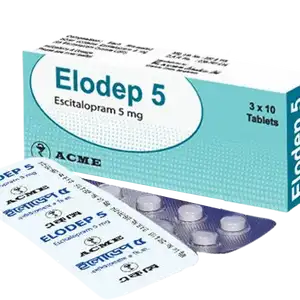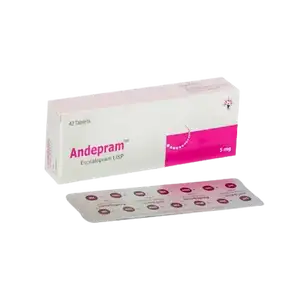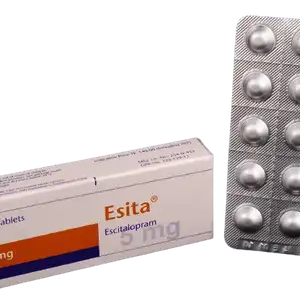
Esita 5 Tablet
by Healthcare Pharmaceuticals Limited
৳7.00
UniMed UniHealth Pharmaceuticals Ltd

Nexcital 5 mg Tablet by UniMed UniHealth pharmaceutical Ltd is available in our Trusted medicine store. Place your order in osudpotro and get the best Price online medicine home delivery in Bangladesh.
Escitalopram oxalate is suitable for the treatment of major depressive episodes.
UniMed UniHealth Pharmaceuticals Ltd
Escitalopram is an oral selective serotonin reuptake inhibitor (SSRI). Escitalopram is the pure enantiomer of the racemic bicyclic phthalate derivative citalopram. By inhibiting 5HT reuptake, escitalopram is at least 100 times more effective than Renantiomer. Escitalopram has no or very low affinity for serotonergic or other receptors (including alpha and beta adrenergic dopamine, histamine, muscarinic, and benzodiazepine receptors).
The safety of daily doses greater than 20 mg has not been demonstrated. Escitalopram oxalate is given as a single daily dose and can be taken with or without food.
Major depressive episode: the usual dose is 10 mg, once a day. Depending on the individual response of the patient, the dose can be increased to a maximum of 20 mg per day. Generally, it takes 24 weeks to obtain an antidepressant response. Once symptoms subside, treatment is required for at least 6 months to consolidate response.
Panic disorder with or without agoraphobia: the recommended starting dose for the first week is 5 mg and then the dose is increased to 10 mg daily. The dose can be increased further, up to 20 mg per day, depending on the individual response of the patient. The maximum effect is reached after about 3 months. The treatment lasts several months.
Social anxiety disorder: the usual dose is 10 mg once a day. It usually takes 24 weeks to relieve symptoms. Subsequently, depending on the individual response of the patient, the dose can be reduced to 5 mg or increased to a maximum of 20 mg per day. Social anxiety disorder is a chronic course and 12 weeks of treatment is recommended to consolidate the response. Long-term treatment of responders has been studied for 6 months and can be considered according to individual circumstances to prevent recurrence; the effect of the treatment should be reassessed regularly. Social anxiety disorder is a well-defined diagnostic term for a specific illness and should not be confused with excessive shyness. Medication is only necessary when the disease seriously interferes with professional and social activities. The position of this treatment compared to cognitive behavioral therapy has not been evaluated. Medication is part of the overall treatment strategy.
Generalized anxiety disorder: The starting dose is 10 mg per day. Depending on the patient's individual response, the dose can be increased to a maximum of 20 mg per day. Long-term treatment of responders for at least 6 months has been studied in patients receiving 20 mg/day. The benefits of treatment and dosage should be reassessed regularly.
Obsessive-compulsive disorder: The starting dose is 10 mg per day. Depending on the patient's individual response, the dose can be increased to a maximum of 20 mg per day. Since obsessive-compulsive disorder is a chronic disease, patients must receive sufficient treatment time to ensure that they are asymptomatic. The benefits of treatment and dosage should be reassessed regularly.
Escitalopram should generally be given with or without food every morning or evening.
As an SSRI or related antidepressant, it should not be used within 2 weeks after stopping MAOI. On the contrary, MAOI should not do this. Start at least 1 week after stopping SSRI or related antidepressants (paroxetine and sertraline for 2 weeks, fluoxetine for at least 5 weeks).
Patients who are known to be allergic to escitalopram or citalopram or any inactive ingredients in the drugs should not use escitalopram. Patients taking monoamine oxidase / pimozide are prohibited from using escitalopram at the same time.
Compared to tricyclic antidepressants, SSRIs have weaker sedative effects and fewer antimuscarinic and cardiotoxic effects. Side effects of SSRIs include gastrointestinal reactions (dose related and fairly common including nausea, vomiting, indigestion, abdominal pain, diarrhea, and constipation), anorexia and weight loss (increased appetite and weight gain), and allergic reactions , including skin rash, hives. , angioedema, allergic reactions, arthralgia, myalgia and photosensitivity; other side effects include dry mouth, tension, anxiety, headache, insomnia, tremor, dizziness, fatigue, hallucinations, drowsiness, seizures, galactorrhea, sex dysfunction, urinary retention, sweating, hypomania or mania, dyskinesia and dyskinesia, visual impairment .
When escitalopram is used to treat pregnant women in the third trimester, physicians must carefully consider the potential risks and benefits of treatment. It is excreted in breast milk. The decision to continue or discontinue breast-feeding or escitalopram therapy should consider the risk of exposure to citalopram to the infant and the benefits of escitalopram therapy to the mother.
SSRIs should be used with caution in patients with epilepsy (if not properly controlled, avoid use, stop if epilepsy occurs), synchronized electroconvulsive therapy (fluoxetine reports prolonged seizures), history of mania, heart disease, diabetes, angle-closure glaucoma , Concomitant use of drugs. Increase the risk of bleeding, history of bleeding disorders (especially gastrointestinal bleeding), liver and kidney failure.
SSRIs and related antidepressants
Store at a temperature below 30°C and protect from light and moisture. Keep the medicine out of the reach of children.
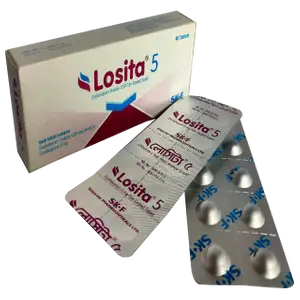
by SK+F
৳7.00