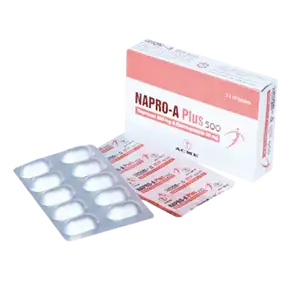
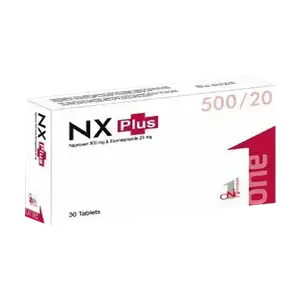
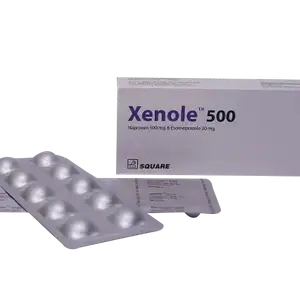
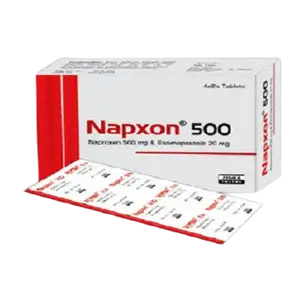
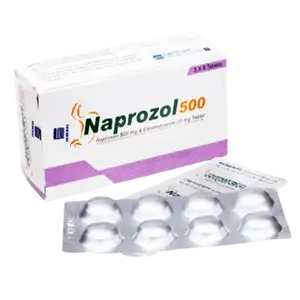
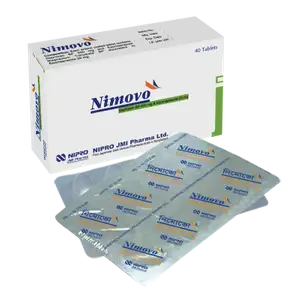
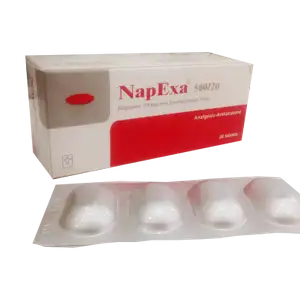
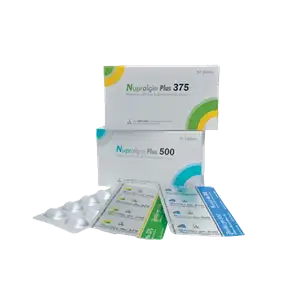
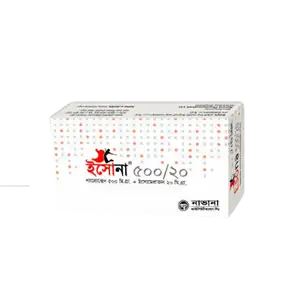
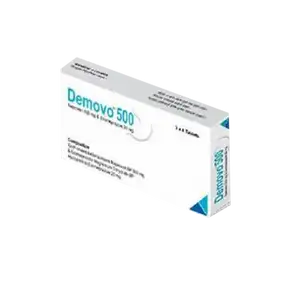
Generic
Naproxen Sodium + Esomeprazole Magnesium
Indications
Naproxen and Esomeprazole are used to treat the signs and symptoms of osteoarthritis.
- Rheumatoid arthritis is a type of arthritis that affects the joints.
- Ankylosing spondylitis (AS) is a type of arthritis that affects the spine.
- In individuals at risk of NSAID-associated stomach ulcers, to reduce the chance of developing gastric ulcers.
Pharmacology
This is made up of an Esomeprazole Magnesium coating that releases quickly and an enteric-coated Naproxen core. As a result, Esomeprazole is released into the stomach first, followed by Naproxen dissolution in the small intestine.
Naproxen is a nonsteroidal anti-inflammatory drug (NSAID) with analgesic and antipyretic effects. The activity of Naproxen is to stop the production of prostaglandins. Esomeprazole is a proton pump inhibitor that inhibits gastric acid secretion by inhibiting the H+/k+ -ATPase in the gastric parietal cell. By working selectively on the proton pump, Esomeprazole reduces gastric acidity by blocking the final stage in acid generation.
Dosage
Carefully consider the potential benefits & risks of this tablet & other treatment options before deciding to use this tablet. Use the lowest effective dose for the shortest duration consistent with individual patient treatment goals. If a dose of Esomeprazole lower than a total daily dose of 40 mg is more appropriate, a different treatment should be considered.
Rheumatoid Arthritis, Osteoarthritis and Ankylosing Spondylitis-
- Adults: One tablet twice daily of either: 375 mg naproxen/20 mg of esomeprazole; or 500 mg naproxen/20 mg of esomeprazole
Juvenile Idiopathic Arthritis in Adolescent Patients 12 Years of Age & Older-
- Weight greater than 50 kg: 375 mg naproxen/20 mg of esomeprazole; or 500 mg naproxen/20 mg of esomeprazole
- Weight 38 kg to less than 50 kg: One tablet twice daily of 375 mg naproxen/20 mg of esomeprazole.
Administration
Do not split, chew, crush or dissolve the tablet. This tablet is to be taken at least 30 minutes before meals.
Interaction
When it comes to medication,
- Concurrent use of NSAIDs and ACE inhibitors, diuretics, and beta-blockers may diminish their antihypertensive effects.
- When this tablet is taken with warfarin, the chance of a bleeding problem is raised.
- Esomeprazole decreases gastric acid secretion and may interfere with the absorption of medicines whose bioavailability is influenced by gastric pH. (eg. Ketoconazole, iron salts and digoxin).
With food and others: Giving Naproxen and Esomeprazole combined with a high-fat meal has little effect on naproxen absorption, but it considerably prolongs tmax by 10 hours and lowers peak plasma concentration (Cmax) by around 12% in healthy volunteers.
Contraindications
- Hypersensitivity to any of the tablet's ingredients or substituted benzimidazoles.
- After taking aspirin or other NSAIDs, you may experience asthmay urticaria or other allergic responses.
- In the case of coronary artery bypass graft (CABG) surgery, use during the peri-operative period.
Side Effects
This medication is generally well tolerated. Erosive gastritis, dyspepsia, gastritis, diarrhea, gastric ulcer, upper abdominal discomfort, nausea, and other unpleasant responses were the most common in clinical trials (>5%).
Pregnancy & Lactation
Category C pregnancy. It should be avoided in late pregnancy since it may cause premature closure of the ductus arteriosus. Because of the Naproxen component, this tablet should not be taken by nursing mothers.
Precautions & Warnings
Patients having a history of cardiovascular disease or risk factors may be at higher risk. In patients with fluid retention or heart failure, this tablet should be used with caution.
Therapeutic Class
Drugs for Osteoarthritis, Drugs used for Rheumatoid Arthritis, Non-steroidal Anti-inflammatory Drugs (NSAIDs)
Storage Conditions
Protect from light and moisture by storing at a temperature below 30°C. Keep out of children's reach.
Pharmaceutical Name
One Pharma Ltd.