Paloxi 0.5 Tablet
by Beacon Pharmaceuticals Limited
৳20.06
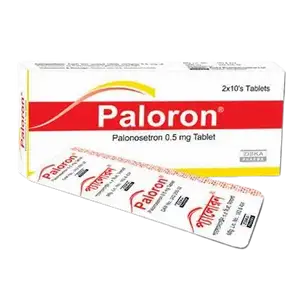
Ziska Pharmaceuticals Limited
Palonosetron
Palonosetron indicated in Acute and delayed nausea and vomitingUncontrolled nausea and vomitingChemotherapy-induced nausea and vomiting (CINV): Acute CINV resulting in on the day of treatment with certain types of chemotherapyDelayed CINV resulting in on days later with certain types of chemotherapyRadiotherapy-induced nausea and vomiting (RINV)Post-operative & Post-discharge nausea and vomiting (PONV & PDNV).
Palonosetron is a 5-HT3 receptor antagonist with a strong binding affinity for this receptor and little or no affinity for other receptors. It is thought that chemotherapeutic agents produce nausea and vomiting by releasing serotonin from the enterochromaffin cells of the small intestine and that the released serotonin then activates 5-HT3 receptors that are located on the nerve terminals of the vagus in the periphery and centrally in the chemoreceptor trigger zone of the area postrema, to initiate the vomiting reflex. Postoperative nausea and vomiting is influenced by multiple patient, surgical and anesthesia related factorcs and is triggered by release of 5-HT3 in a cascade of neuronal event involving both the central nervous system and the gastrointestinal tract. The 5-HT3 receptor has been demonstrated to selectively participate in the emetic response. Palonosetron works by blocking the actions of Serotonin, associated with nausea and vomiting, at 5-HTs receptor. It is likely that Palonosetron works in the small intestine but it may also work in the brain.
Adult tablet dosage: 0.5 mg daily. Adult IV dosage: A single IV dose of 0.075 mg should be administered over 10 seconds.
In controlled clinical trials, Palonosetron injection has been safely administered with corticosteroids, analgesics, antiemetics/antinauseants, antispasmodics and anticholinergic agents. Palonosetron did not inhibit the antitumor activity of cisplatin, cyclophosphamide, cytarabine, doxorubicin and mitomycin C in murine tumor models. Concomitant administration of Palonosetron and metoclopramide has no significant pharmacokinetic interactions. In vitro studies indicated that palonosetron is not inhibitor of CYP1A2, CYP2A6, CYP2B6, CYP2C9, CYP2D6, CYP2E1 & CYP3A4/5 (CYP2C19 was not investigated) nor does it induce the activity of CYP1A2, CYP2D6 or CYP3A4/5. Therefore, the potential for clinically significant drug interactions with Palonosetron appears to be low.
Palonosetron is contraindicated in patients known to have hypersensitivity to the drug or any of its components.
The most common adverse reactions are headaches and constipation.
'B' pregnancy category. Palonosetron is not known to be secreted in breast milk.
Anti-emetic drugs
Store in a cool & dry place, protected from light.
Ziska Pharmaceuticals Ltd.