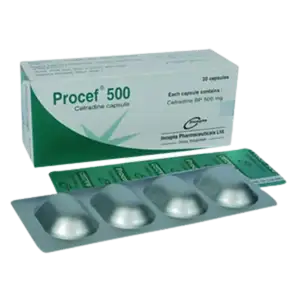
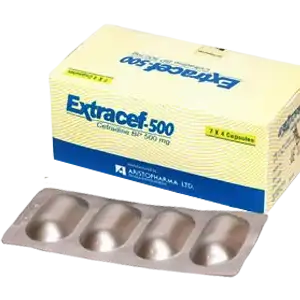
Indications of Procef 500
Cefradine is presented in the treatment of the following infections due to sensitive strains of the specified microorganism:
- Respiratory infections (betahemolytic streptococcal and staple group pneumonia) (pneumonia.
- Staphylococci (sensitivity to penicillin and cylindrice penny cylindrit) and one Dermatology Street Solubility Streptococcus Mill Beta.
- Escherichia coli, Proteus Mirabilis, Klebsiella species and urinary tract infections, including prostate deactivations with Enterocoques.
- Streptococcal blood decomposition, Streptococcus pneumoniae, Haemophilus influenza and groups. Staphylocoques are also used by the Staphylococcus group.
Pharmaceutical Name of Procef 500
Incepta Pharmaceuticals Ltd.
Pharmacology
Cephradine is a cephalosporin antibiotic with broad-spectrum bactericidal activity against Gram-positive and Gram-negative bacteria. Cephradine interferes with the synthesis of the bacterial cell wall by inhibiting transpeptidase enzymes. As a result, the bacterial cell wall is weakened, the cell swells, and then ruptures.
Dosage & Administration
Adults:
- For respiratory tract infections (not lobar pneumonia) and skin and skin structure infections, the usual dose is 250 mg every 6 hours or 500 mg every 12 hours.
- For lobar pneumonia, the usual dose is 500 mg every 6 hours or 1 g every 12 hours.
- For uncomplicated urinary tract infections, the usual dose is 500 mg every 12 hours.
- In more serious urinary tract infections, including prostatitis, 500 mg orally every 6 hours or 1 g every 12 ours can be given.
Children:
- The usual dose for children over nine months of age is 25 to 50 mg/kg/day in equal doses every 6 or 12 hours.
- For H. influenzae otitis media, 75 to 100 mg/kg/day in equal doses every 6 or 12 hours, but not to exceed 4 g per day.
Interaction of Procef 500
Concomitant use of nephrotoxic drugs such as aminoglycosides with cefradine may increase the risk of kidney damage. Diuretics (eg, frusemide, ethacrynic acid) and probenecid have increased the potential for nephrotoxicity.
Contraindications
Contraindicated in case of hypersensitivity to cefradine or other cephalosporins.
Side Effects of Procef 500
Limited mainly to gastrointestinal disorders and occasionally to hypersensitivity phenomena. These are more likely to occur in people who are hypersensitive and have a history of allergies, asthma, hay fever or hives. Skin reactions have occasionally been reported. Rarely epididymitis, heartburn, dizziness, chest tightness, nausea, vomiting, diarrhea, abdominal pain, vaginitis, candida overgrowth. Skin reactions and hypersensitivity include urticaria, rash, arthralgia, and edema.
- Blood and lymphatic system disorders Unspecified frequency: blood disorders (including thrombocytopenia, leukopenia, agranulocytosis, aplastic anemia and hemolytic anemia)
- Immune system disorders Frequency not known: fever, serum sickness-like reactions, anaphylaxis
- Psychiatric disorders Unspecified frequency: confusion, sleep disturbance
- Nervous system disorders Not known: hyperactivity, hypertonia, dizziness, nervousness; Rare: Headache
- Hepatobiliary disorders Frequency not known: Liver, enzyme disorders, transient hepatitis, cholestatic jaundice
- Renal and urinary disorders Not known: Reversible interstitial nephritis
- Investigation Not known: Increased blood urea nitrogen, serum creatinine aminoransferase, alanferase, aspartate aminotransferase, total bilirubrase, alkaline phosphatase.
Pregnancy & Lactation
The US FDA's category B for cefradine during pregnancy is B. However, there are no adequate and well-controlled studies in pregnant women. Since animal reproduction studies are not always predictive of the human response, this medicine should be used during pregnancy only when clearly needed. Cefradine has been shown to be excreted in human milk. Therefore, care should be taken when Cefradine is given to a nursing woman.
Precautions & Warnings
- Prolonged use of anti-infectives can lead to the development of secondary infections due to the emergence of resistant organisms.
- Cephradine should be used with caution in penicillin-sensitive patients due to the risk of cross-sensitization between beta-lactams.
- Cephalosporin antibiotics may cause a positive Coombs test result. When the Coombs test is performed on newborns whose mothers received a cephalosporin before labor, it should be borne in mind that a positive result may be due to the drug.
- Cephradine may cause false positive urine glucose results when Benedict or Fehling solutions or tablets such as Clinitest are used in the test. This does not occur with enzyme tests (eg Clinistix, Diastix).
- Dosage adjustment is required in patients with renal impairment.
- This product contains lactose. Patients with rare hereditary problems of galactose intolerance, the Lapp lactase deficiency or glucose galactose malabsorption should not take this medicine.
Therapeutic Class
First generation Cephalosporins
Storage Conditions
Keep in a dry place away from light and heat. Keep out of the reach of children.
Generic of Procef 500
Cephradine