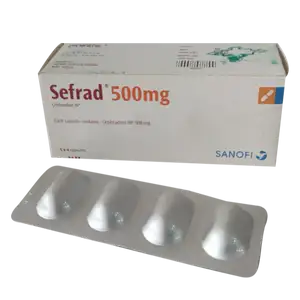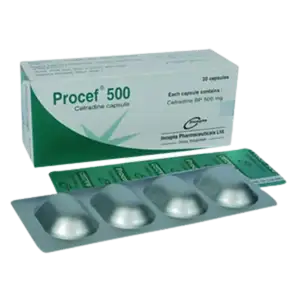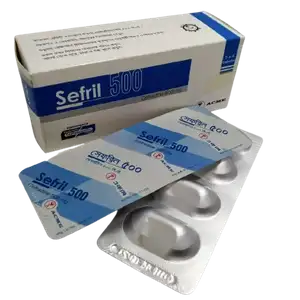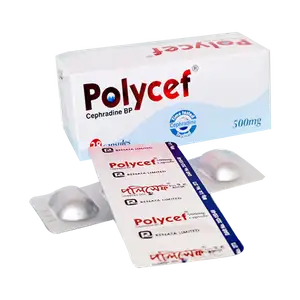
Lebac 500 Capsule
by Square Pharmaceuticals Limited
৳15.05
The IBN SINA Pharmaceutical Industry Ltd.
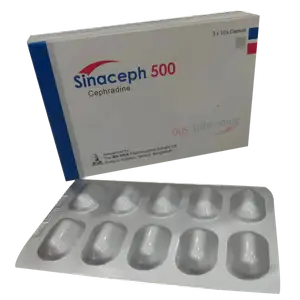
Sinaceph 500 mg Capsule is used in the treatment of a wide variety of bacterial infections - Pneumonia, Pharyngitis, Susceptible infections, Otitis media, Skin and Skin-Structure Infections, Rheumatic fever, Tonsillitis, Respiratory tract infections, Urinary tract infections, Surgical Prophylaxis, Genitourinary tract infections, Acute prostatitis. View Sinaceph Capsule usage, price, side effect & alternative Medicines. Order online at the best price from osudpotro.
It is recommended to treat patients who are more likely to develop gastrointestinal complications from NSAIDs; elderly, patients taking any other NSAIDs or acetylsalicylic acid at the same time, or patients with a history of gastrointestinal diseases (such as ulcers and gastrointestinal bleeding).
Patients with significant risk factors for cardiovascular events (such as hypertension, hyperlipidaemia, diabetes, smoking) should be treated with etoricoxib after careful consideration.
Etoricoxib intake may cause decreased prostaglandin formation, which in turn leads to decreased renal blood flow, impairing renal function. Monitoring of renal function in these patients should be considered.
Caution should be exercised in patients with a history of heart failure, left ventricular dysfunction, or hypertension, and in patients with pre-existing edema for any other reason.
Any patient with symptoms and/or signs suggesting liver dysfunction, or with abnormal liver function tests, should be monitored. If signs of liver failure appear or persistent abnormal liver function tests are detected (three times the upper limit of normal), etoricoxib should be discontinued.
Etoricoxib should be discontinued at the first appearance of a rash, mucosal lesions, or any other signs of hypersensitivity.
Etocoxib may mask fever and other signs of inflammation. Caution should be used when combining etoricoxib with warfarin or other oral anticoagulants.
Cephradine is a semisynthetic broad range bactericidal antibiotic that is effective against both gram-positive and gram-negative bacteria. Cephradine is toxic to both penicillinase-producing and non-producing staphylococci. Cephradine's principal site of action is the bacterial cell wall. Peptidoglycan is found in the cell wall of sensitive organisms. Cephradine inhibits cross-linking, resulting in the formation of a cell wall with numerous holes, resulting in bacterial lysis owing to external osmotic pressure.
For oral administration-
Adults:
Children:
Elderly: The normal adult dose is appropriate. Patients with impaired renal or hepatic function should be monitored during treatment.
For injectable administration-
When nephrotoxic medicines like aminoglycosides are used with Cefradine, the risk of kidney damage increases. Renal toxicity was increased by diuretics (e.g., frusemide, ethacrynic acid) and probenecid.
Lactulose is classified as a pregnancy category B by the US Food and Drug Administration. Lactulose has been shown in studies to have no negative effects. A registered physician must make decisions about usage during pregnancy and breastfeeding.
It is recommended to treat patients who are more likely to develop gastrointestinal complications from NSAIDs; elderly, patients taking any other NSAIDs or acetylsalicylic acid at the same time, or patients with a history of gastrointestinal diseases (such as ulcers and gastrointestinal bleeding).
Patients with significant risk factors for cardiovascular events (such as hypertension, hyperlipidaemia, diabetes, smoking) should be treated with etoricoxib after careful consideration.
Etoricoxib intake may cause decreased prostaglandin formation, which in turn leads to decreased renal blood flow, impairing renal function. Monitoring of renal function in these patients should be considered.
Caution should be exercised in patients with a history of heart failure, left ventricular dysfunction, or hypertension, and in patients with pre-existing edema for any other reason.
Any patient with symptoms and/or signs suggesting liver dysfunction, or with abnormal liver function tests, should be monitored. If signs of liver failure appear or persistent abnormal liver function tests are detected (three times the upper limit of normal), etoricoxib should be discontinued.
Etoricoxib should be discontinued at the first appearance of a rash, mucosal lesions, or any other signs of hypersensitivity.
Etocoxib may mask fever and other signs of inflammation. Caution should be used when combining etoricoxib with warfarin or other oral anticoagulants.
Although animal studies have not demonstrated any teratogenicity, safety in pregnancy has not been established. Cephradine is excreted in breast milk and should be used with caution in lactating mothers. Since the medicine may cause dizziness, patients should be cautioned about operating hazardous machinery, including automobiles.
Due to the emergence of drug-resistant microorganisms, prolonged use of anti-infectives can lead to the development of superinfections.
Cephradine should be used with caution in patients allergic to penicillin, due to the risk of cross allergies between beta-lactam antibiotics.
Cephalosporin antibiotics can cause a positive Coombs test. When performing the Coombs test in newborns whose mothers received cephalosporin treatment before delivery, it should be noted that the positive result may be due to the drug.
The use of Benedict or Fehling solutions or tablets (such as Clintest) in the cephradine test may cause false positive urine glucose results. This does not happen in enzyme-based tests (eg Clinistix, Diastix).
Dosage should be adjusted in renal impairment.
This product contains lactose. Patients with rare genetic problems such as galactose intolerance, Lapp lactase deficiency, or glucose or galactose malabsorption should not take this medicine.
First generation Cephalosporins
Cephradine Suspension should be made as soon as possible. If maintained at room temperature, the reconstituted suspension should be used within 7 days; if kept in the refrigerator, it should be used within 14 days. When stored at room temperature, Cephradine Injection solutions should be used within 2 hours. Solutions keep their potency for 12 hours when kept at 5°C. The color of reconstituted solutions can range from pale to straw yellow, although this has no bearing on their effectiveness. Do not use beyond the expiration date. All medications should be kept out of the reach of youngsters. Only on a qualified physician's prescription can it be dispensed.
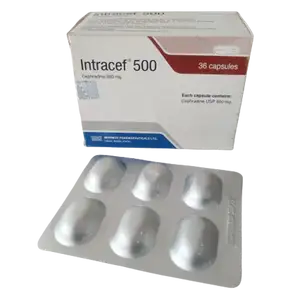
by Beximco Pharmaceuticals Ltd.
৳12.50