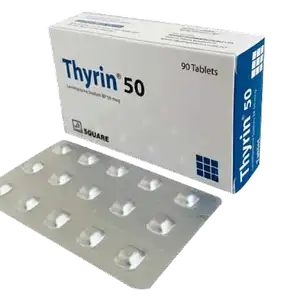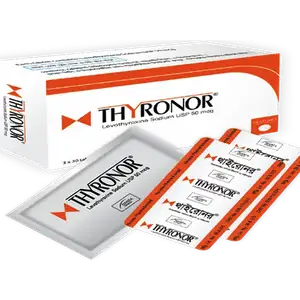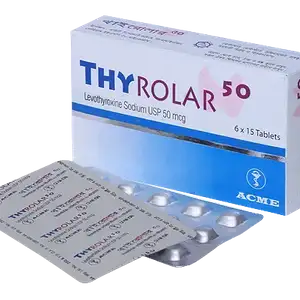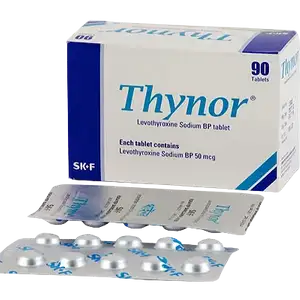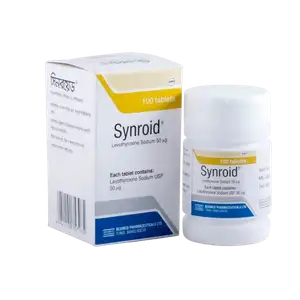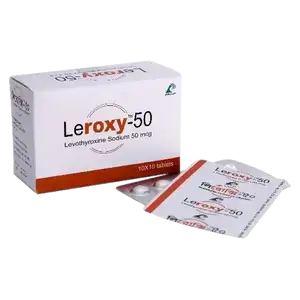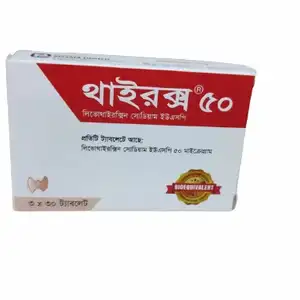
Thyrox 50 Tablet
by Renata Pharma Ltd
৳2.20
Aristopharma Ltd.
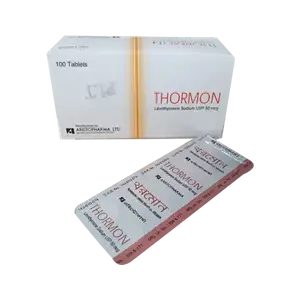
Levothyroxine Sodium
This tablet contains synthetic levothyroxine (also called thyroxine or T4), which is the same as the natural hormone T4 produced by the thyroid gland. Approximately 30% of T4 is converted into the more active triiodothyronine (T3) in peripheral tissues. TBG (thyroxine binding globulin) is the main carrier of T4. This combination protects T4 from the effects of metabolism and excretion, which leads to a longer circulatory half-life. Only about 0.03% of T4 in plasma is unbound. The elimination half-life of T4 is 6 to 7 days. The half-life of hyperthyroidism is shortened to 3 or 4 days, while the half-life of hypothyroidism may be 9 to 10 days. In cases related to a decrease in plasma protein, such as kidney disease or liver cirrhosis, or when protein binding is inhibited by certain drugs, the half-life of T4 may be shortened. The liver is the main place where thyroid hormones are broken down. T4 combines with glucuronic acid and sulfate through phenolic hydroxyl group and is excreted in urine. Enterohepatic circulation of thyroid hormones occurs because they are released and absorbed by hydrolysis in the intestine. Due to the long half-life of T4, a constant blood level of T3 with higher biological activity can be achieved by taking levothyroxine once a day. Therefore, once the correct dosage is determined, the therapeutic effect is unlikely to change.
Adult dose:
Pediatric Dosage (Newborns): The recommended starting dose is 10-15 meg/kg/day. A lower starting dose should be considered in infants at risk for cardiac failure and the dose should be increased in 4-6 weeks as needed based on clinical and laboratory response to treatment. In infants with very low (<5 mcg/dL) or undetectable serum T4 concentrations, the recommended initial starting dose is 50 meg/day of Levothyroxine Sodium.
Pediatric Dosage (Infants and Children): In children with chronic or severe hypothyroidism, initial dose of 25 meg/day with increments of 25 meg every 2-4 weeks until the desired effect is achieved. Hyperactivity in an older child can be minimized if the starting dose is one-fourth of the recommended full replacement dose and the dose is then increased on a weekly basis by an amount equal to one-fourth the full recommended replacement dose until the full recommended replacement dose is reached.
The dose should be adjusted based on clinical response and laboratory parameters.
Concurrent use of tri/tetracyclic antidepressants and Levothyroxine may increase the therapeutic and toxic effects of both drugs, possibly due to increased receptor sensitivity to catecholamines.Toxic effects may include increased risk of cardiac arrhythmias and CNS stimulation; onset of action of tricyclics may be accelerated. Administration of sertraline in patients stabilized on Levothyroxine may result in increased Levothyroxine requirements. Addition of Levothyroxine to antidiabetic or insulin therapy may result in increased antidiabetic agent or insulin requirements. Careful monitoring of diabetic control is recommended, especially when thyroid therapy is started, changed, or discontinued. Serum digitalis glycoside levels may be reduced in hyperthyroidism or when the hypothyroid patient is converted to the euthyroid state. Therapeutic effect of digitalis glycosides may be reduced.
Adverse reactions associated with Levothyroxine therapy are primarily those of hyperthyroidism due to therapeutic overdose. They include the following:
Category A Pregnancy. The need for Levothyroxine may increase during pregnancy. Although thyroid hormones are excreted in small amounts in human milk, caution should be maintained when given to a nursing mother. To maintain regular lactation, however, appropriate replacement doses of Levothyroxine are usually required.
Thyroid drugs & hormone
Store below 30°C and dry place, protect from light. Keep out of the reach of children.
Aristopharma Ltd.
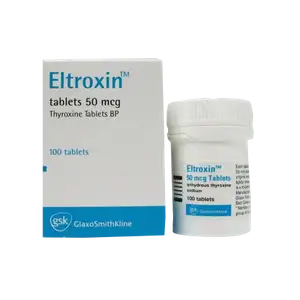
by GlaxoSmithKline Bangladesh Limited
৳255.60