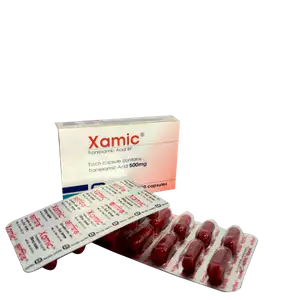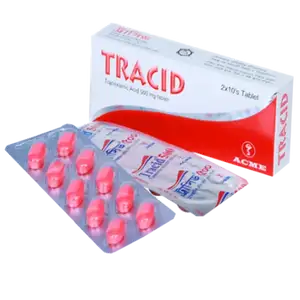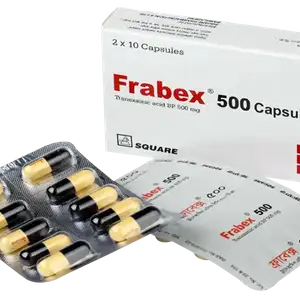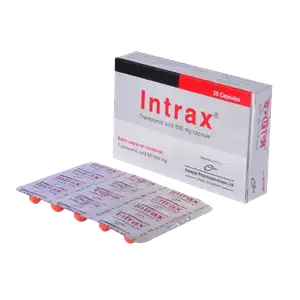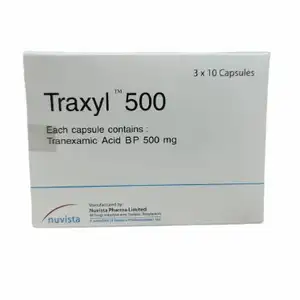
Traxyl 500 Capsule
by Nuvista Pharma Limited
৳25.00
SK+F

Tranexamic Acid
In medicine, hemophilia prophylaxis and treatment, digestive hemorrhages, hemorrhagic syndromes in leukemia, cirrhosis, and hemophilia, thrombocytopenic purpura, and transfusion-related accidents.
Prophylaxis and anti-hemorrhagic therapy for many types of surgeries, especially pulmonary, cardiovascular, and abdominal surgery, as well as post-operative and traumatic shock.
Prophylaxis and antihemorrhagic therapy following prostatic, vesical, and renal surgery in urology. Hematurias.
Prophylaxis and antihemorrhagic therapy after a tonsillectomy, specialty surgery in general, and epistaxis in otorhinolaryngology.
Prophylaxis and antihemorrhagic therapy after maxillofacial procedures and tooth extractions in stomatology.
Oncology (as a form of supportive therapy): To encourage the creation of a fibrin capsule that will seal off ovarian tumors and so slow their progression. To cause ascites to disappear as a result of cancer. To lessen bleeding during surgical procedures.
This is a tranexamic acid preparation (trans-4 aminomethyl-cyclohexanecarboxylic acid). Tranexamic acid is a potent antifibrinolytic agent that has been shown to be 10 times more active than standard hemostatics in vivo and in vitro, depending on the assay. Tranexamic acid's antihemorrhagic effect is primarily due to an inhibition of plasminogen activation by both exogenous activators such as streptokinase and endogenous activators such as urokinase and the plasminogen tissue activator. This is very significant for Tranexamic Acid's clinical application, because it ensures antihemorrhagic activity with an antifibrinolytic mechanism in a range of situations.
Tranexamic Acid's acute toxicity is exceedingly low, and longterm toxicity is nearly non-existent. Tranexamic Acid is well absorbed when taken orally, and the effects can be visible 15-30 minutes after taking it. It is primarily eliminated by the kidneys, but at a slower rate than traditional hemostatics. Because of these characteristics, Tranexamic Acid has a longer-lasting effect than traditional hemostatics. Thus, significantly smaller single doses of Tranexamic Acid can be given at longer intervals without the drug's plasma levels decreasing below ineffective antifibrinolytic activity between doses.
Adults-
Children-
Elderly patients: No reduction in dosage is necessary unless there is evidence of renal failure.
Tranexamic Acid is a synthetic amino acid that reacts badly with penicillin-containing solutions (eg: Benzylpenicillin). Thrombolytic medicines like Streptokinase and Urokinase work against Tranexamic Acid's antifibrinolytic effect. Concurrent administration of estrogen-containing medicines, such as oral contraceptives, may increase the risk of thrombus development. During the transfusion, a direct combination of Tranexamic Acid with whole blood should be avoided.
Active thromboembolic disease, such as deep vein thrombosis, pulmonary embolism and cerebral thrombosis, Subarachnoid haemorrhage. Hypersensitivity to Tranexamic Acid or any of the ingredients .
Tranexamic Acid is generally well accepted; nevertheless, weariness, conjunctival irritation, nasal obstruction, itching, skin reddening, and exanthems may occur in rare cases.
Nausea, diarrhea, and gastric pyrosis may occur after oral dosing.
Postural hypotension is a rare occurrence.
If you have a hypersensitivity to tranexamic acid, stop taking it or stop taking it until you find a medication that works for you.
Tranexamic Acid should not be used during known or suspected pregnancy because the drug's transplacental passage and potential effects on the fetus are unclear. Tranexamic Acid is excreted in breast milk at a concentration of about one-twentieth of that seen in maternal blood. In the infant, an antifibrinolytic effect is improbable.
When there is hyperfibrinolysis, Tranexamic Acid should be taken. The preventative treatment must begin 24 hours prior to the procedure and last for 3-4 days afterward.
Hemorrhage treatment must be continued for at least 24 hours after the symptoms have subsided.
Reduce the doses if you have hematuria, especially if it isn't accompanied by any other hemorrhagic symptoms. This will help prevent clots in the urinary tract.
Tranexamic Acid should be avoided in cases of severe renal insufficiency or anuric syndromes, and should only be administered with caution in cases of less severe renal impairment.
Hemostatic medications, anti-fibrinolytic drugs.
Store at 15-30°C in a dry place away from light and out of reach of youngsters.
Eskayef Pharmaceuticals Ltd.
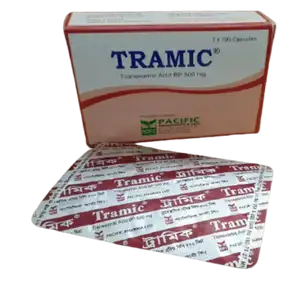
by Pacific Pharmaceuticals Ltd.
৳23.00