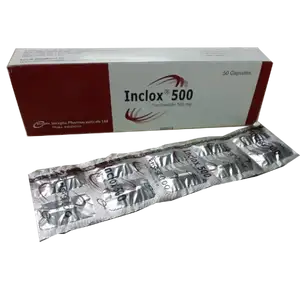
Fluclox 500 Capsule
by ACI Limited
৳14.00
Popular Pharmaceuticals Ltd.

Flucloxacillin Sodium
Flucloxacillin is suitable for treating infections caused by gram-positive bacteria, including infections caused by penicillinase-producing staphylococci. These indications include:
Flucloxacillin is active against gram-positive bacteria, including penicillinase-producing strains. It has little activity against gram-negative rods. Flucloxacillin works by inhibiting the formation of bacterial cell walls. Flucloxacillin is isoxazole penicillin, which combines resistance to enzymatic hydrolysis of penicillin, gastric acid stability, and activity against Gram-positive bacteria. Flucloxacillin is a bactericidal antibiotic that is particularly useful for Staphylococcus that produces penicillinase. Flucloxacillin destroys the bacterial cell wall, which interferes with peptidoglycan synthesis. Peptidoglycan is a heteromeric structure that provides mechanical stability to the cell wall. The final step of peptidoglycan synthesis involves completion of crosslinking with the terminal glycine residue of the pentaglycine bridge connected to the fourth pentapeptide residue (Dalanin). The transpeptidase that performs this step is inhibited by flucloxacillin. As a result, the bacterial cell wall weakens, the cell swells, and then breaks down. The effect of flucloxacillin against bacterial penicillinase may be due to the steric hindrance caused by the acyl side chain preventing the opening of the β-lactam ring.
Oral administration:
Parenteral administration:
Adult or Elderly:
Children:
Concurrent use of Flucloxacillin and may result in increased level of Flucloxacillin in blood for prolonged period.
Flucloxacillin is contraindicated in penicillin hypersensitive patients.
Nausea, vomiting, diarrhoea, dyspepsia, and other minor gastrointestinal problems are some of the most prevalent gastrointestinal side effects. Urticaria, purpura, fever, interstitial nephritis, hepatitis, and cholestatic jaundice have all been documented in addition to these rashes.
Nausea, vomiting, diarrhoea, dyspepsia, and other minor gastrointestinal problems are some of the most prevalent gastrointestinal side effects. Urticaria, purpura, fever, interstitial nephritis, hepatitis, and cholestatic jaundice have all been documented in addition to these rashes.
In patients with hepatic impairment, flucloxacillin should be taken with caution. In the treatment of patients with allergic diathesis, caution is also advised.
Penicillinase-resistant penicillins
Keep in a dry place away from light and heat. Keep out of the reach of children.
Popular Pharmaceuticals Ltd.

by Renata Pharma Ltd
৳10.00