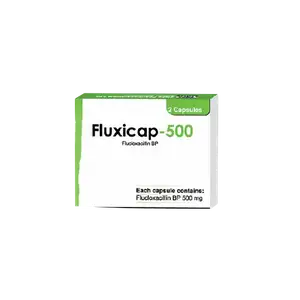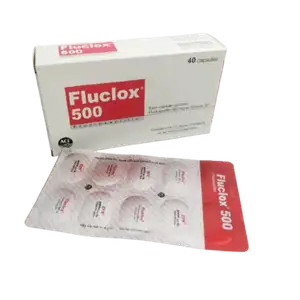
Fluclox 500 Capsule
by ACI Limited
৳14.00
Opsonin Pharma Limited

Flucloxacillin Sodium.
Flucloxacillin is indicated for the treatment of infections due to Gram-positive organisms, including infections caused by penicillinase producing staphylococci. These indications include:
Skin and soft tissue infections: Boils, abscess, carbuncles, infected skin conditions (e.g. ulcer, eczema, acne, furunculosis, cellulitis, infected wounds, infected burns, otitis media and externa, impetigo).
Respiratory tract infections: Pneumonia, lung abscess, empyema, sinusitis, pharyngitis, tonsillitis, quinsy.It is also used for the treatment of other infections i.e. osteomyelitis, enteritis, endocarditis, urinary tract infection, meningitis, septicaemia caused by Flucloxacillin-sensitive organisms.As a prophylactic agent, it is used during major surgical procedures where appropriate; for example, cardiothoracic and orthopedic surgery.
Flucloxacillin is active against Gram-positive organisms including penicillinase-producing strains. It has little activity against Gram-negative bacilli. Flucloxacillin acts by inhibiting the formation of the cell wall of bacteria. Flucloxacillin is isoxazolyl penicillin which combined the properties of resistance to hydrolysis by penicillinase, gastric acid stability, and activity against gram-positive bacteria. Flucloxacillin is a bactericidal antibiotic that is particularly useful against penicillinase-producing staphylococci. Flucloxacillin kills bacterial cell walls, thus interfering with peptidoglycan synthesis. Peptidoglycan is a heteropolymeric structure that provides the cell wall with its mechanical stability. The final stage of peptidoglycan synthesis involves the completion of the cross-linking with the terminal glycine residue of the pentaglycin bridge linking to the fourth residue of the pentapeptide (D-alanine). The transpeptidase enzyme that performs this step is inhibited by Flucloxacillin. As a result, the bacterial cell wall is weakened, the cell swells, and then ruptures. Flucloxacillin resists the action of bacterial penicillinase probably because of the steric hindrance induced by the acyl side chain which prevents the opening of the β- lactam ring.
Oral administration:
Parenteral administration:
Adult or Elderly:
Children:
Oral doses should be administered 1 hour before meal.
Concurrent use of Flucloxacillin and may result in the increased level of Flucloxacillin in blood for a prolonged period.
Flucloxacillin is contraindicated in penicillin hypersensitive patients.
There have been some common side effects of the gastrointestinal tract such as nausea, vomiting, diarrhea, dyspepsia, and other minor gastrointestinal disturbances. Besides these rashes, urticaria, purpura, fever, interstitial nephritis, hepatitis, and cholestatic jaundice have been reported.
US FDA Pregnancy Category of Flucloxacillin is B. There are, no adequate and well-controlled studies on pregnant women. Because animal reproduction studies are not always predictive of human response, this drug should be used during pregnancy only if clearly needed. Flucloxacillin has been shown to be excreted in human milk. So, caution should be exercised when Flucloxacillin is administered to a lactating mother.
Flucloxacillin should be used with caution in patients with evidence of hepatic dysfunction. Caution should also be exercised in the treatment of patients with allergic diathesis.
Penicillinase-resistant penicillins.
Keep in a dry place away from light and heat. Keep out of the reach of children.
Opsonin Pharma Ltd.

by The ACME Laboratories Ltd.
৳10.58