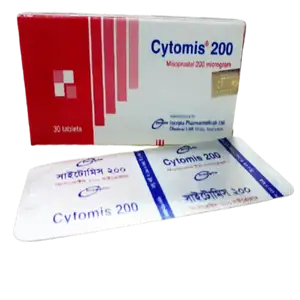
Cytomis 200 Tablet
by Incepta Pharmaceuticals Ltd
৳15.00
Square Pharmaceuticals Limited
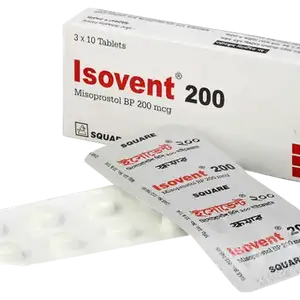
Misoprostol
IsoventTM (Misoprostol) is indicated for reducing the risk of NSAID (nonsteroidal anti-inflammatory drugs, including aspirin)-induced gastric ulcers in patients at high risk of complications from gastric ulcer, eg, the elderly and patients with concomitant debilitating disease, as well as patients at high risk of developing gastric ulceration, such as patients with a history of ulcer. IsoventTM (Misoprostol) has not been shown to reduce the risk of duodenal ulcers in patients taking NSAIDs. Misoprostol should be taken for the duration of NSAID therapy. It had no effect, compared to placebo, on gastrointestinal pain or discomfort associated with NSAID use.
Gynecological Indication:
Misoprostol is extensively absorbed, and undergoes rapid de-esterification to its free acid, which is responsible for its clinical activity and, unlike the parent compound, is detectable in plasma. Maximum plasma concentrations of Misoprostol acid are diminished when the dose is taken with food and total availability of Misoprostol acid is reduced by use of concomitant antacid. Misoprostol has both antisecretory (inhibiting gastric acid secretion) and (in animals) mucosal protective properties. NSAIDs inhibit prostaglandin synthesis, and a deficiency of prostaglandins within the gastric mucosa may lead to diminishing bicarbonate and mucus secretion and may contribute to the mucosal damage caused by these agents. Misoprostol can increase bicarbonate and mucus production, but in man this has been shown at doses 200 mcg and above that are also antisecretory. It is therefore not possible to tell whether the ability of Misoprostol to reduce the risk of gastric ulcer is the result of its antisecretory effect, its mucosal protective effect, or both.
Antiulcerant dosage & administration:
The recommended adult oral dose of IsoventTM (Misoprostol) for reducing the risk of NSAID-induced gastric ulcers is 200 mcg four times daily with food. If this dose cannot be tolerated, a dose of 100 mcg can be used. IsoventTM (Misoprostol) should be taken for the duration of NSAID therapy as prescribed by the physician. IsoventTM (Misoprostol) should be taken with a meal, and the last dose of the day should be at bedtime.
Renal impairment: Adjustment of the dosing schedule in renally impaired patients is not routinely needed, but dosage can be reduced if the 200 mcg dose is not tolerated.
Gynecological dosage & administration:
Induction of Labor: 25 mcg vaginally 6 hourly or, 50 mcg orally 4 hourly.
Postpartum Hemorrhage (PPH) prophylaxis: 400 mcg to 600 mcg orally or rectally immediately following delivery of the child.
Postpartum Hemorrhage (PPH) treatment: 1,000 mcg rectally or, 200 mcg orally with 400 mcg sublingually.
There's no prove of clinically critical interaction between Misoprostol and cardiac, aspiratory, CNS drugs and NSAID's. The bioavailability of Misoprostol is diminished with tall dosages of stomach settling agent.
Misoprostol should not be taken by pregnant women to reduce the risk of ulcers induced by nonsteroidal anti-inflammatory drugs (NSAIDs). Misoprostol should not be taken by anyone with a history of allergy to prostaglandins.
By and large, Misoprostol is well endured. The foremost visit antagonistic impacts related with Misoprostol treatment include the GI tract such as the runs, stomach torment, dyspepsia, tooting, queasiness, heaving, rashes and discombobulation. The frequency of loose bowels may be minimized by regulating the medicate after feast and at sleep time and by dodging concomitant organization with a magnesium-containing or other purgative stomach settling agent.
Because of the abortifacient property of the Misoprostol component, it is contraindicated in women who are pregnant. It should not be used in women of childbearing potential unless the patient requires nonsteroidal anti-inflammatory drug (NSAID) therapy and is at high risk of developing gastric or duodenal ulceration or for developing complications from gastric or duodenal ulcers associated with the use of the NSAID. In such patients, it may be prescribed if the patient:
Precaution should be taken in conditions where hypertension might precipitate severe complications (e.g. cerebrovascular and cardiovascular disease).
Drugs acting on the Uterus, Prostaglandin analogues
Store in a cool and dry place, protected from light and moisture. Keep out of the reach of the
children.
Square Pharmaceuticals Ltd.

by Gonoshasthaya Pharmaceuticals Ltd.
৳12.01