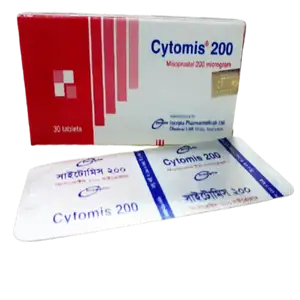
Cytomis 200 Tablet
by Incepta Pharmaceuticals Ltd
৳15.00
Ziska Pharmaceuticals Limited
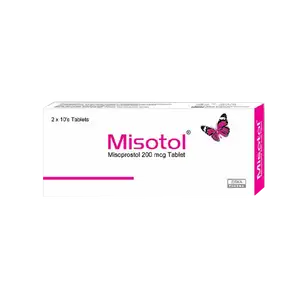
Misoprostol
Misoprostol is broadly ingested, and experiences quick de-esterification to its free corrosive, which is dependable for its clinical action and, not at all like the parent compound, is perceptible in plasma. Most extreme plasma concentrations of Misoprostol corrosive are decreased when the dosage is taken with nourishment and add up to accessibility of Misoprostol corrosive is diminished by utilize of concomitant stomach settling agent. Misoprostol has both antisecretory (hindering gastric corrosive emission) and (in creatures) mucosal defensive properties. NSAIDs restrain prostaglandin union, and a insufficiency of prostaglandins inside the gastric mucosa may lead to lessening bicarbonate and bodily fluid emission and may contribute to the mucosal harm caused by these specialists.To increase bicarbonate and mucus, misoprostol can be used at high doses of 200 mg or more, which are also antisecretory. Because of this, it is impossible to determine whether the capacity of Misoprostol to reduce the incidence of stomach ulcer is due to its antisecretory activity, mucosal protective impact, or both.
Benign gastric and duodenal ulceration and NSAID associated ulceration: 800 meg daily (in 2-4 divided doses) with breakfast or main meals and at bedtime; treatment should be continued for at least 4 weeks and may be continued for up to 8 weeks if required.
Prophylaxis of NSAID-induced gastric and duodenal ulcer: 200 meg 2-4 times daily taken with NSAID. If this dose cannot be tolerated, a dose of 100 meg can be used. Misoprostol should be taken for the duration of NSAID therapy as prescribed by the physician.
Induction of labor: Place 25 meg in the posterior fornix of the vagina. Repeat after every 6 hours if necessary until the maximum dosage of 200 meg total misoprostol is reached. Fetal heart rate and uterus contractions should be monitored. Alternatively, 100 meg taken orally. If cervical ripening or active labor does not occur, repeated dose of 100-200 meg of oral misoprostol is given every 4 hourly until labor is established (as evidenced by a Bishop score of 7 or more). Maximum number of dose is 6. Maternal vital signs, fetal heart rate and contractions should be monitored. Oxytocin can be started 4 hours after last dose of misoprostol. Physician should be notified for signs of fetal distress or tetanic uterine contractions. Oral misoprostol therapy should be monitored by Physician.
Prevention of postpartum hemorrhage: 600 meg orally immediately following delivery.
Treatment of postpartum hemorrhage: 600 meg orally or 1000 meg per rectally.
Misoprostol does not appear to interact clinically with cardiac, pulmonary, CNS, or NSAID medications. High doses of antacids reduce the bioavailability of Misoprostol.
Allergy to prostaglandins and pregnancy are contraindications to misoprostol.
Misoprostol is generally well tolerated by patients. In general, the most common side effects of Misoprostol therapy are gastrointestinal, including diarrhea, dyspepsia (abdominal pain), flatulence, nausea and vomiting, rashes, and dizziness. Use the medicine after a meal and before sleep to reduce diarrhea risk. Avoid taking it with antacids that include magnesium or other laxatives.
Because of the abortifacient property of the Misoprostol component, it is contraindicated in women who are pregnant. It should not be used in women of childbearing potential unless the patient requires nonsteroidal anti-inflammatory drug (NSAID) therapy and is at high risk of developing gastric or duodenal ulceration or for developing complications from gastric or duodenal ulcers associated with the use of the NSAID. In such patients, it may be prescribed if the patient:
Excretion of the active metabolite (Misoprostol acid) into milk is possible but has not been studied. Because of the potential for serious adverse reactions in nursing infants, it is not recommended for use by nursing mothers.
The use of misoprostol during pregnancy and in the treatment of NSAID-induced gastric and duodenal ulcers is contraindicated. While using Misoprostol, women of childbearing potential must utilize an effective contraceptive technique and must not be pregnant when Misoprostol therapy is began.
The pregnancy should have reached 38 weeks gestation by reliable date, or lung maturity as shown by an L/S >2.0 or a positive phosphotidyl glycerol test, or reached 36 weeks gestation with a maternal or fetal medical indication for induction of labor. For example, induction of labor is contraindicated in cases of acute fetal distress, abruptio placenta, placenta previa, and unexplained vaginal bleeding Fetus should be displayed at vertex position (see image).
Drugs acting on the Uterus, Prostaglandin analogues
Storing in a cool, dry location, away from light and moisture, is recommended. Do not give to youngsters.
Ziska Pharmaceuticals Ltd.

by Gonoshasthaya Pharmaceuticals Ltd.
৳12.01