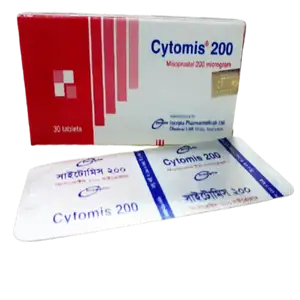
Cytomis 200 Tablet
by Incepta Pharmaceuticals Ltd
৳15.00
The ACME Laboratories Ltd.
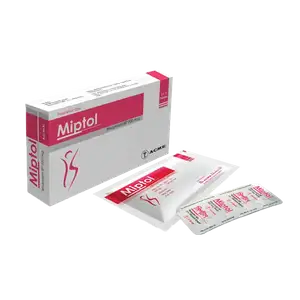
Misoprostol is used to treat the following conditions:
Misoprostol is rapidly absorbed and de-esterified to its free acid, which is responsible for its therapeutic action and is detectable in plasma, unlike the parent molecule. When taken with food, maximum plasma concentrations of Misoprostol acid are lowered, and overall availability of Misoprostol acid is reduced when an antacid is taken at the same time. Misoprostol possesses antisecretory (gastric acid secretion inhibition) and mucosal protecting effects in animals.NSAIDs suppress prostaglandin production, and a lack of prostaglandins in the stomach mucosa can reduce bicarbonate and mucus secretion, contributing to the mucosal damage produced by these medications. Misoprostol has been proven in humans to enhance bicarbonate and mucus production, however at dosages of 200 meg and above, it is also antisecretory. As a consequence, it's impossible to say if Misoprostol's capacity to lower the incidence of stomach ulcer is due to its antisecretory action, mucosal protective impact, or both.
There is no evidence that Misoprostol interacts with cardiac, pulmonary, CNS, or NSAID medications in a clinically relevant way. With large dosages of antacid, Misoprostol bioavailability is reduced.
Misoprostol is not recommended for anybody who has had a previous reaction to prostaglandins, and it is also not recommended during pregnancy.
Misoprostol is generally well tolerated. The GI tract is the most common side effect of Misoprostol treatment, with diarrhea, stomach discomfort, dyspepsia, flatulence, nausea, vomiting, rashes, and dizziness being the most common. The risk of diarrhea can be reduced by taking the medication after a meal and before night, and by not taking it with a magnesium-containing or other laxative antacid.
It is not recommended for pregnant women due to the abortifacient nature of the Misoprostol component. It should not be used in women of reproductive age unless the patient requires nonsteroidal anti-inflammatory medication (NSAID) therapy and is at high risk of developing gastric or duodenal ulceration or complications from gastric or duodenal ulcers. It may be prescribed in such cases if the patient:
The active metabolite (Misoprostol acid) can be excreted in milk, although this has not been investigated. It is not advised for use by nursing women due to the risk of significant adverse reactions in nursing babies.
In the case of NSAID-induced gastric and duodenal ulcer prevention and treatment, misoprostol is contraindicated in pregnant women and should not be administered in women of childbearing potential unless the patient necessitates NSAID therapy. Women of childbearing age should be informed that they must not be pregnant when Misoprostol therapy begins, and that they must utilize an effective contraceptive technique while on the medication.
Protect against light and moisture by storing in a cool, dry location. Keep it out of the reach of kids.

by Gonoshasthaya Pharmaceuticals Ltd.
৳12.01