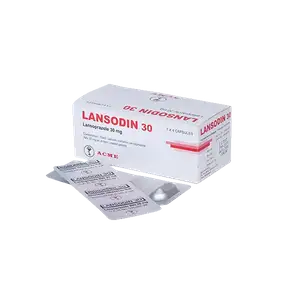
Zoton Capsule
by GENERAL Pharmaceuticals Ltd.
৳6.04
Square Pharmaceuticals Limited
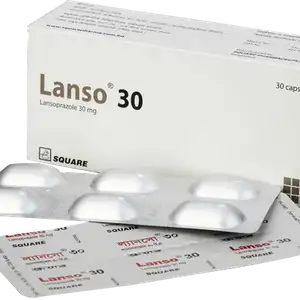
Lansoprazole
Lansoprazole is used to treat the following conditions:
Lansoprazole is a substituted benzimidazole that is also known as a proton pump inhibitor (PPI) because it inhibits the H+/K+ ATPase enzyme system in the gastric parietal cell, blocking the final stage of acid secretion. Acid is blocked at both the baseline and stimulated levels.
Benign gastric ulcer: 30 mg daily in the morning for 8 weeks.
Duodenal ulcer: 30 mg daily in the morning for 4 weeks; maintenance 15 mg.
NSAID-associated duodenal or gastric ulcer: 15-30 mg daily for 4 weeks, followed by a further 4 weeks if not fully healed.
Zollinger-Ellison syndrome (and other hypersecretory conditions): Initially 60 mg once daily adjusted according to response; daily doses of 120 mg or more is given in two divided doses.
Gastroesophageal reflux disease: 30 mg daily in the morning for 4 weeks, followed by a further 4 weeks if not fully healed; maintenance 15-30 mg daily.
Acid-related dyspepsia: 15-30 mg daily in the morning for 2-4 weeks.
Lansoprazole appears to be a selective inhibitor of the cytochrome P-450 monooxygenase system; it may affect hepatic clearance, although no clinically significant interactions have been reported to yet. The impact of Lansoprazole on the oral combination contraceptive pill is still unknown. A more thorough investigation is now ongoing. Physiological changes similar to those found with Omeprazole are likely to take place because of the reduction in gastric acid, which is likely to influence the bacterial colonization of the stomach and duodenum and also vitamin B12 absorption.
Patients with known hypersensitivity to any component of the formulation should avoid using lansoprazole.
Severe or permanent side effects include the possibility of carcinoid tumors being induced by severe acid suppression, as well as an increase in serum gastrin. Serum gastrin levels rise over the first three months of therapy and subsequently remain stable, but at a lower level than in pernicious anemia. In individuals with Helicobacter pylori infection, long-term therapy with a proton pump inhibitor may hasten the onset of atrophic gastritis.
Symptomatic side effect: At 30 mg per day, the incidence of dose-dependent diarrhoea is around 4%, increasing to 8% at 60 mg per day. Headache affects 2% to 3% of individuals who are being treated.
Unless there are strong reasons, lansoprazole should be avoided during pregnancy.
Malignancy of the stomach should be checked out. Hepatic dysfunction. Lactation and pregnancy.
Inhibitor of the proton pump
Keep at a temperature of 25° C.
Square Pharmaceuticals Ltd.
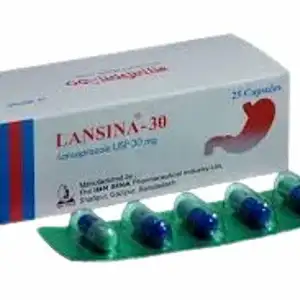
by The IBN SINA Pharmaceutical Industry Ltd.
৳6.00